The Electric Connection’s Blog

hanging chandelier

Who Can Hang My Chandelier?

hanging chandelierChandeliers can be pretty easy to complex to hang, unlike good ol’ regular light bulbs. So, it’s normal to be uncertain about whom to install your chandelier.

What is a Chandelier? 

When it comes to lighting, nothing creates a more attractive display than a chandelier. Many buildings (industries, companies, hotels, institutes) have adopted diverse means of furnishing and decorating their internal area, all driving the aim of depicting an excellent and beautiful appearance.

Chandeliers are mostly referred to as a physical representation of the sun. They come in different forms, sizes, shapes, and designs.

Some of the many types of chandeliers include Modern chandelier design, Rustic chandelier design, Craftsman chandelier design, and many more.

They all serve the same function, which is typically to capture the significance of light. They remain a beautiful design of adornment. A chandelier hangs from your ceiling and can create a defining statement for the parts of a home or building its installed in.

Who Can Hang My Chandelier?

You can hang a chandelier but only a professional electrician or someone with prior experience and knowledge can hang it the right way.

When installing a chandelier, it’s important to hire an expert electrician to carry out the job to avoid wrong connection or damage.

Chandeliers are not exactly the cheapest lighting on the market, so it’s important to get your installation right.

Where can I hang my chandelier?

When chandeliers were first invented, mostly the wealthy were the only ones to use them.

Fortunately, with development, advancement and growth, chandeliers have become very affordable for you to purchase, giving you the chance to install it in every part of your apartment.

You can give your apartment a unique appearance by installing your chandeliers in places like your living rooms, bedroom, hallway, dining room, and even on your balcony.

To make this more elegant, we advise you to place your chandeliers 30- 32 inches above your table level.

Conclusion

Hiring an expert electrician for the proper installation of your chandelier should be your top concern when choosing a chandelier decoration.

If you’re unsure about the size or type of chandelier to buy for a particular space, you should reach out to an electrician first.

Improper installation of a chandelier could lead to irreversible faults or outright damage, but with The Electric Connection, you need not worry. Schedule a call with us now.

inside of tesla vehicle displaying dashboard

What Happens if Tesla runs out of charge?

inside of tesla vehicle displaying dashboardElectric cars, especially Tesla, seem to be the newest evolution when it comes to automobiles. Especially with their eco-friendly specifications, such as reduced noise and air pollution.

However, since EVs run on electricity, you may find yourself suddenly stuck, if your battery runs out.

What Happens if Tesla runs out of charge?

Before a Tesla runs out of charge, it issues warnings a couple of times. Eventually, though, if the warnings are ignored, it will come to a halt.

If this happens, you’ll need to hire a flatbed truck to come to pick it up and transport it to the nearest charging station.

While Driving The Tesla Does The Following

The Tesla alerts you when you’ve gone beyond the range of all known charges. It notifies you that you’re leaving a recognized charging region.

If you’re driving to a location, the Tesla will calculate the remaining range and distance to your destination. You’re frequently passing through a SuperCharger on your way to the next SuperCharger. If your energy consumption is much higher than planned while you’re near the final SuperCharger, Tesla will tell you to go back to it and charge some more.

If you’re running low on power and approaching your destination, Tesla will suggest a particular speed reduction to guarantee you arrive safely. It may, for example, advise driving at 65 mph rather than 75 mph. Every few minutes, it will remind you again. It will also adjust the recommended speed as necessary. These warnings are difficult to dismiss.

The battery sign becomes yellow and eventually red as the remaining range drops below 10%

There’s still hope if you’re still out of range of a charging station. Your Tesla isn’t going to die on you. Even when your range has been reduced to zero, it has a few over 10-20 kilometers.

This isn’t to say you should bank on it, but knowing that you can drive at 65 mph for that 20-10 miles gives you some hope that you’ll make it to your destination and charge it up is reassuring.

A buffer is the number of extra miles you get in a Tesla. You won’t be able to maintain a 65mph speed until it runs out. Instead, you’ll find your car slowing down gradually. It allows you plenty of time to pull over to the side of the road and park while you plan your next move.

Your Tesla will warn you it won’t be able to drive for a while as it slows down to roughly 15 mph, and then it will come to a halt and park itself.

You’ll need to call for roadside help or a tow truck to go to the nearest charging station at this point. To avoid damage to your Tesla, make sure it is transported on a flatbed. When roadside help arrives, put the automobile in “transport mode” so that the tow truck drivers can simply pull it into the tow truck.

Install a Tesla Wall Connector or other charger at home to help with this issue.

swimming pool in backyard with a lot of trees around

How Much Amount of Electricity Does Pool Equipment Consume?

swimming pool in backyard with a lot of trees aroundWhen everyone thinks of their dream house, there’s almost always a pool. Most people want a pool in their house, and so if you’re planning to have one installed, welcome to the club!

However, there are very crucial factors that must be considered before embarking on such a task. One of such factors is if your electrical service can sustain the extra power needed for a swimming pool? To which end, there is a great need to know how much electricity the pool equipment you seek to install will consume.

You need not worry any further. We’ve written this article to let you know just how much electricity installing a new pool will cost you and help you know if upgrading your electrical service will be needed.

A swimming pool comprises several types of equipment that consume quite an awful lot of power.

Below is a list of the common pool equipment and their electricity requirements.

  • Salt Water Chlorinator: 240v, approx 5-8 amps
  • Automatic Pool Cover: 220v, 5-7 amps OR 110v, 11-13 amps
  • Pool Lights: 12v, 3.5 watts each
  • Self-Contained Hot Tub: 240v 50 amps
  • LP/NG Pool Heater: 240v, 3 amps
  • Pool Heat Pump: 240v, 50 amps
  • Pool Pump: 240v, 10 amps

These numbers might seem confusing and that’s because these things are better handled by a professional electrician to fully ascertain the state of your electrical service and circuits.

Would I Need An Upgrade On My Electrical Service To Install a Swimming Pool?

A service upgrade occurs when your electrician and the power company increase the capacity of your home’s electrical system.

There are a few DIY assessments you can carry out to find out if your home’s electrical service can cope with the installation of a swimming pool.

The availability of more space in your panel box is a sign that your current electric service will most likely be able to manage a regular pool pump and pool lights. You should consult an electrician if you decide to install more power-demanding equipment like a pool heat pump or a hot tub.

What Amount Of Electricity Does A Pool Pump Use?

Pool pumps take about 2,500 kWh per year to filter and circulate about 20,000 gallons of water, which is roughly 5,000 gallons more than the average human will drink in a lifetime. The pool pump is the largest power-using equipment in an average swimming pool, aside from the air conditioner. According to research reports, a pool pump can add up to $300 to an annual electric bill.

If you find it difficult to diagnose the situation yourself, as is often the case, then contact us at The Electric Connection. We not only offer proper guidelines but also offer expert services for every household electrical fixes and installations.

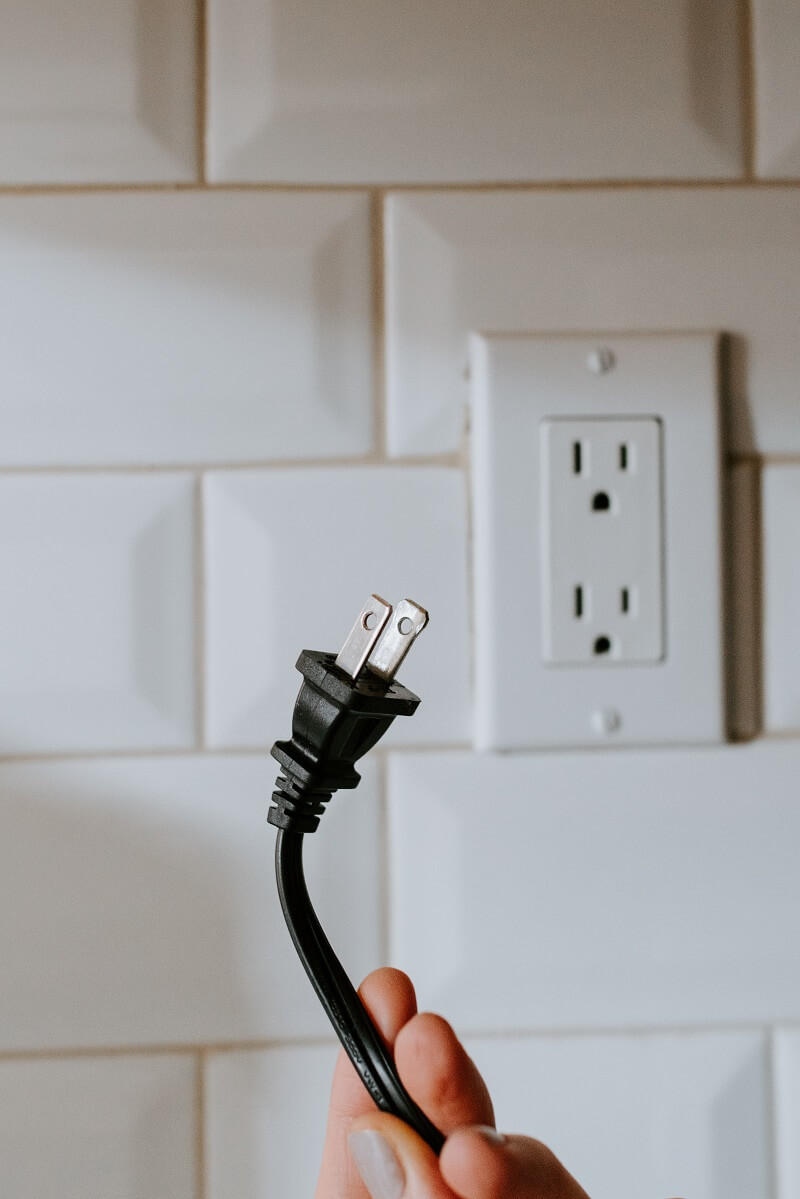
person holding up plug in front of outlet

How Do Electricians Not Get Electrocuted?

person holding up plug in front of outletElectricity is dangerous and a lot of precaution is necessary when you work around it all the time. This raises the concern for electricians and how they manage to not get electrocuted. We know there are many things they know that everyone else doesn’t, but is that all?

Could there be other things electricians do to protect themselves from getting electrocuted? Let’s find out:

Appropriate Tools

An electrician makes sure to always use appropriate tools while doing electrical work, in order to stay protected. There are many protective tools and equipment available for electrical work, they include:

  • Insulated Screwdrivers to protect you while working on an energized circuit during installation of light fixtures, or wall plate and mounting outlet box removal.
  • Wire strippers for correctly stripping wires. They can remove insulation without causing damage to the conductor beneath. These strippers have graduated holes along its jaw length, and you can match the hole sizes to the wire size you intend to strip.
  • A protective eyewear is a necessary tool to avoid having vision damaged.
  • Side-cutting pliers are highly versatile, and can be useful for anything from snipping through cable and wire, to pulling cables through walls. The protective ones have insulated handles to avoid electrocution.
  • A voltage sniffer is a tool that helps confirm that electricity is not present. This is one of the most important tools as it protects you from making moves on a live circuit that may be dangerous and lead to a hazard. These tools do not necessarily make contact with outlet prongs or wires, they can still detect when there’s live power.
  • Insulating rubber and leather gloves protect electricians from both high and low voltage.
  • Safety boots are a necessity, and come with soles that are non-conductive, making sure that electricity does not get through.
  • Arm sleeves made of rubber are worn in situations of high voltage to avoid electrocution
  • Mats that are rubber insulating are useful when electricians have to lean or stand
  • The corona suits are not worn for fancy. They are necessary for transmission line work, to keep the electrician safe from high voltage electricity.

Precautions

Electricians are also conscious about precautions when it comes to their line of work. There are ground rules designed to keep you safe while working with electricity and a compromise of these rules can become dangerous.

These are some of the precautions every electrician knows and is conscious of:

  • Avoiding water and making sure there is no water around the electrical work site. This means no working with wet hands or wet clothes because of how much electrical conductivity increases.
  • Watching out for broken plugs, frayed cords and damaged insulation in equipment and not using such equipment.
  • Making sure the mains are turned off while working.
  • Avoiding energized equipment repairs until they are de-energized.
  • Never making use of a steel or aluminum ladder because of the high conductivity. A wooden or bamboo wire is always a safer option.
  • Being familiar with the country’s wire code.

These are some of the ways electricians are kept safe at our company, The Electric Connection, and we’ve done a good job of making sure our electricians are properly trained against electrical hazards.

pink spring flowers in a field

Spring Electrical Tips For Southern California Homeowners

pink spring flowers in a fieldAs a homeowner, every spring, there are certain aspects of your property that are crucial to maintain along with your daily tasks. A main aspect of springtime preparedness is to maintain your electricity and safety standards to keep your family safe. Use these three spring electrical tips from the Electric Connection specifically for Southern California homeowners.

Maintain Your Outlets

One of the most important parts of keeping your home safe from electrical issues is to protect your outlets from overload. It’s essential to keep your wires organized and uncrossed when you can. This can be difficult depending on your home, but focus on where you’re utilizing a lot of power strips, extension cords and outlets. In order to ensure electrical safety, store cords away when they’re not in use and don’t overload each outlet or power strip. If you realize that you don’t have enough places to plug in the appliances you want to use, the best solution is to increase the amount of outlets and power strips throughout your home. This is a reliable way to avoid the danger of extension cord hazards.

When an item is not in use anymore, unplug it from the outlet and tuck it away when possible. This will help organize your cables while avoiding your wires from getting tugged on, or being exposed to potential damage from a vacuum or another outside source. If an electrical item is frayed or the cord is damaged, it’s time to replace it rather than risk an electrical fire or electrocution. Keeping your cords hidden is critical when you have pets, as you don’t want them to chew on the accessible cords or vulnerable wiring.

Protect Your Appliances

In order to keep your electrical systems in great working condition, you’ll want to ensure that you are protecting your home appliances. As a Southern California homeowner, be mindful of the temperature of your appliances along with any wiring or flammable exposure. If your appliances are overused, they can go into overdrive. Another beneficial way to protect your appliances from electrical failure is by using surge protectors. Electrical surges can occur more often than you think. Be prepared by consistently checking your appliances for any electrical vulnerabilities.

It’s smart to invest in a home warranty policy. This plan can successfully protect your systems against deterioration and destruction. Since your electrical system is integral to your home, you’ll feel at ease knowing you’re covered in case anything goes awry. Do additional research accordingly to determine what policy fits your needs and what gives you the rapid response you’ll need. Another benefit to having a home warranty policy in place is that it will cover any repairs or replacements to your HVAC system, so you won’t have to worry about trying to fix it yourself.

Prepare For Spring Storms

In Southern California, the weather changes in the spring months rapidly, exposing your home’s electrical system to a variety of storms. During a large storm, you’ll want to ensure that you unplug any appliances and other electrical items to avoid damage during a voltage surge caused by lightning striking or a storm surge. Keeping them plugged in during a surge can cause wear and tear over time, which you’ll want to avoid to guarantee longevity of your appliances. Similar to your home appliances, clear all of your electrical items away from potential water damage exposure. It’s vital to unplug them and store them in safer places around your home, especially those big ticket items you don’t want to replace.

If you’re planning on working outside, make sure that the surrounding area has had time to dry off and you’re not in danger of electrocuting yourself while performing any routine home maintenance. At the end of your work outdoors, bring your tools back inside to a dry storage space like a tool bench or tool shed to keep them out of the elements. You’ll want to avoid using a tool that’s been left out in the rain at all costs to ensure safety during your work.

Conclusion

With these spring electrical tips in mind. you can ensure your safety while performing work on your home and stay comfortable when relaxing. Now is the time to put these tips to good use and keep your property in pristine condition.

charging nissan leaf at home at night

Can a Nissan Leaf Charge at a Tesla Charging Station?

charging nissan leaf at home at nightIf you just got a Nissan Leaf or are planning to get one, one of the many questions you probably have is whether you can charge your Nissan Leaf at a Tesla Charging Station.

Those Tesla superchargers are everywhere and they are sweet. It would be nice if you could get some of that too for your Nissan Leaf.

So, the big question is, will you be able to charge your Nissan Leaf at a Tesla Charging Station?

Unfortunately, the answer is No

Why Can You Not Charge a Nissan Leaf with a Tesla Charger?

You cannot use a Tesla charger on a Nissan Leaf because Tesla’s charging connector can only work on a Tesla car, especially if it is a Tesla Supercharger.

Tesla is the sole proprietor of its charger, and handles everything from the power delivery, to payment and control via the car’s infotainment system. This does not give room for this charger to work on a different EV except Tesla somehow decides to open up its network and protocols to other automobile manufacturers.

Plus, the plug design of the Tesla is quite unique and it is impossible for the Nissan Leaf charging cable to directly plug into its Supercharger/destination charger.

How Do You Fast Charge Your Nissan Leaf?

The Nissan Leaf uses a different fast-charging connector known as CHAdeMO. This means, instead of looking to a Tesla Supercharger, you will have to search for an EV Charging station that allows for CHAdeMO charging.

Some stations that support CHAdeMO are ChargePoint, Electrify America and EVGo. You can also search for charging stations using the PlugShare app – simply install the app, register and it will search for charging stations closest to you that support your car’s charging type.

Will Tesla Ever Accommodate Other EVs?

It is difficult to tell whether this will ever happen, but there have been rumors that Tesla will in fact let other EVs charge cars with its supercharger. The details are still unclear but this may mean a lot of things, both for other EVs and Tesla.

For the Nissan Leaf, its fast-charging days are looking bleak with Tesla not opening up to it and Electrify America stopping installation of fresh CHAdeMO plugs in its new stations.

Tesla allowing Nissan Leaf to use its Supercharger will be a big deal, especially for the older Nissan Leaf versions because these cars have a limited range and it is difficult to find charging stations that support its charging.

The downside to Tesla accommodating Nissan Leaf charging is how long it takes for a Nissan Leaf EV to charge completely. On average, it takes about an hour, and this may be inconvenient for Tesla cars.

In conclusion, it would be a great thing for Nissan Leaf if Tesla’s Supercharger could accommodate it. However, it may not be such a great thing for Tesla. It is best to have your own EV home charging station so that you can charge your Nissan Leaf whenever you want and for as long as you want, especially overnight.

Book an appointment with us at The Electric Connection to install a home EV charging station.

back patio of house

3 Essential Tips for Taking on Home Maintenance Projects

back patio of house
Photo via Pixabay

With fall upon us and winter on the horizon, you need to make sure your home and yard are ready. Taking care of maintenance items around your home now will prevent major issues down the road. Best of all, most projects are simple enough to DIY, even with little or no experience. So, if you want to get your home in top shape, make sure you read through these simple tips from The Electric Connection.

Get Help From Pros for Major Projects and Repairs

Knowing how to DIY home maintenance jobs can save homeowners a lot of time and money. For the projects you’re not completely comfortable completing, however, it’s best to hire a pro to help you out.

Professional services are also great resources for taking care of those tasks you just don’t want to do on your own or feel uncomfortable handling yourself, like electrical work. For example, a deep cleaning can take up most of your weekend, and you need to be sure to get all those often-missed areas, like the tops of cabinets and your baseboards. If you want to save yourself some time, you can use a maid service to take care of the cleaning so you can spend your time on more pleasant tasks.

Pick Up Some New Tools

You can’t complete your work without the right tools, so why not renew your toolbox with a few essentials that will make those home maintenance tasks easier? A quality cordless drill, like this one from Black & Decker, is always a must for DIY-focused homeowners and can help out with projects all around your home. You can use a cordless drill as a handy screwdriver, to sand wood surfaces, and of course, to drill holes of all sizes in all sorts of materials.

Feeling handy and want to give your outdoor areas a bit of a makeover? You can put your new drill to work on some of these DIY patio projects that you can complete in no time. Add some custom seating or build a beautiful potting bench to make your updates more comfortable. Consider also installing a decorative windmill ceiling fan on your covered porch.

An all-purpose drill is a good tool to keep around your home, but if you’re new to DIY maintenance, make sure you have these essentials in your toolkit as well.

Plan Out Your DIY Maintenance and Refresh Projects

You’ve got the pros taking care of some heavy lifting and some new tools to help you take care of the rest. Now, you just need to figure out which maintenance projects you need to DIY first. Start with a tour around your home so you can check your gutters for any damages and ensure your roof is still in good shape ahead of winter storms. If you spot any leaves or debris in those areas, you will want to get out your ladder and clean them up. This is also a good time to check out the weather-stripping around your doors and windows.

Also take a look at your exterior paint. Freshening up any trouble areas will give your home an immediate facelift (which is especially important if you plan on putting your home on the market any time soon). Minor spots can be DIYed, but turn to a pro if there are large areas that need a new coat of paint.

After you’ve taken care of projects inside and outside your home, move on to your yard and garden so you can make sure your trees, grass, and plants are in good health and will fare well through the fall and winter months.

For your home’s interior, look at upgrades you can make to your kitchen. Add a new wall-mounted range hood to pair with new appliances, or spend some time repainting and refacing your cabinets. Kitchen upgrades always get noticed.

Keep in mind that when it comes to improvement projects, especially any that contribute to your home’s value or that are in relation to a home-based business, it’s important to take before and after photos, and to keep receipts. This information will come in handy when the time comes to reappraise your home and when tax season rolls around and you’re looking for extra deductions.

Now is a great time to refresh your home, especially when you can DIY to check those tasks off your to-do lists. Using pros can help make good use of your time and budget too. Either way, you can get your home ready for anything the seasons throw your way.

This article is brought to you by The Electric Connection, fully licensed, bonded, and insured to protect you, your home or business, and our crews. We believe in quality work at an honest price and in treating our customers the way that we would want to be treated. For more information, please contact us today!

city skyline of los angeles

How Southern California Homeowners Can Combat Outages

For Southern California homeowners, the demand for electricity efficiency can be exceptionally high at times. With consistently hot temperatures, almost every Californian is forced to run their air conditioners to the max, leading to periods of power surges.

State power suppliers and utilities have a hard time keeping up with the demand, which can lead to temporary outages and even rolling blackouts. Power surges and blackouts in your So. Cal home can cause pricey damages to electronic devices and appliances, so here are some useful tips to combat these power outages in the best way possible.

Pull The Plug

The first thing every Southern California homeowner should do when combatting a power outage is to pull the plug on all of their appliances. It’s essential to unplug any appliances with electronic components, such as televisions, computers and microwaves.

  • This action will help to avoid any damage to your appliances from voltage surges after the electricity is restored.

Wait a few minutes before turning on these appliances. When the electricity is restored, turn them on one at a time.

  • This will help minimize the demand on the power supplier’s electrical grid.

Unless you have a whole-home surge protection system or individual surge protectors all over your house, some of your plugged-in devices are probably vulnerable to surge damage. It doesn’t take a huge surge from a lightning strike or a transformer explosion to damage your appliances. Small surges commonly occur when other large appliances in your home turn on, for example, your refrigerator’s compressor or your air conditioning. Over a period of time, these small surges can gradually wear away at other appliances on the same circuit, shortening their lifespans.

Utilize Surge Protectors

One of the easiest and least expensive ways to deal with power surges at home is to plug expensive TVs, computers and appliances into a surge protector. While they won’t provide protection from the millions of volts resulting from lightning strikes, these specialized power strips can provide protection against the built up damage from lower voltage surges. Ultimately, a surge protector evens out the sudden peaks of electricity, thus protecting your electronic devices against random power spike damage.

Having a surge protector isn’t enough to protect your appliances from harm. It’s important to find one that suits the needs of your specific items. Identifying the type and value of the equipment being cared for will help you determine the amount of surge protection you need. Surge protectors offer protection in joules; the joule rating refers to the maximum amount of energy it can absorb before it fails. Obviously, the higher the joule rating, the more energy the protector can absorb. For the most protection possible, consider acquiring a surge protector with a joule rating of at least 600. Gain peace of mind by using surge protectors on your most essential appliances and devices.

Invest In A Generator

Depending on the severity of the outage or experience with outages in the past, every Southern California homeowner should consider buying a home generator. A home generator can serve as a backup to the municipal power grid providing your electric functions.

  • They can cater to the home’s electrical needs when faced with an extended blackout that lasts for days at a time.

If rolling blackouts have taught Californians one thing, it’s that having an extra power source is crucial during tough times.

It’s critical for Southern California homeowners to consider which home generator is right for their property’s past experiences. For longer, rolling blackouts, standby generators are the way to go. Although they are more expensive, they cover more major appliances like your refrigerator. Portable generators are another great option for someone with a limited budget, who needs smaller devices powered for the time being. If you do find yourself with a narrow budget, try using your home’s equity to fund your new generator purchase. A home equity loan can provide funding in a lump sum with a lower interest rate than that of a personal loan or credit card. Take control of your power by investing in a generator that is best suited for your home.

Establish An Emergency Plan

When a power outage occurs, it’s important to relax and assess the situation. Having an emergency plan is essential for the safety of your home and your family. If you have a pet or younger child, make them a priority in this situation. If it’s dark, gather your family members and bring them together to distribute emergency lighting tools. Try using your cellphone’s light to prevent injuries when navigating your home.

  • Then, check that your flashlights are operational and replace their batteries if needed. Also, analyze your power banks and charging cables to make sure they are ready for use.
  • If it’s still light out, strategically place battery-powered lights or candles in the most commonly used rooms so they are spread out if the blackout continues later into the night.

Depending on the severity of the outage, each requires some sort of emergency kit. There are a number of things to consider when creating an emergency kit for your entire family. Having enough water available to last several days is significant in these types of situations. Your kit should also include other essential items like non-perishable foods, portable power devices, hand or solar-powered communication tools, and a first aid kit. For entertainment purposes, this kit could also include things like books, board games, and even puzzles. Try being as prepared as possible when an energy disruption arises.

Conclusion

There are a variety of ways for California homeowners to be proactive when dealing with potential outages or existing blackouts. Use your local resources for help as utility companies in your area should assist you when trying to find information surrounding potential disruptions. Being proactive, prepared, and aware of potential threats is the best way to combat potential power outages in Southern California.

fire burning

What Would Make a Fire Alarm Beep at Night?

fire burningThere is nothing scarier than hearing your fire alarm go off in the middle of the night. You get worried that you left the fire on, or your kids forgot to put off the stove. You might eventually realize nothing that can start a fire is on, but the chirping sound persists.

The reason for this can range from you leaving on something that can trigger your fire alarm to other technical issues.

Why Does Your Fire Alarm Keep Making Sounds?

The following factors might be responsible for the chirping or whiny sounds your fire alarm makes at night:

  • Your smoke detector is old.

    The simple reason your fire alarm is always beeping at odd hours of the day, especially at night, could be because it is old. An outdated alarm system will malfunction, meaning it needs to be replaced immediately.

    Ideally, a good smoke alarm system should last for 10 years, but in between that time, it’s important to have it constantly checked by a professional electrician. When your fire alarm is nearing the end of its life, the chirping sound will increase, but you don’t have to wait for this sound before replacing your smoke detector.

  • The battery is weak.

    Most smoke alarms use alkaline batteries, which are powered by a reaction between manganese dioxide and zinc metal. Temperature affects the emission of this energy connection, and so an alkaline battery is 2% less effective after the first year when stored at room temperature. At 85°F and 100°F, the alkaline battery loses 5% and 25% energy, respectively.

    Even when you try to preserve their power by freezing them, colder temperatures will still affect alkaline batteries. A hot temperature drains the battery life faster, a cold temperature causes slow battery discharge, leading to a weaker voltage being transmitted into the smoke alarm.

    To prevent further unnecessary beeping at night, always replace the batteries in your fire alarms, and test the alarms weekly to ensure they are working.

  • There’s a drop in the room’s temperature

    The beeping sounds your alarm makes are to alert you to a fire or smoke outbreak, or low battery. Sometimes, a drop in room temperature can cause a false fire alarm or low battery alert. Between 2-6 am, most houses are cold, making the fire alarm chirp a low battery warning. When the temperature warms up a few degrees, the sounds will stop.

    Also, when a battery is about to expire, the drop in power impacts the battery’s output. This causes the battery to enter low battery mode more often, lowering the effectiveness of the fire alarm system and making it chirp unnecessarily. There isn’t much you can do in this case, but to have your fire alarms checked constantly and replace their batteries regularly.

What To Do When Your Fire Alarm Constantly Beeps at Night?

Apart from the tips shared above, have a professional electrician near you to inspect your fire alarm system once in a few months just to be on the safe side.

The Electric Connection has professional electricians who carry out routine checks, repair, and replacement of fire alarms and smoke detectors.

recessed lighting above window

Recessed Ceiling Light Issues

recessed lighting above windowRecessed ceiling lighting is a common feature in most modern homes because of its suitability in any part of a house. The recessed ceiling light fixture is popular for its cost-effectiveness as it has a high illuminating quality. It is also more reliable than some other ceiling lighting options and gives a beautiful aesthetic effect to the home.

This ceiling light type makes every room look well lit and effortlessly beautiful.

But regardless of how effective and aesthetically functional recessed ceiling lighting can be, it usually develops some common faults. Like most home electrical appliances, recessed ceiling light requires regular maintenance, and sometimes, repair or replacement. This article explains why and when you have recessed ceiling light issues.

Why Is Your Recessed Ceiling Light Not Working?

If you or a licensed electrician fixed your recessed ceiling light properly from the start, it shouldn’t have issues such as blinking on and off for a long time. However, there are certain reasons why your recessed ceiling light is having issues. Below are some of them:

  • The bulb blew up or got damaged. 

    Bulbs are designed to blow up or burn out from full-term usage. Once a bulb completes its lifecycle, it can die out with no external influence, such as overheating. However, one of the main reasons your recessed ceiling light goes off is because the bulb has suddenly burned out.

    Always inspect your light bulb when this happens, but ensure you keep the switch off and let the bulb cool before extracting the bulb from the enclosed case. If there are black or grey spots on the glass, it means the bulb has burned out. All you need to do is buy a new bulb and replace it.

  • You have a weak and damaged socket. 

    A weak or damaged socket is hardly the number one cause of recessed ceiling light issues, but it is a big possibility. When sockets malfunction, it affects outlets connected to them. Watch out for buzzing sounds coming from your wall sockets and light switches. They might indicate a faulty socket and explain why you’ve been replacing your ceiling bulbs too often.

  • Inaccurate Wattage.

    Using a bulb with an inaccurate wattage in the wrong place can lead to overheating, which causes your bulb to burn. Always check to ensure that the wattage of your light bulb matches the recommended light fixture rating. You might need to go for a lower or higher wattage light bulb if your recessed ceiling light is getting blown constantly, or isn’t working.

  • Your light trim is sagging.

    You will experience recessed ceiling light issues if the light trim is sagging. The ideal thing is for your recessed ceiling lights to stick firmly to your ceiling. When the light trim sags, it will disconnect your bulb from the light fixture.

    This causes the off-and-on blinking you might experience. You should get such lighting issue checked immediately as it could be a potential fire hazard waiting to happen.

Why You Shouldn’t Fix Your Recessed Ceiling Light Issues Yourself. 

It is easy to think you can get these lighting problems fixed yourself by watching a few YouTube videos or reading a step-by-step how-to article.

However, it is always better to get a licensed electrician near you to check and fix the ceiling light issues for you. Getting an experienced electrician will also save you time and stress. Contact The Electric Connection for all your recessed ceiling light issues.