
Troubleshooting Electrical Outlets

Here’s a familiar household scenario. You put a can of catfood into the electric can opener hoping to see the can spin around and make whirring noises, but instead nothing happens. No spinning, no noise. What to do?

Is the can opener broken or is it just not getting electricity? Finding this out is the first step of troubleshooting the problem.

Step 1: Plug the can opener into a socket that is delivering power to an appliance or lamp that works. Let’s say the can now spins and whirs. You know the can opener is fine. After you’ve fed Kitty, you can turn to the electrical issue to see if it’s something that you can handle or if you need to call an electrician.

Step 2: Look at the kitchen outlet that you originally plugged into. Does it have two little buttons on it that say “Test” and “Re-set”? If so, it’s a safety outlet (GFI) for kitchens and other places where water might be nearby. Push the re-set button and see if the can opener works now. If so, the problem may be solved.

However, if you frequently have to push re-set to get this outlet to work, there’s an electrical problem that an electrician should handle. If re-set doesn’t fix it, go on to Step 3.

Step 3: Is the outlet controlled by a wall switch? If so, flip the wall switch. Does the can opener work now? If not, go on to Step 4.

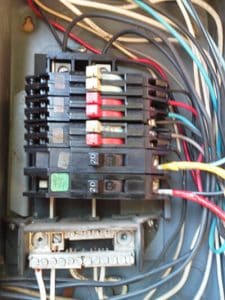
Step 4: Has the circuit breaker that controls the outlet flipped off? As a first step, turn off any computers and other electronic devices that might lose data if they lose power suddenly. Next, look in the circuit breaker box for any flipped switches. Even if you don’t see one, it’s possible that one has flipped off internally without moving to the off position. Firmly flip off each circuit breaker in turn and flip it on again. Now, plug the can opener into the kitchen outlet and see if it works. If the can opener works, you’re done.

But as a note, if a particular circuit breaker repeatedly flips off, your electrical system may need to be enlarged to meet your power needs or there may be an intermittent short circuit. An electrician can tell you which it is. A short circuit is a fire hazard and should be addressed as soon as possible.

Step 5: If after these steps, the kitchen outlet still doesn’t work, it’s time to call an electrician.

If you follow these steps whenever an electric outlet or wall switch is giving you trouble, you can save on unnecessary electrical service calls.  But if it turns out that you need an electrician and you’re in L.A., give us a call at (818) 446-0888.  We’ll be happy to discuss any electrical issues with you.

Kim Hopkins

CEO, The Electric Connection

Click here to visit our website.
 

Is Your Electrical System Grounded?

Back before the days when parents “baby-proofed” their homes, my wife’s little sister got quite a shock. Little sister was the mischievous type and stuck her finger into an electrical outlet. It’s not actually a very easy thing to do, but at three-years-old, her fingers were small. Fortunately, no lasting damage was done. But my wife will never forget her little sister’s blackened finger and the stern warnings by her parents that those mysterious little holes in the wall can kill you.

Now that my wife has married an electrician, she insists that I take every possible measure to ensure that the electrical system of our Los Angeles home is safe. One important step was to ensure that it’s properly grounded.

What is electrical grounding, anyway?
Grounding adds a safety factor for your family and your electronics. Here’s how it works. Electricity travels the path of least resistance. If an appliance like a toaster breaks, electricity can flow on the metal outside of the toaster. Touching it could result in a serious shock, causing injury or even death. But if the electrical system is grounded and the toaster is plugged in with three prongs, the electricity won’t flow to the outside of the toaster. Instead it will flow through the third prong back into the wires and harmlessly into Mother Earth. Thus, the term “grounding.”

An electrical system can be grounded with various types of devices. A “ground wire” is simply a wire attached to your electrical system that’s been pushed securely into the ground. Metal pipes (electricians call them “conduit”) that hold and protect your electrical wires can also act as a grounding device. Sometimes, grounding is provided by running a wire from your electrical system and attaching it to metal plumbing pipes that run into the earth.

Grounding protects not only people but also sensitive electronics. Without grounding, electrical charges build up in wiring and create slight but continuous damage to delicate electronics. This damage can shorten the lives of computers, phones, and any electrical appliance that has “smart” (computer) components — possibly your fridge or dryer.

How can I tell if my electrical system is grounded?
Homes built before 1950 were sometimes grounded. Homes built after 1950 were usually grounded. Even if your system was originally grounded, wiring mistakes may have rendered the grounding ineffective. The only way to know for sure is to have a qualified electrician check out your electrical system with a special tester. My electrical company, The Electric Connection, offers this check as a complementary service. It’s part of our Free Home Safety Inspection when we do an electrical job for an L.A. resident or business. If you’re outside Los Angeles County, you may find an electrical contractor who offers testing as a free service or as a service call.

My electrical outlets have three prongs — are they grounded?
If your home has electrical outlets which accept three prongs, it MAY have a grounded system. The third prong allows an appliance to be grounded IF it’s plugged into an electrical system that has a grounding device.

Sometimes three-pronged outlets have been installed in electrical systems that aren’t grounded. This can make it look like the system is grounded when it’s not. Do-it-yourselfers or handymen may install three-pronged outlets in an ungrounded system not realizing the hazard or that such a set-up violates the National Electrical Code.

Sleep sounder with a grounded electrical system
If you’ll sleep sounder knowing that your family and electronics are safe, give your electrician a call. If you’re in L.A. County, we at The Electric Connection will be happy to provide you with a full safety check of your electrical system, including grounding. Give us a call at (818) 446-0888 between 8 and 5. If you have other electrical work that you want us to do, use this coupon for a Home Electrical Safety Check and we’ll add your safety check for free.

Click here to visit our website.

What are CFLs — Can They Save Electricity and Save You Money?

CFLs are those new, small fluorescent light bulbs that screw into most regular light fixtures. You can use them to replace regular (incandescent) bulbs to save money and electricity. As the Los Angeles Department of Water and Power gets over 60% of its electricity from fossil fuels, especially coal, any time you replace a regular incandescent bulb with a CFL, it’s one small step towards reducing fossil fuel use in L.A.

CFLs come in all different shapes, but basically they’re a fluorescent tube bent this way or that or twisted into a spiral. “CFL” stands for “Compact Fluorescent Lamp.” They’re more compact than the long fluorescent tubes of our childhoods. They’re lamps, which is electrician-speak for “light bulb.” Here’s why they’re green — they save 75% of the energy that traditional incandescents use.

Here’s why they save you money — they cost more than a regular incandescent, but last a lot longer — 13 times longer. So even though each CFL costs more per bulb (about $4 for a CFL), it will also save you about $4 in bulbs as you won’t have to replace it so often.

Your electric bill will show more significant savings. Lighting costs about $20 out of $100 monthly electric bill. Because CFLs use one-quarter of the electricity of a regular incandescent, if you replace all the bulbs in your house with CFLs, you’ll save about $15 each month on a $100 electric bill.

CFLs are green, but not blue. Many people don’t enjoy the eerie bluish light of the old-fashioned long fluorescent tubes. CFLs can create all different colors of light, including warm tones. A recent study by the magazine Popular Mechanics found that even when people didn’t know which type of bulb was involved, they preferred the light of the CFL over the light from incandescent bulbs. CFLs also don’t buzz as the long tubes did.

CFLs have one downside — they each contain a small amount of mercury, which is a toxin. If a bulb breaks, you’ll need to take care to clean every bit up and to not touch the pieces. You’ll need to recycle spent bulbs or dispose of them as you would paint or other hazardous waste. However, they’re so long lasting that this will come up on the order of years, rather than months.

OK so you have a basic understanding of CFLs, now what can you do that’s simple to save money and electricity? The next time you go to the store, pick up a four-pack of CFLs. Choose four incandescent lights in your home or business that you use often and replace the incandescent bulbs with your new CFLs. You’ll start saving on your electric bill and will decrease the burning of fossil fuels to power Los Angeles.

Click here for more tips on saving electricity.

Can I Charge My Electric Car Overnight?

The short answer is, yes, you can charge your new electric car overnight and drive out into the world with a full charge in the morning. Both new electric cars, the Nissan Leaf and Chevy Volt, started deliveries in Los Angeles in December 2010. If you’re anxiously awaiting delivery of one of these vehicles, it’s time to consider your charging options.

The all-electric Nissan Leaf can drive about 100 miles before it needs a battery charge. The Chevy Volt can drive about 40 miles, and then it starts burning gasoline. It’s a hybrid. Both come with a complimentary charging cord called a “Level 1 charger.” It plugs into an electrical outlet in your garage or carport and requires only ordinary house current. But a Level 1 charger works slowly and won’t take you from a depleted battery to a full charge overnight. You may still be able to use a Level 1 charger if you have a short commute which would allow you to top off your battery overnight. Here’s more about Level 1 charging.

Drivers who have longish commutes or who don’t charge up every night will want faster charging with a Level 2 charger. A Level 2 charger takes a Nissan Leaf battery from completely empty to completely full in 8 hours; 4 hours for the Volt. So, even if you totally drain your battery, with a Level 2 charger, you’ll be able to fill it by morning. A Level 2 charger is usually purchased along with the car. It’s housed in a container about 18 inches around and hangs on the garage wall, sticking out about a foot. It requires installation of a 240 volt circuit, higher than ordinary house current.

Both Nissan and Chevy will arrange your purchase and installation of a Level 2 charger if you wish. Both car manufacturers have contracted with electrical contractors that they’ve trained and certified. Or you can make your own arrangements with an electrical contractor.

Purchase and installation of a Level 2 charger costs about $2,000. The price can vary quite a bit depending on the distance of the charger from your electrical panel and on whether you need an upgrade of your panel size to accommodate the additional power demands of the charger. Some lucky homeowners, who registered for a California state research project on electric vehicles, will qualify for a discount, or even free purchase and installation. And, here’s some good news: A few days ago, on April 27th, L.A. DWP announced a rebate of $2,000 to homeowners who install a Level 2 charger as part of their research project. A rebate of this size is significant as, in many cases, it can cover the entire cost of the purchase and installation of a charger. Click here for more information on L.A. DWP rebates for EV chargers.

All homeowners who buy an electric car will benefit by their far-sightedness. No more stops for gas. No more worries about gas prices creeping up to $4 or $5 a gallon (or more?!) any time there’s unrest in the Middle East or a natural disaster. They’ll know that they’re contributing to the solution to our dependence on foreign oil — about 60% of that oil is sucked up by our gas tanks. For this reason, President Obama has set the goal of one million electric vehicles on U.S. roads by 2015. For us in Los Angeles, every electric vehicle makes our skies bluer — when you’re running on electricity, your car is emitting no pollution or greenhouse gases at all.

For more about my company, The Electric Connection — all the stuff you wanted to know but were afraid to ask — If you’re interested coupons for electrical work, for example, $50 off installation of a Whole House Surge Protector in the L.A. area, click here on our coupon page.

What is the Difference between a 100amp panel and a 200amp panel?

100amp vs 200ampElectricity become a major part of our lives from the day it was introduced. Electricity has remained powerful, relevant, and dangerous in some situations and at the same time, our demand for it increases. The way power is used now is highly different from how it was used in the past, and this only means that conversations on upgrades will often occur.

What is a 100 amp and 200 amp panel?

The electric panel in your home distributes power through the circuits to every outlet, light bulb, and appliance. These panels come in different sizes ranging from 60 to 400 amps. It could be more or even less depending on what is needed.

A 100 amp panel is equally equipped with circuit breakers or fuses and is ideal for homes with normal or regular electric demands. A good example is a home of up to 2500/3000 sq ft. with heat, gas, water, and one air conditioner.

A 200 amp panel suits average to large homes. It is ideal for a home of the same 2500/3000 sq ft. but with enough coverage for a hot tub, more outlets and other power demands. Homes of 3500 sq ft. and above will, however, need a 200 amp panel and an additional panel for their electrical needs with power demanding appliances.

The Difference

The major difference between a 100 amp panel and a 200 amp panel is capacity. With a 100 amp panel, you can do a lot but never too much because overloading circuits can compromise your electrical safety and lead to damages and even loss of life and property.  A 200 amp panel, on the other hand, enhances electrical safety because it gives you enough room to include a hot tub, a pool, a few power demanding appliances, or expand your home.

You can get along fine with either panels or even larger ones depending on your usage. What are your electrical needs and what is the size of your home?

If you have a 100 amp panel but are not sure of an upgrade, an electrician can provide you with professional insight on what to do. If you have a panel with even less capacity than 100 amps, then an upgrade is needed for sure. Modern homes use either 100 or 200 amp. Some use more. What’s important is to ensure safety and comfort.

What does a panel upgrade take?

A panel upgrade is never a small task. It is financially demanding, and it is also vital to hire only a licensed and experienced electrician to get the work done. This electrical technician may also be required to pull a permit for this project. Depending on the electrician you hire and if services like repairs are needed on your electrical system, the upgrade can take from up to 10 hours to a few days.

If you have questions on your home’s electrical panel it is important to speak with the experts. Reach out to us.