The Electric Connection’s Blog

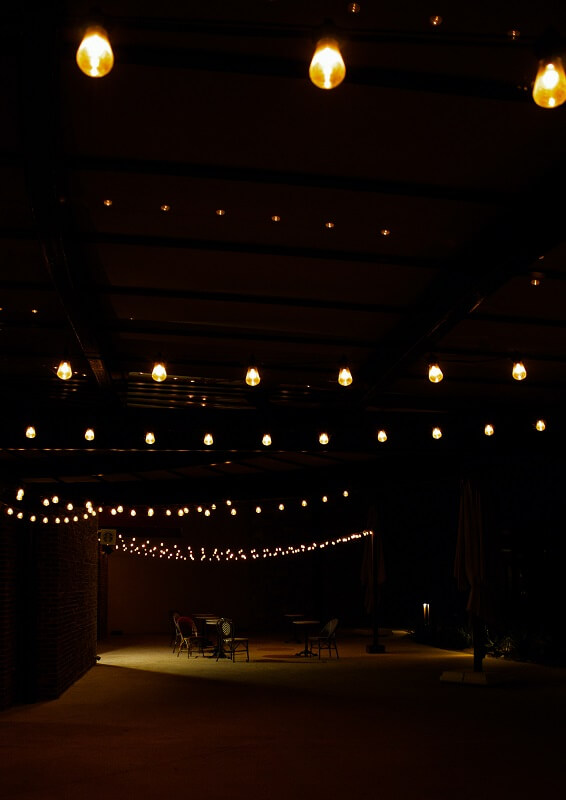
lights outside on the porch

Do You Need Lights On Your Outside Porch?

lights outside on the porchFinding the right lights for your porches isn’t as easy as you think it is. Most homeowners find it quite challenging. This is probably because aside from just picking out the lights and knowing where to put them, you also have to figure out why you’d want to have lighting and what atmosphere you’d like to create as well as find the right fixtures, the colors, and knowing porch light safety. It may sound like a lot and without the proper guidance, it is a lot to take on. So here’s a list of all the things you need to figure out before you install lights on your outside porch.
The Why?

It’s as simple as it sounds. Installing porch lights can instantly transform your porch. However, installing the wrong porch lights may not give you the transformation you’d like. If you’d want lights so you could have a nice, quiet time alone or with a loved one, then you’d have to pick lights that suit that purpose. If you need lights for security reasons, then you’d have to go for lights that are a lot brighter as well. Having this in mind makes the selection a lot easier. Remember that going for lights that’d enhance your security doesn’t completely remove the chances of burglaries. You’d have to learn some common porch light safety rules as well.

The Where?

Now that you’ve figured out why you’d like your lights based on the purpose they’d serve, you have to identify where you’d want them as well. The different placements give off a different feel so be sure your placements align with the mood you’re going for. You could place your porch lights on either the side or overhead. Be sure to take proper measurements when buying new lighting. Ensure you enlist the help of a professional when installing or changing new lighting.

The What?

Choosing the right materials is an essential part of the process. You have to get the right lighting fixtures, lights, and colors of bulbs. Getting light fixtures that match the existing colors and patterns in your home won’t be a bad idea. It’ll make your house look more aesthetically pleasing. Following the purpose you’d like to achieve, it would be wise to get colors that highlight it. Bulb colors also have a deeper meaning than you think so be sure to research what the colors you’d like would purchase mean.

There are also different varieties of porch lights. The flush and semi-flush offer better coverage for large porches. The powerful lights are more decorative as you can choose to style them however you want. They’re also not too bright and a perfect fit if you’d rather want your porches to have a more calming aura. They’re not good as security lights so you may want to look into other options if you’re more safety conscious. No matter the lighting and the fixtures you’d be getting, ensure to hire the services of a professional electrician.

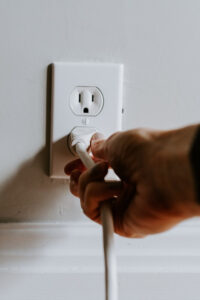
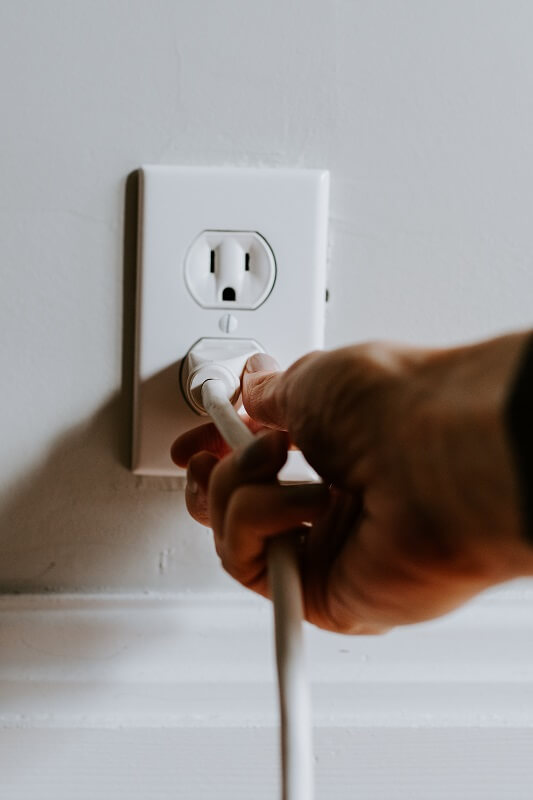
hand plugging appliance into outlet

What To Do When Your Outlets Aren’t Working

hand plugging appliance into outletHaving a faulty outlet can be hazardous. The start of a house fire can be a faulty outlet. And as an electrical problem it’s not one that you can simply DIY and call it a day.

When noticed, the best reaction would be to call a professional immediately to troubleshoot it and fixed properly. However, before you proceed to call an electrician, here are a few things you could do when your outlets aren’t working properly.

  • Safety First: Be sure to turn off all the lights in the area and unplug any appliances there as well. Make sure you check out the state of each of the appliances. The fault may not lie with the outlet if your appliances are also faulty. Plus, you’d need to check to make sure that the outlet hasn’t ruined the appliances in the house.
  • Test Other Outlets: Is the fault in just a specific spot or a general area? You’d need to do a thorough check to ensure that it’s just a specific spot. You can test out other appliances on the outlet to pinpoint where the exact fault is from. If the fault is from just one outlet, then it’s most likely an isolated problem. If it’s in a more generalized area, then that’s more complicated. Either way, you need to call a professional to have it properly checked and fixed.
  • Check Your Circuit Breaker: One of the most common reasons why your outlet may not be working is a tripped circuit breaker. Your circuit breaker is like the motherboard of all the electricity flowing in your house. When the current becomes too much, the circuit breaker protects the circuits by tripping it or cutting it off to avoid overheating. So check out your circuit breaker and try resetting it.
  • Loose or Burned out Outlets: Outlets, like all other things, tend to go bad after a certain period. A loose outlet wouldn’t work as effectively as it should and can also start house fires. A burned-out outlet would seem quite warm or look like it’s burned. Don’t forget to check out your fuse box as well. These can cause serious fire hazards and should be fixed as soon as possible by a professional.
  • See a Professional: Electrical problems are dangerous and should not be taken likely. Irrespective of how little or big the problem may seem, you should leave it to experienced hands or experts to avoid further complications. Although some problems can be handled with a quick fix, they may not be as simple as it looks. If you do need a professional and you are in the Los Angeles area, give The Electric Connection a call.

It’s easy to overlook a faulty outlet or a blown fuse or to postpone fixing a loose outlet because it works, in a way. However, those aren’t solutions to the problem and can only make it worse. Make sure you check all your appliances, replace any faulty ones and get a faulty outlet properly checked and fixed.


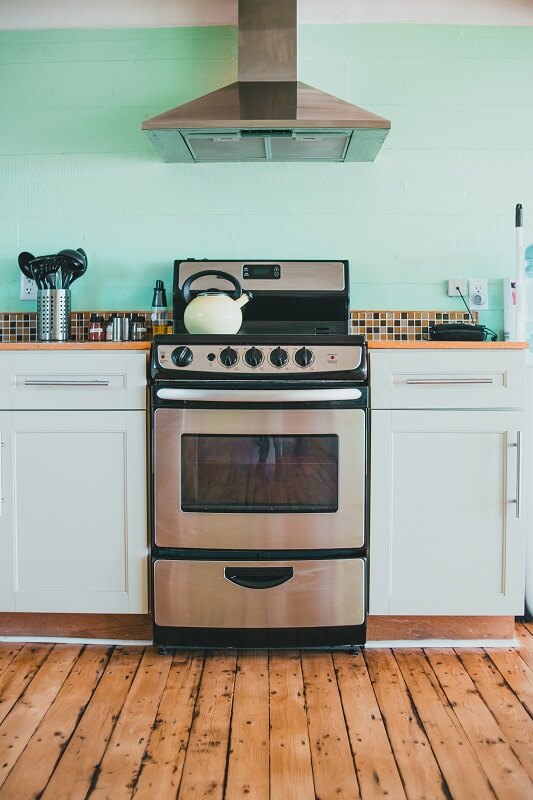
stove in kitchen

How Much Electricity Is My Stove Using?

stove in kitchenAre you bothered about how much electricity your stove is using? Do you wonder what appliances use the most electricity as your electric bill comes in? Are you looking for the advantages and benefits of using an electric stove instead of a gas cooker?

In this article, we would exemplify how your stove uses electricity, how to reduce your electric stove electricity usage, the advantages and benefits of using an electric stove, the options available for cooking, and their pros and cons.

If you need to add a new circuit for your stove, give The Electric Connection a call!

How To Determine How much Electricity your Electric Stove is Using

According to research, an electric stove uses on average about 2,000 to 5,000 watts during use depending on so many factors, including:

Number of burners

How many burners do you use? How often do you use more than one burner while cooking? All these will depend on how much electricity you use while cooking.

Oven Usage

Do you power your oven with electricity? Ovens are known to use more electricity than stoves. Your oven usage and frequency can greatly affect your electricity consumption.

Cooking Duration

How often do you cook? How long do you cook? Do you make multiple foods and make meals for large people? All these can adversely affect how low or high the amount of electricity you use.

How To Reduce Your Stove Electricity Usage

You can reduce your electricity use with some tips no matter how much cooking you do. Sometimes, you can save up some watts of electricity by being organized, careful, and following the tips below:

Use the same burner-to-pot ratio

It is advisable to use the same circumference of the burner for your pot. When you use a larger burner for a smaller pot, you are wasting electricity you could have ordinarily saved.

Meal Preps

To save electricity, you need to learn how to make meal preparations and do all the washing and cutting before turning on your electric stove. This will save you the electricity while prepping your meals while your electric stove is on. You would be amazed at the amount of energy you save when you begin to do this.

4 Advantages of Using Electric Stove

Let’s highlight a few benefits of using an electric stove.

  1. It is safer and easier to turn off and turn on an electric stove.
  2. It is noticeable that the kitchen is cooler while cooking with an electric stove than with a gas stove.
  3. It has a more stable surface for pots and pans and is easier to clean with a cooktop.
  4. It is less expensive and easier to install unlike a gas stove with the hike in gas prices.

4 Disadvantages of Using an Electric Stove

Also, there are a few disadvantages to using an electric stove: They are:

  1. It is dependent on electricity. When there is a power outage then you can’t cook either.
  2. Some electric stoves, especially the modern ones, cost more than gas stoves. Which is generally not cost-effective.
  3. They cook food slower than gas stoves. The cooking time is slower which may not be helpful when you are hungry.
  4. The cooktops can be easily damaged if handled carelessly which may not be cost-effective.
paying high electricity bills

Why Your Utility Bill Is High

paying high electricity billsIf you’re reading this article, chances are you’re probably dealing with a high utility bill. You wouldn’t normally pay attention to your power bill but now you want to know what’s going on.

You’re not the only one who’s turned suspicious over a utility bill so pay close attention. Here is a list of things to check when you see a spike in the bill.

  • You Never Go Out: Hear me out; when you stay indoors for too long, you use a lot more power. You watch a little more TV; cook a little more; leave the lights on a little longer and you charge your appliances a lot more often, and then it all adds up.

Utility bills are bound to spike up during holiday seasons when you’d spend a lot of time indoors with family and during the pandemic as well. You may also notice an increase in the price during certain seasons. For instance, the weather gets a lot hotter during the summer, so you use the air-conditioning a bit longer and when it gets colder in the winter, you use your heater more. All that can give your utility bill a rather significant boost.

  • Vampire Appliances Sucking The Power: These are appliances and electronics that stay connected all the time. Appliances like your TV, your kitchen appliances, and the likes consume a good amount of power all the time. Whether these appliances are in use or not, as long as they stay plugged into the power source, they add to your bill.
  • Inefficient Appliances: The older the appliance, the less effective it is. That doesn’t mean it consumes less power though. Also, some appliances consume a lot more than others. So if you just bought a new appliance, like a lightbulb, be sure to check the type of bulb you’re getting and the amount of energy it consumes. Getting Led bulbs would be better for you. They use far less power and last way longer than the rest.

To save up on electricity and cut down the utility cost, you may want to check on those vampire sources and unplug them when they’re not in use. You can plug them back in when you’d want to use them but be sure to take them right out after.

Getting new appliances as well to replace the old ones will also prove to help along the way. Just make sure you’re checking how effective they are and how much energy they’d likely consume.

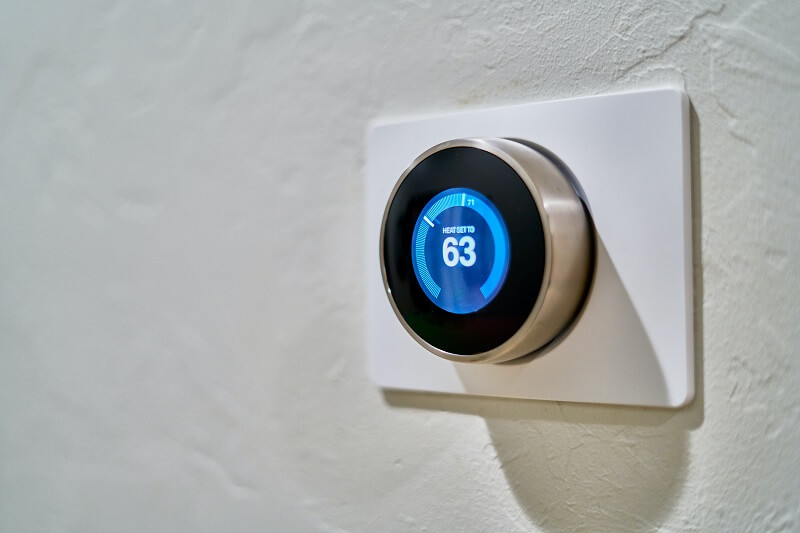
Don’t forget to turn off the lights when the day’s bright. You don’t need the extra lighting in the middle of the day. Invest in a good programmable thermostat that you can customize to suit your needs.

Check if you’ve been billed for the wrong meter reading as well. If your bill isn’t an estimate, then you may have been given someone else’s by accident. Compare your previous meter readings to the new ones and call up your supplier to lay a complaint.

An electrician may be able to help troubleshoot what is causing the high electrical bills. Please call The Electric Connection for more information if you are interested.

ceiling fan in bedroom

Cleaning Ceiling Fans – Quick and Safe

ceiling fan in bedroomHave you walked into a home and looked up to see dirty ceiling fans? How often have you seen clean and sparkling ceiling fans? You may want to do a mental check and answer these questions.

If you have a ceiling fan and struggle to keep it clean, then you need to keep reading this article. In this article, you’ll learn why most people don’t clean their ceiling fans, important cleaning equipment, and quick and safe tips for cleaning ceiling fans; whether they are mounted on low or high ceilings.

It is common to find dirty ceiling fans in homes and spaces for different reasons. Some reasons are:

  • They usually forget it during cleaning routines.
  • It takes extra effort to climb up and clean.
  • It is risky to climb up and clean.
  • It requires frequent cleaning which can be tiring sometimes.
  • Unavailability of the right cleaning equipment.

A List of Important Equipment/Materials for Cleaning a Ceiling Fan

  1. Ladder: A ladder is to help you reach heights where your ceiling fans are mounted. You must get a sturdy ladder that can conveniently hold your weight and prevent you from falling. The type of ladder depends on if you have a low or high ceiling.
  2. A pole duster: This is a duster that has a long end to help reach heights. The duster can be used to clean the blades of the ceiling fans especially if you don’t have a long ladder or you prefer to not climb before cleaning your ceiling fans.
  3. A microfiber cloth or wipes: A microfiber cloth can easily absorb and retain moisture to help you clean your ceiling fans. A damp one for cleaning, and a dry one for drying off the blades of the ceiling fan.
  4. A dust repellent product: This product will help to easily clean off dust and debris on your ceiling fan. It ensures a sparkling clean ceiling fan.
  5. Water: You would need a good amount of water to help dampen the microfiber cloth and give the ceiling a good clean.

5 Quick and Safe Steps to Having a Clean Ceiling Fan

Here is a sure and quick way to get your ceiling fan clean, and working perfectly without spreading dust and dirty air in your space.

  • Put off your fan and ensure the blades have completely stopped rolling before you start cleaning. This is to prevent cuts.
  • Get your damp microfiber cloth and a dust repellent product for easy cleaning to clean the blades of the ceiling fan.
  • Get on your ladder and clean the blades carefully and gently. Be careful not to apply pressure on the ceiling fan to prevent it from bending and breaking.
  • If the ceiling fan is greasy and dusty, you may want to repeat the process a few times to wipe the fan clean.
  • Then finish with a dry cloth to dry off the blades. Do not forget to clean the cup of the ceiling fan too.

Note that you can use this simple procedure whether it is a high ceiling or not. All you have to do is get a ladder or pole duster that can conveniently help clean the ceiling fan.

Do not hesitate to contact us at The Electric Connection if you need maintenance checks and repairs on your ceiling fan or your other electrical needs. We have capable and handy electricians to help you.


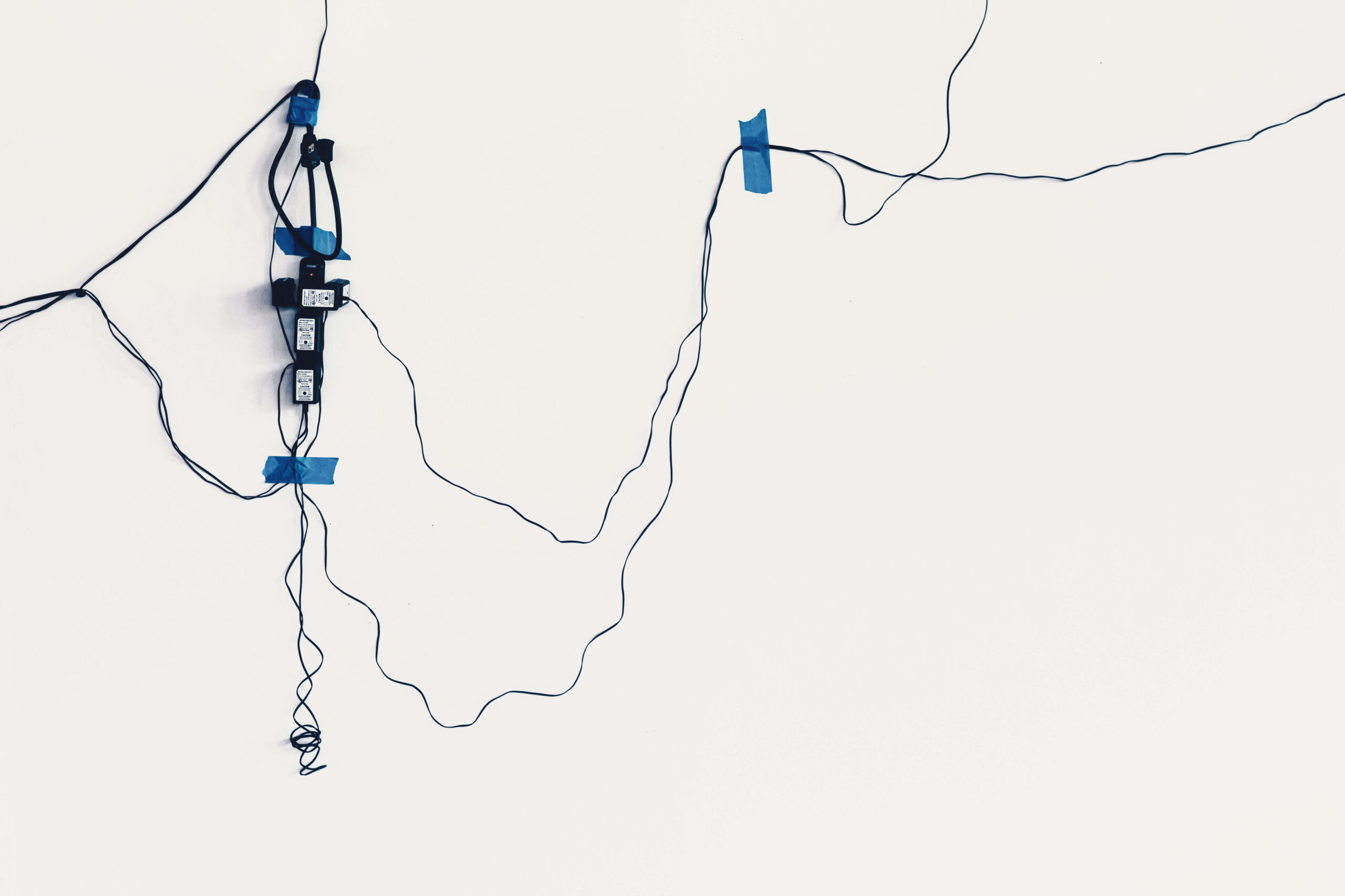
extension cord taped to wall

Extension Cord Storage Tips

extension cord taped to wallIt may seem ridiculous to give safety reminders on how to store extension cords but lots of hazards have occurred because of the lack of extension cord storage. Think about it for a minute, do you own an extension cord? Where do you keep them? Are they safe and accessible where they are kept?

Do you want to learn storage tips for extension cords? Are you willing to learn safety tips for extension cords? We hope the answers in this article help you to stop underrating the importance of safety measures for your extension cord.

4 Safety Tips for Extension Cord Usage

Before you know how to effectively store your extension cords to prevent safety risks, below are safety tips you should consider while using an extension cord.

  1. Avoid wet surfaces: Never use wet hands to handle an extension cord or plug in one on wet surfaces. You should also be wary of plugging in a wet extension cord to avoid electric shocks.
  2. Pull the plug: While unplugging your extension cord, do not pull the cord rather pull the plug connected to the cord.
  3. Avoid use on foot traffic areas: people can easily trip on extension cords so it is advisable not to be used on where there is a lot of foot traffic. You should also keep out of reach of children and Pets
  4. Use good extension cord: You may be tempted to use damaged, frayed extension cords but don’t. It is risky to use these kinds of extension cords as they are hazardous. Also, you can avoid getting the extension pinched or damaged by not running it through a window or door.

3 Simple and Smart Extension Cord Storage Ideas For You

Below are some simple extension cord storage ideas you can try out in minutes with little or no cost.

  1. Loop your Extension Cord
    This is the method of looping your extension cords and then hanging them on a hook in your storage closet or garage. Be careful to loop them in the same direction to avoid tangling when you need them. If they are more than one, you may need to loop them separately on different hooks.
    Also, ensure you use a sturdy hook so it can support the weight of your extension cords. Using this method, you can easily find your cords handy and safe whenever you need them.
  2. Spool Method
    Another method of storing your safe fashion is by spooling it around a cylinder tube, old electric wire spool, or anything in that fashion that can serve such a purpose. All you have to do is spool your extension cords around it in the same direction and you are good to go.Ensure it is not too tight or loose so it is not damaged or loose. You can easily stack it or put it in a cabinet without any safety risks.
  3. Hang like a tie or belt
    This is simple if you have a rotating belt and tie hanger. All you have to do is hang the extension cords like you would hand a tie or belt on the hanger and you are good to go. You can hang multiple cords like this, saving you space.

Did you find the safety and storage tips useful in helping you keep your extension cords safe and accessible? You can reach out to us at The Electric Connection for inquiries and questions concerning extension cords or any other electric concerns.

white electrical outlet on blue wall

What To Do When You Have A Loose Outlet

white electrical outlet on blue wallNo matter how it seems, fixing a loose outlet is not a job to be taken likely. It’s more than just screwing a few nuts into the wall and calling it a day. Faulty outlets can result in electrical shocks and can even go on to cause house fires.

It’s also quite easy to overlook the problem initially as it may not seem like such a big deal. We guarantee you, it is. You should call for a repair  when you notice a loose outlet. Sometimes, the signs may not be as clear as day. If your cover plate doesn’t lay flat on the wall, if it shakes or the plugs fall out, that can be a clear indication that you have a loose outlet. If you do want a quick fix before you call a professional then you should follow the next steps with precision and caution.

  • Turn Off The Power:

Doing this would go a long way in your ensuring your safety and is a top priority. To be completely safe, turn off the main breaker. It’s far safer to carry this out during the day when it’s a lot brighter to avoid making mistakes due to the lack of a sufficient light source. Be sure to use a tester to be completely sure that there is no power.

  • Unscrew The Outlet:

Using a screwdriver, unscrew the screws holding the cover plate in place to expose the outlet. You’d need to see what’s going on behind the cover plate so it’s best to take it off. Gently remove your outlet. Be careful not to cut any wires when pulling it out and if you do, you’d need the services of a professional immediately. Do not continue with the rest of the instructions.

  • Add Electrical Spacers:

If your outlet is loose because the electrical box is too far back into the wall, adding outlet shims can bridge the gap between the screws and the electrical box. The number of shims you use depends on how far your electrical box is from the screws. You can also tighten your screws if they seem loose. Use your screwdriver to screw in the nuts tightly. Give it a little shake to be sure it’s nice and firm. Fix your outlet and tighten the screws. You can place more shims if the outlet still seems loose. Otherwise, proceed to fix the cover plate as well, and then turn on your breaker.

If your outlet still seems loose, do not proceed any further. The wisest and safest option would be to call a professional electrician to ensure that your outlet is properly fixed to avoid additional damages that could occur otherwise.

We are always here to help.

outdoor shed to get electricity

I Have A Shed Outside, Can I Add Electricity To It?

outdoor shed to get electricitySheds are generally for simplistic purposes like a garden, a sit-out, or a workshop. Oftentimes, you can feel like there’s no need to add electricity to it. Using a hand or table lamp might be enough for you.

But whatever your shed is useful for, whether it’s a workshop, a workspace, or a garden, you’ll be needing some proper level of lighting so you can see, especially at night.

If you use your shed as a workspace, then you need that electricity more than ever.

Although using solar energy to power your shed will work perfectly, some people prefer the use of electricity, especially when they can’t easily opt for solar power.

Whichever way, it is possible to add electricity to your shed, but there are things you must consider first before doing this.

What to Know Before Adding Electricity to your Shed.

Permit

In the area where you live, you will need to find out what the rules and regulations are surrounding the installation and use of electricity on certain occasions, to avoid trouble with the authorities for going against neighborhood rules.

Power Hazard 

Because a shed is not your home, you will not always be in there. So, adding electricity to a shed means there will be a possibility of a power hazard. How can you control that? Preventing or controlling this begins with running your electricity properly, in other words, ensuring that you are careful with how you fix the wires and run the connections.

To help set up your electricity safely, you’ll need an electrician to help you. Make sure that you only hire a licensed and experienced professional to handle this.

The Electric Connection is a great example of what kind of electrical contractor you should hire. We make sure all safety measures are in place.

What Kind of Electricity Should you Put in Your Shed?

This depends on several factors, like where your shed is or how close it is to your house. You may choose to connect the shed to your house electricity, use a solar panel, which is safe, or use a generator specifically for your shed, which is also safe because you have control over it.

Using a generator will require more maintenance because you’d need diesel; you’d need to service it if it gets broken, and you’d need space to mount it.

Using a solar panel will work for you if your shed is exposed to sunlight, and you have to consider the amount of wattage your shed can take before buying solar with the right capacity.

The final and most advisable option is connecting your shed to your stable home electricity. This way, the lighting in your shed is constant.

At The Electric Connection, our team of professional electricians are well-versed with electric installations of all kinds. This means that whichever option you go for, we handle the installation perfectly. Book a call with us to get electricity in your shed.


rows of lights outside

How Do Outdoor Lights Receive Power?

rows of lights outsideWhat are Outdoor Lights?

Outdoor lights are lights used for the illumination of exterior environments, whether at home, in hotels and restaurants, or even at social gatherings.

Outdoor lights don’t exist simply for illumination. They also exist to enhance safety by shedding light, and for aesthetics in homes or more public settings.

Types of Outdoor Lights

Outdoor lights come in different types, shapes, and sizes, and have different methods of installation. Different types are ideal for certain places, and all serve their purpose perfectly.

There are floodlights, landscape lights, motion sensor lights, and spotlights.

Floodlights, for instance, are easily rotatable, depending on where you want to shine the light per time. You can mount these types of outdoor lights on the ground, walls, and poles.

There are different types of floodlights, and the longest-lasting is the LED floodlight, which only requires the use of lesser energy than other kinds of floodlights.

Floodlights are useful for focusing much light or illumination on a particular object or area, and you’ll find them mostly in parks, fields, and play areas.

Landscape lights, on the other hand, are installed as attachments to globes, spotlights, and lanterns. You’ll find them mostly on walkways, for both security and aesthetics. So yes, they’re for safety but are designed in such a way that they also offer aesthetic value.

Motion sensor outdoor lights are the kinds that detect motion and light up instantly as a reaction to said motion.

The motion sensor light doesn’t stay on all the time, it stays on for a period and then goes off for a while. It’s a perfect choice if you have security concerns. Plus, it conserves energy since it only comes on when it detects motion.

How do Outdoor Lights Receive Power?

There are different ways to power outdoor lights, and it all depends on what sources of power are available to you, and how often you need your outdoor lights. But there are three major ways that outdoor lights receive power.

Solar

Solar energy is energy from natural lighting, and it’s a good option for locations where there is little or no access to electricity. It’s easy to install and there is no need for wiring. So, you can power an outdoor light through solar.

Low Voltage 

Some outdoor lights are low voltage and require only a moderate amount of power. They’re also less risky and are the easiest to install. All you need is a two-core cable. You fix that to a power socket indoors, and then it runs to your outdoor lights from above the ground or underneath. It shouldn’t go deep because it’s low voltage and safe.

Line Voltage 

This type is for high-voltage outdoor lighting like floodlights. It requires a level of carefulness because of the high voltage. So, using equipment to cover up and protect the wires is necessary to prevent electrical accidents.

For all your outdoor light installations, contact The Electric Connection. We’ll deliver professionally and with great care.


blue electric vehicle charging

How Do Electric Vehicles Impact Electric Bills?

blue electric vehicle chargingElectric vehicles have become more common these past few years and have begun to take over from gas-run vehicles.

One reason people turn to electric vehicles is because they are generally less expensive. You can charge them at home before you drive out, and you don’t have to make any stops on the road to “refill your tank”.

Also known as Battery Electric Vehicles (BEVs), an electric vehicle has in place of an internal combustion engine and an electric motor.

But are electric vehicles truly less expensive? What does it really cost to own one?

Does it affect your electric bill that much?

Are Electric Vehicles Inexpensive?

When compared to an internal combustion engine (ICE) vehicle, an electric vehicle is less expensive because while ICEs require a lot of maintenance, an electric vehicle does not require much of the maintenance required for an ICE.

For example, ICEs may get oil leakages from time to time, and need fixing. They also need new spark plugs often, fresh oil and filtered fuel, and new brake pads for when the old ones fail. Now that is a lot to handle, whereas an electric vehicle does not need any of these.

Much of the components you’ll find in an ICE are not in the EV, which means less cost of maintenance.

Does Charging an Electric Vehicle Affect Electric Bills?

As far as charging an EV goes, it impacts electric bills, no doubt. You’ll be paying for extra electricity consumption, but, don’t be scared, it will only be a moderate increase.

Your electricity bill, however, will depend on the normal cost of electricity in your area.

Although charging EVs affects electric bills, it’s still less expensive than an ICE.

What is the Actual Cost for Charging an Electric Car?

The cost of charging an electric vehicle varies based on the electricity rate in every given region, the car you own, or the charger you install.

Regardless, it costs an average of $50 to $100 to charge an EV in a month.

Depending on what kind of charger you use, your EV can be fully charged in three hours or you may have to charge it through the night to have a fully charged battery.

A level one charger can work for overnight charging, but a level 2 charger (240V) can charge your EV in three hours.

Electric vehicles are worth the hype, and research shows that owning an EV saves about $4600 in maintenance—less than what it takes to maintain an internal combustion engine vehicle.

Not only is it cost-effective, but it is also energy efficient, and the carbon emissions from an ICE that results from fuel use are significantly lower than an EV.

If you are considering purchasing a vehicle, these are good enough reasons to opt for an EV. Don’t worry about your home charger installation. The Electric Connection handles this perfectly with our team of licensed and experienced electrical professionals. Give us a call!