


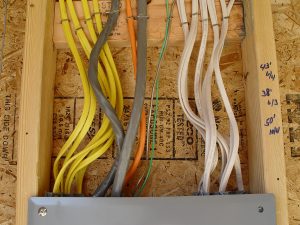
Rest assured that you are not the first or the last to ask about rewiring a house without removing the drywall.
Rewiring a house can make your heart skip a bit. Homeowners react this way because aside from the high costs, an electrical rewiring project usually means tearing down walls and making a big mess that the exhausted homeowner is left to deal with. But time has proven that this process can be highly disruptive and even costlier for the homeowner.
Hence, some opt for repair services or using the old, faulty wiring as it is. Of course, this is dangerous and your electrician will advise you against it.
Thankfully, there is an alternative to tearing down walls. It is possible to rewire your home without removing the drywall. How? With skill, the right tools, and cost. To do this, you will need an experienced electrician or comprehensive information on the process.
An experienced electrician can inform you of the process and carry out the rewiring easily. The method used by the electrician is to find a crawlspace to feed the wire through the wall. We have discussed the stages below.
Planning and Preparatory Stage
After an inspection carried out by the electrician, planning becomes necessary. Not removing the drywall means you will need a new way to access the old wires and run new ones.
In this first stage, the electrical technician will require a plan showing or depicting the circuitry of the wires to be removed and another for the replacement.
Get a detailed plan of the old circuitry and what runs where. This drawing will help you see beyond the walls. Next, draw a similar plan for the new wires, and while it doesn’t have to be identical, seeing both plans helps know what to expect.
Determine the best route for removing the old wires and running new ones. Also, measure the amount of wires you will need.
Ideally, the only routes to take in rewiring your home without removing the drywall is through the attic or crawl space between floors. The attic usually has more space.
Part of preparing can also include creating room for the wires to slide through by removing some insulation. Any clutter that stands in the way has to be removed as well.
Discarding the Old Wiring
Before doing anything with the wires, be sure to shut off the power to the house. This is for your electrical safety as you work.
Removing the old wiring is also not as simple as just pulling them out. Some wires may be stapled to the wall and you could end up creating a short circuit problem. The wires must also be recycled properly.
Take out the old wiring from the crawl space. For tricky spots, you can pull the wires from inside the room and patch that drywall later.
With the old wiring out of the way, feed the new wires through a pre-cut opening in the wall.
Running the new wiring will probably be a two-man job, so be sure to have someone else to help.
Keep track of everything you do and follow the plan from before.
What can make a house rewire without removing the drywall successful?
- Get help. You can hardly complete the process alone, even as a professional electrician. So have someone around to help feed the wires to you.
- If you need to open drywall, patch the spot by covering it with paper joint tape and a joint compound. Leave the compound to dry for up to an hour.
- Measure your wiring and make sure you have enough.
- Go in with a bright flashlight.
Taking Precaution
Since you won’t be taking the regular technique of pulling down drywall for rewiring, you must ensure the new cables are extra tight or clamped down.
This rewiring technique is usually faster and more efficient as a two-man job, where one person feeds the wire and another catches it to secure the wires.
To get this done in your home, hire a skilled electrician with experience on the job. It is often better to consider referrals from people who had similar work done in their home.
It is important not to attempt this yourself or hire someone less skilled. You can reach us at The Electric Connection to put an end to your worries and complete this project. Our electrical technicians guarantee a stress-free rewiring for your home.
Learn more about house rewires:
 An electrical contractor will always tell you that good lighting is everything. These are not empty words as both homeowners and store owners can agree. The benefits and functions of light in any location are numerous. It is one of the primary reasons we use electricity. Lighting illuminates a space to give you clarity and vision, but in contemporary times they do even more. Lights can boost your business in a commercial building. They can improve security, productivity, and efficiency. Also, studies have shown that lights can be associated with good mood and a relaxed mind.
 A large number of house fires are attributed to faulty wiring.
 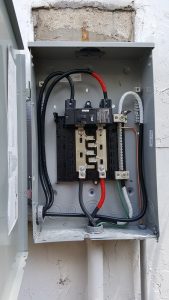 Panel upgrades are large projects. They require the expertise of a professional electrician and a good investment in funds. The electrical panels of a home contribute to its overall efficiency. In this modern age, we all rely so much on power to complete day-to-day activities. This power is distributed by the electrical panel of a home or building.
  High-occupancy vehicle lane which is popularly known as HOV lanes is a traffic lane restricted and reserved for use by vehicles with a driver and one or more passengers. The minimum number of occupants is 2 to 3. In simple terms, the aim of this traffic lane is to get as many people off the road as possible to reduce traffic and air pollution.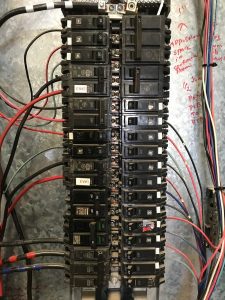
 Electricity is a necessary part of our daily lives. It is important for day-to-day activities in the home and commercial buildings. To ensure that electrical systems in a building are safe and reliable, you would need a trustworthy, professional electrician.
  The electrical panel is the center of electricity supply in a home or building. It is called several other names such as the distribution board and breaker panel. You can identify the electrical panel as a metal electrical service board, located outside the home, in the garage, or the utility room. It is a network of wires and switches.
 Recessed lighting are also known as downlights. They differ from regular lighting that drops from the ceiling. Recessed lighting is installed within the ceiling and only the shining light can be seen. They appear as a light shining from a hole in the ceiling.