The Electric Connection’s Blog

New Home Electrical Wiring Ideas

electrician installing new deviceA new home comes with the excitement of setting up things just the way you like them. You could be eager to try out different colors and textures; explore flooring options, window placement, and so on. Getting everything done to your liking is what makes your new home feel truly yours. But, in all your planning, it’s important to consider creative electrical wiring options that may come in handy sooner than you know.

Some electrical ideas to consider with a professional electrician include;

  • Speakers
  • Solar panels
  • LEDS
  • Electric fireplace
  • Towel warmers
  • Built-in WIFI
  • Security system
  • Remote access to some parts of the home
  • Indoor/outdoor home theater pre-wiring
  • Alarm systems.


Consider the cost

Figuring out your new home electrical wiring can mean looking at several options or ideas. This also means looking at a wide range of costs. The good news is, by making the right choice for new home wiring, you can always enjoy the value when you wish.

Generally, it can cost $100 per run of wire for a new home. The variation in price depends on factors such as the length of the run, the type of project such as rewiring, and more.

With a professional electrician, you can get reasonable prices for a dependable and reliable system.


Terms you should get used to

Electrical wiring can often sound confusing to homeowners. While you might not be able to grasp the entire idea of how home wiring works, it’s possible to get by with some basic knowledge. In wiring your home, a few terms to get used to now include;

  • F connectors – These can be described as screw-type connectors. They are useful for attaching video cables to DVDs, VCRs, and television.
  • Home-run wiring – With home-run wiring, you run a single wire/cable from a central location or panel to a specific outlet. It is the most common wiring scheme in modern homes.
  • Daisy-chain wiring – The daisy-chain wiring scheme runs a single wire from a central location or distribution panel to a series of outlets.
  • Category 5 wire – CAT 5 wire is a high-quality wire used for voice and data transmission.
  • Plain old telephone service (POTS) – POTS is the traditional style wiring used mainly for voice transmission, but it does not work so well for data transmission.

A few tips to guide your new home electrical wiring

You need the service of the right electrical technician to help with suggestions on the best ideas and providing an adequate wiring service. Some tips to help you work through the entire process of new house wiring are listed below.

Decide on a budget and time frame for the wiring you need. Some ideas may be good to incorporate now, and others can wait for later.

Ask for references from the electrician you hope to work with. Find out about his past work with them, how their wiring works, and if the electrician can provide your service.

Identify your wants and needs beforehand but also be open to suggestions on what works from your electrical contractor.

How to know if Cloth Covered Wiring is a Fire Hazard?

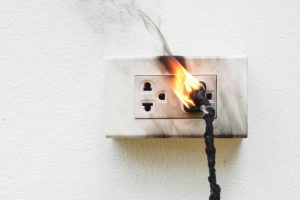
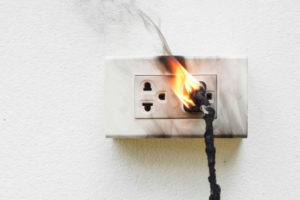
house rewire signs, outlet on fireCloth-covered wiring is generally considered a fire hazard, and in some situations, it can make getting home insurance tougher than it has to be. If your home is an old home or you intend to buy an old home, it’s relevant to note that it might have cloth wiring installed.

Why cloth wiring is considered a fire hazard

Unlike modern wiring, cloth wiring is covered in cloth and this material tends to deteriorate over time. The cloth insulation can become brittle, damaged by insects or rodents, and so on. All of these lead to exposing the wires underneath and this can lead to fires.

It has also been discovered that cloth is a poor insulator unable to hold in heat from wires subjected to the demands of modern homes. Cloth-covered wiring may also lack grounding, which makes your electrical system unsafe. The cloth insulator may contain asbestos, which is a hazardous substance to breathe in.

Identify cloth covered wiring

If you are unsure about having cloth-covered wiring, you can look out for the cloth material or any of the following brand names;

Essex, Dutrax, Cablex, Cirtrex, Cres-Flex, KFlex, Triangle PWC, Southwire, Phelps Dodge, and Paraflex.

How to know if your cloth covered wiring is a fire hazard

Just having cloth covered wiring doesn’t spell doom for your electrical system. Some cloth-covered wiring are in good shape and with minor modifications can continue to serve your home. Here are the steps to take to know where you stand with cloth-covered wiring in your home.

  • Call the professionals

An experienced and licensed electrician is the professional you need to hire to determine the state of your electrical system. The electrical technician will confirm that the wiring is indeed cloth covered wiring and inspect the system to reveal any potential problems. This helps you save money on unnecessary repairs or nonexistent problems. If the electrician discovers that your cloth-covered wiring is a fire hazard, it saves you from future trouble and helps you take timely action.

What to do if your home’s cloth covered wiring is a fire hazard

After calling a professional to determine the status of your home’s electrical system, you could get good news or not so good news. If the electrician has discovered that the cloth covered wiring is a fire hazard or presents any other danger the best option will be to replace the wiring.

Rewiring your home will cost a substantial sum but it is well worth it for your safety and a reliable electrical system. The electrician you hire for this project should be both experienced and licensed. Agree on all details such as cost, time, and more with the electrician before starting the project. The cloth wiring should be replaced with modern wiring which often uses PVC insulators. The wiring should also be up to code.

Don’t wait until cloth wiring has caused electrical fires and put your home in danger. Call an electrician today for an inspection.

Do I Need A Permit To Replace an Electrical Outlet?

outlet stops workingThis question would often come up if you are considering doing some electrical work yourself. While DIY is great and even cost-effective for some tasks around the home, electrical works are very different and some rules apply.

There are several reasons you might need to replace an electrical outlet. From outlets not being installed where you need them to having faulty outlets are all good reasons. However, the first thing to remember is that electrical works are best left to licensed and professional electricians. If you have no experience or skills to perform the work yourself, then do not attempt it at all.

You will require a permit to replace an electrical outlet. Read on to see how this works.

The role of a permit in electrical projects

Permits and building codes are designed to protect you and your home by ensuring that a project is done safely and correctly. An inspection which is the last part of any project involving a permit helps to enhance this safety by spotting mistakes and preventing extensive repairs.

When it comes to electrical work and electrical permits for homeowners going DIY, it’s important to note the following;

  • Only the owner and occupant of a home can obtain a permit to do the work themselves. This means as a homeowner looking to DIY you cannot perform any electrical services on a house about to be sold, on rent, lease, or exchange. Only a professional electrician can pull a permit and perform the electrical service in all situations.

When is an electrical permit required?

As a landlord or homeowner, you may not require a permit to replace electrical appliances or perform maintenance on existing installations. Other electrical works that usually require a permit include;

  • Install or alter any permanent wiring or electrical device
  • Installing a new electrical outlet or light fixture
  • Install additional wiring in your home.
  • Installation of a receptacle for a garage-door opener
  • Converting a fuse box to a circuit breaker
  • Installing or altering low-voltage systems such as security alarms

You can always call the local building department in your area to clarify any uncertainty on what electrical projects require a permit.

What do I need to do to get an electrical permit?

An electrical permit is only issued by your local building department. After confirming that your electrical project requires a permit that can be obtained by you, the first step is to complete an application. The permit application is usually offered in-office and some jurisdictions offer it online or via fax.

Next comes the permit fee, which depends on the complexity of your project. After the permit is issued you can perform the electrical work. An inspection should also be scheduled as soon as possible to complete the process.

Electrical codes, restrictions, and rules.

Part of the reasons why hiring a professional electrician for your electrical needs is safer and preferable to DIY is their knowledge of current electrical codes. Before you attempt any electrical work, get updated on the dos and don’ts of the NEC.

Can a Homeowner Replace Electrical Panel?

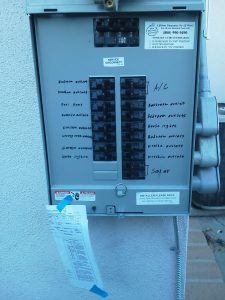
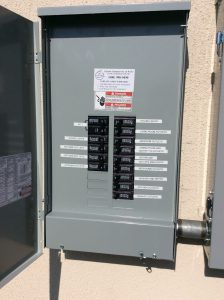
panel upgrade los angelesYour home’s electrical panel is the source of electricity to your home. It is where the power from your utility company is distributed across circuits, outlets, and all areas where they are needed in the home.

All too often, homeowners try to DIY some electrical services and the short answer to the topic question is yes. The long and safer answer, however, is no.

An electrical panel should only be replaced for reasons such as the following;

  • The panel is faulty
  • The panel is old/ you live in an old home
  • It’s not up to code
  • You need to add a new appliance, renovate your home, or need more power.

Why an electrician should replace an electrical panel?

Replacing the electrical panel can involve rewiring the home as well. It also means having to deal with permits, a dangerous amount of electricity, and so on.

An electrician should be one to replace or repair an electrical panel because they are trained, experienced, and knowledgeable on the project. An electrician knows the safety measures to put in place to protect himself and your home while working on such a demanding project. Electricians are updated on the latest National Electrical Code information. They are insured to cover any injury or damage gotten from the project – which is unlikely for a homeowner.

Taking directions or advice on the process from online sources still means you are unsure or uninformed about what you’re doing and this could lead to fatal injuries and fire.

 What you need to know before replacing your electrical panel?

You will need a permit. A panel replacement is a serious electrical project that often requires the technician performing it to pull a permit.

In some states, it’s illegal for a homeowner to do electrical works themselves. You would be unable to pull a permit in this situation. You would also need to get the final work inspected.

It goes further to when or if you intend to sell your home. Some states require that homeowners provide a list of all modifications or repairs done to the home without a permit.

Before you take on replacing the panel yourself, it’s important to first check with your local laws and know what’s legal or required.

Learn the safety measures involved and understand the steps well before starting the project.

While many homeowners can replace their electrical panel, most choose to leave it to the professionals. The cost and hassle of hiring an electrical technician for the project are worth it when your safety is on the line. A professional replacement guarantees a reliable system and no conflicts with the law. You can get an inspection, sell your home smoothly, and enjoy your upgraded electrical system as you want.

With experienced electricians such as The Electric Connection, a panel replacement can be affordable and stress-free. We do our best to make this less worrisome or intrusive on your part. Start by scheduling an inspection to confirm if your panel should be replaced or repaired.


Do I Need A Panel Upgrade When Purchasing a New Refrigerator?

electrical panelA refrigerator is almost a must-have in modern homes and as such various models hit the market every day trying to meet up with homeowners’ needs. When you purchase a new refrigerator, it’s fine to wonder if there will be any complications with your home’s electrical system.

Your home’s electrical system and panel precisely might seem like superheroes who never tire but make no mistake, it has a limit to what it can take.

There are several reasons you might need a panel upgrade with or without your purchase of a new refrigerator. They include:

More power

An old home yet to be rewired likely has a 60-100 amp electrical panel. Modern homes typically have a 150-200 amp service and larger homes can even invest in a 400 amp service. As you would observe the capacity for home panels seems to increase over time. It’s only natural following the constant introduction of various home appliances on the market. Hence, when adding any home appliance it’s important to ensure you have sufficient power.

An upgrade gives you more power and the flexibility to do this without the worry of putting stress on your electrical system. If your amperage is insufficient for new additions, the breaker will trip frequently and be at risk of electrical issues. Power-hungry appliances in any home often include air conditioner, electric clothes dryer, electric range, hot tub, and refrigerators. An upgrade becomes necessary for you to enjoy a safe system with the freedom to add new appliances.

Faulty wiring

Flickering or dimming lights, sparking or discolored power outlets, burning smells, and more are warning signs that indicate faulty wiring. Your home electrical wiring was built to last, but not forever. As the wiring deteriorates with use, the need for rewiring and upgrade can come up.

Old-fashioned fuse box

Circuit breakers and fuses perform the same function, but fuses are outdated because of their limitation to one-time use. While circuit breakers have to be reset after tripping to prevent a short circuit, fuses melt and disrupt the flow of power. Fuse boxes are often found in old homes and you will need an upgrade to change them.

Despite these reasons, only an electrician, like those at The Electric Connection, can determine if an upgrade is what you need. Upgrading from a lower amp to up to 200 amps can cost up to $3000. The project usually requires a permit and will be inspected after completion.

Refrigerators and your electrical panel

Refrigerators come in different design, styles, and sizes, but they all typically require a dedicated 115 or 120 volts with a properly grounded branch circuit. This should also use a 3 prong grounding type receptacle, protected by a 15 or 20-amp circuit breaker or time-delay fuse. If you are plugging your refrigerator in with a generator as the power source, you will need to know the wattage. You can find the exact figures written on the refrigerator’s rating plate. Make your calculations using volts x amps = wattage.

A fact to note is that the amps or wattage needed to start the refrigerator is 3 times its running amps or wattage.


How Can I Run Electrical Wire through Finished Walls

More often than you would like, the need to run electrical wire through finished drywalls comes up. You could be remodeling or just trying to move your outlet. The problem is, running electrical wires can seem like rocket science to DIYers.

The easiest way to fish wires and cables through finished walls is to contact a professional electrician. In the meantime, here are the steps to fish like a pro.

Start by turning off the power to the area you are working in. Next, determine the path your wire will take, including the start and end of the location of the wire. Clear the area if needed.

  1. Using a stud finder, check the whole wall cavity for obstacles. These include duct beams, ductwork, abandoned headers and so on that can make your task highly frustrating if unnoticed. Mark the spots and avoid cutting a hole over any studs.
  2. Try to determine what the obstacles are, as this may affect your work. For example, if you have insulation in the wall it can make running the wire difficult. You also don’t want to discover much later in the process that pipes to the bathroom go through that wall.
  3. Measure and draw the lines for the hole you will cut through the drywall. Be sure to keep the piece as you would need it later.
  4. Drill a hole on the other side using a flex bit drill. This tool also helps you drill the hole from several feet away. Don’t drill too close to the wood and ensure the hole is wide enough to insert your wires.
  5. Shove in your glow rod and attach your wire to the eyelet at the end. Working with this tool makes it easier to see in dark areas. In choosing glow rods you must know the variation in sizes come with distinct advantages. Thinner glow rods are more flexible, especially in making sharp turns. Thicker rods are good for working across long distances.
  6. Feed-in more than enough wire to ensure there’s enough to hook on to. Once you grab hold of the wire on the other side, keep up to six feet extra while hooking it.
  7. If you lose your wire and can’t seem to find it, use an inspection mirror and flashlight with a lot of patience to find it.
  8. If you have to drill through studs or joists on the wall, drill through the center at least 1.25 inches from its edge.
  9. When wiring through unprotected holes or fire blocks, ensure to seal up the holes after with a fire-resistant caulk product.

As we mentioned earlier you can call up the services of an experienced electrician to help you do this efficiently. If any problems come up during your process, contact an electrician regardless.

How Do You Get A License To Be a Los Angeles Electrician?

los angeles electricianBecoming an electrician is a wonderful career choice. It involves repairing, installing, replacement, and maintaining electrical components in businesses, homes, and buildings in general.

According to a BLS report, “the median annual wage for electricians was $55,190 in May 2018.” The BLS May 2018 data also includes that the annual wage of an electrician in California was $69,320.

You can get a license to be a Los Angeles electrician in any of the 5 licenses that fall under the electrical category for California.  Most of what is needed to acquire the license are similar, and we have outlined the differences below. The 5 licenses include;

  1. General Journeyman Electrician

A journeyman electrician is someone who works under an electrical contractor. The job description includes installing, maintaining, or constructing electrical systems under the National Electrical Code. To apply for a general journeyman electrician license (and any license on this list), you will need proof of,

“successful completion of an apprenticeship program approved by the California Apprenticeship Council, the federal Bureau of Apprenticeship Training, or a state apprenticeship council authorized by the federal Bureau of Apprenticeship Training to approve apprenticeship programs, in the classification for which certification is sought”

This experience itself comprises at least 8000 hours of working under an electrical contractor. The application costs a fee of about $175 and is non-refundable. This license is provided by the Division of Labor Standards Enforcement (DLSE).

  1. Residential Journeyman Electrician

A residential electrician provides electrical services to residential buildings such as homes, hotels, and motels. This license is also issued by the DLSE. You will require proof of experience as stated in the quote above for a general journeyman license. The experience itself comprises 4800 hours of work under an electrical contractor. The fee for the application is also a non-refundable $175.

  1. Voice, Data, Video Technician (VDV)

A VDV technician is one that requires at least 4000 hours of work experience under an electrical contractor in installing, constructing, or maintaining electrical systems that “falls within the scope of the National Electrical Code, Articles 725, 770, (non-composite cables only), 800 (non-hybrid cables only), 810 and 820”.

The conditions for the proof of experience are the same as stated for the general journeyman electrician and so is the application fee of $175. The license is issued by the DLSE.

  1. Fire/Life Safety Technician

The job description is exactly what the name sounds like. A fire/life safety technician’s experience is quite similar to that of a VDV technician. It requires 4000 hours of working under an electrical contractor on systems that are “covered in the National Electrical Code (Article 760) and the National Fire Alarm Code”. The license is issued by the DLSE and fee for the application is $175 with no refunds.

  1. Non-Residential Lighting Technician

As a non-residential lighting technician, your job is to repair, service, and maintain all existing and non-residential lighting fixtures including the installation of retrofit upgrade fixtures. Your proof of experience provided should include at least 2000 hours of work experience under an electrical contractor. The license is issued by the DLSE and fee for the application is a non-refundable $175.

What is an Electrical Contractor License?

hiring electriciansElectrical contracting is a wide and successful industry. It has a value of over $130 billion annually. There are over 70, 000 electrical contracting companies and over 650, 000 electricians in the United States. They serve both residential and commercial electrical needs.
An electrical contractor license is a license that allows the licensee to hire other licensed electricians, bid for electrical projects, and apply for relevant permits for jobs. Almost every state requires an individual electrician or company to obtain this license before they can provide electrical services.

Obtaining this contracting license varies between states. However, the individual electrician must be a master electrician. If it is a firm or company applying for the license, then they must present a master electrician who will be responsible for the contracting activities of the firm.

Requirements to Become an Individual or Business Electrical Contractor

  • Complete electrical apprenticeship to become a journeyman electrician
  • Meet all your State’s requirement to be a certified journeyman
  • Earn a master electrician license
  • Apply for the electrical contractor license and fulfill the requirements

Eligibility for an electrical contractor license

For an individual to be eligible for this license you must meet the following criteria;

  • You must pay the required fees- this refers to the application fee and license fee which may vary across States
  • Have insurance with a reputable insurer
  • Commit to an educational and safety training
  • Complete the necessary forms
  • Possess the qualifications, training, and experience of a qualified electrician
  • You must agree to comply with all the State guidelines, legislative requirements, and the codes of practice

The projects a licensed electrical contractor can handle

  • COMMERCIAL AND INDUSTRIAL PROJECTS
    A licensed electrical contractor can take on huge or small tasks within a commercial and industrial setting. These include working on schools, hospitals, office building, factories, and much more. Electrical contractors can bid competitively for these tasks and can also be hired as permanent members of the design-build team. The services they will provide to these buildings include the design and installation of panels, electrical systems, wiring, electrical equipment, and more.
  • RESIDENTIAL PROJECTS
    Residential projects are the most lucrative business for electrical contractors because homes have evolved to need more customized electrical services. There are integrated communication systems, security and entertainment systems in modern homes. An electrical contractor can perform electrical upgrades, installations, wiring, renovation projects, and more in residential settings. Some projects may require permits which the license enables the contractor to obtain.
  • SERVICE AND MAINTENANCE JOBS
    An electrical contractor can provide this to both residential and commercial settings. The contractors would need to service, maintain, and repair electrical systems. Sometimes such tasks are complete within a day or hours and have a flat rate cost.

The Electric Connection is a licensed electrical contracting company. We hire only the best electrical technicians to work for you. We are professional about our tasks and guarantee a satisfying service each time. You can call on us to handle any electrical tasks you might have. Our electricians ensure they get it right the first time, to save you cost, stress, and time.
How to Save Money on Your Los Angeles Electric Bill

save money apartment billsLiving in the bustling city of Los Angeles can be exciting. It’s a city with everything from being able to chase your dreams to the lazy days you are just looking to have fun. It’s almost possible to forget the high costs of living that comes with all the benefits.
Homes in Los Angeles pay up to 23% more for electricity bills compared to the national average. While solar energy solutions are becoming more popular, the larger part of the population still has to consider ways to save money on their electricity bill in LA.

Thankfully, your favorite experts at The Electric Connection have effective tips ready to help you slash those bills in half.

  • Use a programmable thermostat

You’d be surprised how much of your electric bill has to do with your heating and cooling system. With a programmable or smart thermostat, you can set temperatures to 78 degrees when you are home during summer, 68 degrees during winter, and turn it off when you are away. This helps you save up on up to 10% on heating and cooling.

  • Turn off your lights

Turning off your lights when they are not in use or you are away can both help you save on the bill and get paid. Residents in California can earn money through OhmConnect when you agree to cut down on power usage a few times in a week. You earn based on how much power you save. To help you get higher numbers and save on your electricity bill in general, you can switch your lights to LED bulbs.

  • Use nature’s gift

When possible ventilate your home by opening up your doors and windows. Doing this more often helps you cut down on heating and cooling bills.

  • Purchase right

Thanks to continuous breaks in technology, there are several appliances on the market equipped with energy-saving features. Look out for an Energy Star (R) symbol which shows the appliance is compliant with standard energy-saving codes.

  • Unplug devices

We are all guilty of leaving unused appliances plugged in at some point. Regardless of if you turn off the switch or not, phantom charges that can accumulate end up having some significance on your bill.

  • Timers and Power Strips

It won’t be easy keeping up with all plugged in devices, especially those mounted on the wall. Save up on electrical energy by bringing in power strips and timers. These tools allow you to set a schedule for the connected devices to be shut off from power. It comes in handy all the time, but more importantly when you are not home or asleep. A good example is if you need to run your pool pump for some hours. Using a timer ensures you can set the time for the pump to work and be turned off.

There’s also more to save on electrical energy when you get an audit from a professional electrician. The electrician can give more tips suitable for your home.


Should I Worry About Cloth Wrapped Electrical Wiring?

cloth cover wiringThe wiring in your home has a lot to do with your home’s electrical safety and capability. A professional electrician knows how to not only ensure this but to also see that your home’s electrical wiring is up to standard.

Cloth wiring is a subject that comes up more often than you would imagine because there’s hardly any shortage of old homes. Read on as we discuss what it means and more.

What is cloth wrapped electrical wiring and how to identify it?

Cloth covered wiring is exactly what it sounds like – wiring covered in a cloth material. This type of wiring was used mostly in homes built before 1960 and before plastic-covered wiring became the norm. At that time, cloth covered wiring was the standard. It was efficient and served the electrical needs of buildings. Some still do so today. This era also made use of the wiring system knob-and-tube. Both cloth covered wiring and the knob-and-tube system are outdated and not up to the standard of recent times. In many ways, both pose risks and homeowners with old homes are always encouraged to confirm the wiring they have.

You can identify cloth covered wiring easily at a glance. You can also lookout for a knob-and-tube wiring system that may indicate cloth-covered wiring. For even easier identification, here are some common brands of cloth covered wiring. You can inspect the wires to see the brand name;

  • Essex
  • Cablex
  • Cres-flex
  • Dutrax
  • Kflex
  • Narax
  • Roflex/Romex
  • Ammcoflex
  • Hatflex
  • Triangle PWC
  • Southwire

The risks of cloth covered wiring.

  1. Prone to damage and wear and tear.

As expected with cloth material, cloth covered wiring can be chewed on by rodents and even damaged by insects. This can lead to exposure of the wire and electrical arcing, which is dangerous. Cloth wiring is also prone to wear and tear due to brittleness. The longer the wear and tear go on, the more the wires within are exposed. This then poses the risk of electrical fires due to electrical arcing.

  1. Insufficient insulation in modern times.

Proper insulation is vital to prevent heat from building up in the wires and creating a fire hazard.  Cloth covered wiring is not effective at providing proper insulation. In modern homes especially, this lack of proper insulation can be dangerous.

  1. No grounding

Cloth covered wiring alongside the knob-and-tube system lack safety features like grounding. While this doesn’t make the wiring unsafe to use, it means there is no ground protection for your appliances against power surges.

With cloth wrapped electrical wiring being outdated, not up to recent codes and standard, and posing risks, it’s right to worry about them in your home. Some cloth covered wiring may be in good condition and reasonably safe, but only a professional electrician can determine that. If you live in an old home or suspect you have cloth covered wiring, contact a licensed electrician for an inspection.

The best solution to unsafe cloth covered wiring is rewiring the home to standard.

What To Do If You Hear Electrical Humming Sound In Wall?

hummingNo one likes to experience mysteries in their own home. When it comes to hearing a humming sound, it can be both confusing and even as terrifying as a scene from a horror movie.

Humming sounds can almost seem like they are coming from everywhere in the walls or nowhere in particular. But the fact is, if you have heard an electrical humming sound more than once, then it’s likely there and some electrical component is to blame.

We will discuss some possible causes of an electrical humming sound in the walls and what you can do about them. It’s also important to know that in most cases the electrical humming sound can be a warning sign of other problems.

  1. Mains Hum

The mains hum is either a humming or buzzing sound made by electrical wiring or equipment. The sounds occur at 60 hertz (for humming) and 120-180 hertz (for buzzing sounds). They are common with large appliances built with a motor. A good example is a refrigerator. Also, a magnetic field from outside the home can create and increase a mains hum in your audio systems. A mains hum is normal and harmless unless the hum becomes a loud buzzing sound. When this happens, you should contact your electrical technician.

  1. Circuit Breaker

There are a few reasons why a circuit breaker may cause a humming or buzzing sound in your electric system. These include an overload of current. When a circuit breaker conducts more electricity than it can normally handle, it should shut off. When it fails to automatically shut off the current overload develops an audible buzzing sound. The solution is to turn off the electricity to your home and replace the breaker. Improper or incorrect wiring to a circuit breaker can also lead to buzzing sounds.

  1. Wiring Problems

If your electrical wiring is the source of the electrical hum within the walls, it could be from a wide range of causes. Only an electrical technician can inspect this and point out the specific source of the buzzing sound. An example of sources of buzzing sounds due to wiring problems are improperly grounded wires.

  1. Light Fixtures

A light fixture can make a humming or buzzing sound if the bulb is faulty or being used on a dimmer. Sometimes the fixture type is also to blame. Fluorescent light fixtures are also known for often making humming sounds. You can fix this problem by changing the bulb or fixture. If the sound persists, then call an expert to fix the problem.

Since a humming sound could be an indicator of other issues in your electrical system, it’s best to call an electrician when you notice these sounds. The electrician can better identify where your electrical hum is coming from and why. They can also fix the problem.

Avoid taking up fixing the electrical hum in the walls as a DIY project to avoid accidents or harm to life and property,