The Electric Connection’s Blog

Rewiring a Los Angeles House Room by Room

los angeles house rewire by electricianDeciding to rewire your home does not come easily, and there’s no surprise why. Aside from the fact that home rewiring projects dig deep into your pockets, there’s the disruptive nature of the project to consider. But despite what seems like two distinct disadvantages, here are the many benefits that outweigh them and support your decision for home rewiring.

  • New wiring, new electrical power experience
  • A dependable electrical system
  • No more flickering lights, burning smells, or shortage of power
  • More room to add new appliances and remodel
  • Save on energy bills
  • Improved electrical safety
  • Reduce the chance of a power cut
  • Ensure electrical wiring lifespan
  • Prevent damage to your home appliances
  • Increase home resale value

While a home rewire is an option for many reasons, not just any homeowner should rewire their home. There are conditions under which a home rewire is needed and they include:

  • If your home is old, and the wiring is outdated
  • You have hazardous aluminum wiring
  • You are renovating
  • Your electrical system is unsafe with several faults, flickering lights, and so on.
  • Your electrical wiring has insufficient capacity

When you are experiencing any issues with your electrical system, it’s advisable to call on a professional Los Angeles electrician to inspect your wiring and point out the issue. The electrician will advise on if a home rewire is needed.

How to rewire room by room

  1. Make a list – Make a list of the appliances you have now and those you would like to add in a few years. It’s best to think as far as 25 years. This is because most rewiring projects are done every 2 decades. You can consider installations like:
    • Lighting and ceiling fans
    • HVAC
    • Kitchen appliances
    • Water heater
    • Devices such as wheelchair lifts and stairlifts
    • Home office electronics
    • Hot tub, spa, sauna or swimming pool
    • Entertainment systems
  2. Get an electrical building permit – The person who will perform the rewire project has to pull a permit before the work can start. If a rewiring project is carried out without the necessary permit, you might have to take it all down later.
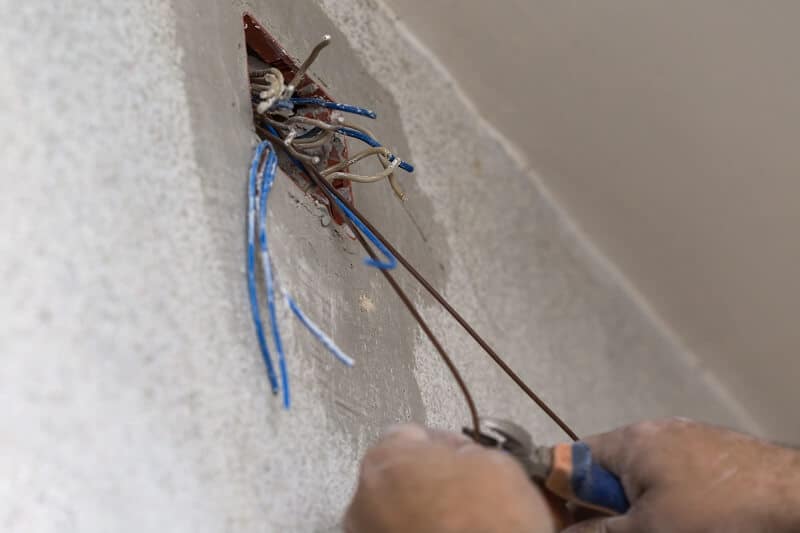
  3. Get to work rewiring room by room – Shut off the electrical power to the home, disconnect circuits, and disconnect wires from electrical boxes. Draw a plan of your new circuitry. Cut holes in the drywall to install new outlets and switches. Run the new wires through the backs of the electrical boxes and staple lateral runs of wire with wire staples. Run the wiring for the new devices and connect each new circuit.

Attempting a rewiring project yourself is no joke, and it gets worse if you have no electrical experience or knowledge. It is always better to leave such demanding electrical services to professional electricians. Hiring a professional saves money in the long run, guarantees electrical safety, and is stress-free for the homeowner.

Be sure to test all your electrical components after the project and ascertain they are working fine. If you opted for DIY, ensure a professional electrician inspects the wiring room by room afterwards.

Contact A Local Los Angeles Electrician

The Electric Connection is proud to employee some of Los Angeles’ greatest electricians. If you need help with a house rewire in Los Angeles or the surrounding areas, be sure to give us a call. We have even created an online form where you can get a free house rewire quote delivered to your inbox in minutes. Don’t take a house rewire project on yourself, give us a call and we can help!

Can I use an extension cord to run power outside?

extension cord legalGetting power within the home is easy. You are already set up with outlets, cables, and extension cords. So, all you have to do when you need to put on the TV, use the microwave, or other appliance is plug in and switch on. However, when you need power outside, it’s different. Running power outside depends on a few factors starting from what you need power for, or rather the duration of use.
Power Outside for Short Term Use

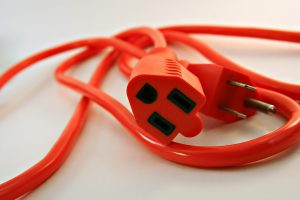
Yes, you can use an extension cord to run power outside if you only need power for a short time. This can include quick activities like trimming the bushes or illuminating a party in your backyard. An extension cord built for outdoor use has you covered from hours to up to two days outside. It’s important you note the use of the term outdoor extension because not all extensions are built for the conditions outside your home. An indoor extension should not be used even for only a few hours outside. Purchase an extension cord identified as an outdoor extension cord.

Also, note that even outdoor extension cords built for use outside should not exceed more than a day or two in use. This is to prevent vital parts of the cord from breaking down and leading to electrical fire or shocks.

Other things to consider when using extension cords for outdoor use

  • After ensuring you use an outdoor extension cord, verify the wattage before purchasing it. The cord should be able to accommodate the wattage needs it will be connected to.
  • Next is the length of the cord. Electricians would often advise on using long extension cords outside the home. However, there’s some discretion to be applied to how long or how short the cord should be. A short cord might not meet your needs and a lengthy cord can easily become a cause for accidents, tripping, and falling. Choose the right length according to your needs and be sure to clip a longer cord or its excess to the ground or tuck it neatly away from sight and foot traffic.
  • Also, ensure that the cord is plugged to a GFCI outlet outdoors. A GFCI outlet grounds the current and protects against shock if the cord is exposed to water.

Power Outside for Long Term Use

When you need power outdoors for more a day or two, an extension cord won’t cut it. Perhaps you need to light up the lawn regularly or something else. In this case, you would need a professional electrician to install outdoor electrical cables and GFCI outlets. This is not a DIY task. The electrician will dig trenches 18-30 inches deep depending on the specifications of electrical code. The cable will be encased in solvent-welded PVC conduit and connected from both ends to GFCI outlets. It requires expertise, tools, and experience. Afterwards, you will have a safe and dependable outdoor source of power.

Contact us at the Electrical Connection for further inquiries or installation of an outdoor power source.

How many amps is a Tesla charger?

Electric cars are clearly the latest and most sought after development in the automotive industry and Tesla is leading the pack. So, when you have just purchased your very own green car, you can leap for joy about avoiding fueling costs and several other issues that come with it.

However, you still have to figure out charging your Tesla.

The amperage of your Tesla charger can play a vital role in determining how much total charge or miles of driving you get. Here’s the breakdown of amps per charger level.

You might be familiar with using a level one charger, which is the common 120V outlet in your home. This works with the portable EVSE (UMC) that comes with the car and gives an amperage of 15-20 amps. As far as miles go, you will replenish 3-4 miles per hour. While the charge time may be slow, this works fine for many Tesla drivers.

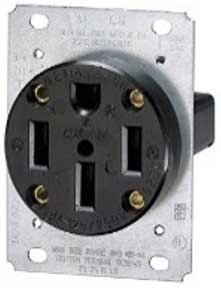
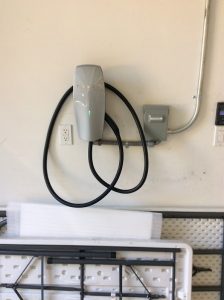
The level 2 charge is a 240V outlet installed by a professional electrician as a dedicated home EVSE. It has the capacity to power tough power-hungry machines like your dryer. This charge is more powerful than the previous option and delivers on up to 80 amps. This translates to anywhere between 9-52 miles of Tesla range per hour charging.

Level 3 charge, which is hardly an option for homes and private buildings, is an ultra-fast, ultra high-power 480V circuit. They are superchargers often found at charging stations and account for why it’s sometimes faster to use a public charging station than a home charger. It delivers on up to 300 amps, which is up to 170 miles per hour of Tesla charging.

When you look at the spread, you find that you do have a few suitable options. What you choose depends on your driving habits and miles. To install a level 2 charge be sure to contact a professional electrician or Tesla charger installer.

COVID-19 Update from The Electric Connection

Coronavirus Statement

All of Our Electricians Have Been Vaccinated Against COVID-19

los angeles coronavirus covidAs a valued customer or potential of The Electric Connection, we wanted to post and let you know that we are paying close attention to all updates from the CDC and local officials concerning COVID-19 (“Coronavirus”). Our highest priorities continue to include the welfare and safety of you, our customers, as well as our employees.
As electrical contractors, we have been classified by government agencies as a service business that should remain available to meet the needs of the public, so until circumstances change we will continue to remain open for business. However, we are doing our part to minimize potential risks related to any concerns with regard to Coronavirus.

We have addressed with our electricians the critical importance of safe practices and sanitation and have supplied our crews with face masks, gloves, hand sanitizer, and other disinfectants. We have instructed all employees to stay home if exhibiting symptoms of the flu or cold, and have told them not to enter homes or businesses where customers are symptomatic of this virus. Additionally, we have instructed our employees to greet customers verbally but to avoid handshaking and to physically keep a reasonable distance from others while on any job site. We thank you in advance for your understanding in these matters.

Our office employees continue to be reachable by phone and email during our normal office hours of 8 am – 5 pm Monday through Friday by setting up a phone and computer communication system that allows our office personnel to work from home. Thank you for choosing The Electric Connection for your past and ongoing electrical needs and we welcome any questions or concerns you may have.

Los Angeles COVID-19 Resources:
Coronavirus (COVID-19) Information from CDC
Coronavirus Disease 2019 (COVID-19) Symptoms & Testing from CDC
California Coronavirus (COVID-19) Response

Is cloth-covered wiring a safety concern?

cloth covered wiring safetyIf you are planning to purchase an old home or you are already living in one, then chances are you may have seen cloth-covered wiring in the home.
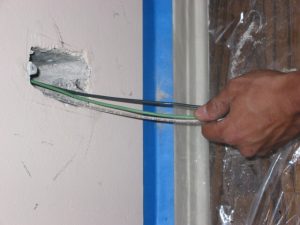
Electricity was discovered in the 1800s, and it was not until the 1900s it became common in homes and buildings. As you might imagine, technology hadn’t gotten so far either, so cloth-covered wiring seemed like a good solution at the time. It wasn’t until the 1960s that plastic covered cables were introduced.

So, is cloth-covered wiring a safety concern? Short answer, YES.

Cloth-covered wiring served as standard insulation during those early times and kept homes running on electricity for several years. However, in recent times, the drawbacks and dangers of cloth-covered wiring have become more obvious and dangerous. Cloth-covered wiring is also quite outdated and out of standard.

Some risks posed by cloth-covered wiring include its vulnerability to being chewed by rats and insects and getting worn or torn over time. Either of these will cause the wire underneath to be exposed creating a major fire hazard.

Cloth-covered wiring is also associated with what is known as knob and tube wiring. During the time that cloth-covered wiring was popularly used, knob and tube wiring was the standard method for running these wires through homes. The knobs and tubes in question were made of ceramic and used to run the wires through the walls. These installations are prone to breakdown, do not supply enough power, and do not carry the safety features of modern wiring methods like grounding.

In addition, some cloth-covered wiring was further insulated with asbestos paper. When wear and tear or brittleness occurs, the asbestos may breakdown releasing its hazardous particles in the air. Asbestos is a known carcinogen to humans and extremely dangerous. All of these contribute to why cloth-covered wiring is a safety concern.

What you can do

The good news is you don’t have to take your purchase elsewhere or abandon your home for safety reasons. Cloth-covered wiring can easily be replaced by professional electricians. A whole-house rewiring will eliminate the presence and dangers of cloth covered wiring.

What is required?

A professional electrician is a first and most important factor in a whole-house rewiring project. The electrician will inform you of what is needed including the cost. Whole house rewiring can be a bit demanding financially but it’s well worth it for the electrical safety of your home, family, and appliances. You will get an all-round improved electrical system with the current electrical standards, grounding, new electrical panel, three-prong outlets, and GFCI outlet protection against shocks and much more.

Contact us today, for more details and excellent service.

How do you pull a new wire through a wall?

Wiring a home under construction or during a remodeling project is easy, mostly because the walls are accessible. The real difficulty comes when you are trying to pull a new wire through a wall – an already existing wall.
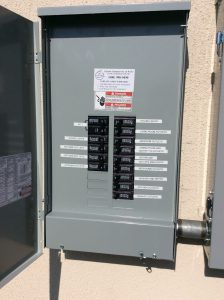
Ideally, this is something you can do with some electrical knowledge and a step-by-step procedure. Here’s how electrical technicians get it done.

Tools you need

  • Stud finder
  • Drywall saw
  • Electricians fish tape
  • Wire stripper
  • Electrician’s tape
  • Auger bit or drill
  • Cable

Wiring Steps

  • Before diving into any electrical work, it is crucial to shut off power to that area completely. Go to your electrical panel and turn off the power. To ensure you have proper lighting without electrical power, carry out this project during the day.
  • Ensure there is a clear path to thread the wire through by using the stud finder to check for studs, pipes, or obstacles in the wall. Plan your route with this.
  • Next check the attic, basement, or crawlspace to confirm you have a clear path for threading the wire.
  • On the main floor, identify where the wire will exit. Draw the outline of a box and ensure it is in line with others you have before. For example, if you are fishing the new wire through an outlet, check that your outline is on the same level as others. This is usually 12-18 inches above the floor. Use a drywall saw to cut out the hole following the outline. After cutting the hole, use a drill or auger bit to drill through the wall plate. Repeat similar procedure with the drill in the attic or basement where you would like the wire to enter through.
  • Tape the fish tape tightly to the cable and make sure you have excesses or enough wire and fish tape to grip. Slide the wire through the opening. It is easier to fish a new wire through a wall if you have someone on the other side to help you pull on the wire if anything happens. Fish the wire gently by pulling at short intervals on one end while your helper feeds more wire from the other end.

If you run into any roadblocks, you will have to repeat the earlier process of drilling another hole in the wall to fish the cable’s free end.

To make it easier to pull the wire you can employ a method that professional electrician’s use. Coat the cable with a lube product. This lubrication makes the cable slippery and easier to pull while protecting the sheathing from tearing.

If the procedure is just too difficult or time-consuming for you, the best option is always to call a professional electrician.

Avoiding Electrical Overload In Your Home

electrical overload los angelesWhat is an electrical overload?

When too much current passes through your electrical wires, you may experience an electrical overload. When this happens, the wires may heat up and melt which may result in a fire starting.

Appliances like televisions, microwaves, hairdryers are the highest power-consuming devices in the average home. The power consumption can go higher once you start thinking of lighting and other smaller devices. A high number of devices will lead to many electrical circuits on your electrical panel.

You run the risk of having an electrical overload once you begin to draw too much power from an electrical source or circuit. While different buildings have different designs, circuit breakers or fuses are often employed to prevent electrical overload. A fuse will burn itself out to perform its job and will need a replacement once it has done so. With circuit breakers, they only trip off if a lot of electrical current is drawn.

Steps to Take to Avoid Electrical Overload

There are a few steps that you can take yourself to avoid the occurrence of an overload.

  1. Know what circuit powers what device. Identifying what circuit your highest power consuming devices are is the first step. A single circuit is usually dedicated to most of these devices. Such devices include furnaces, toasters, hairdryers, refrigerators, and microwaves. Once you have identified these circuits, it is necessary to pay particular attention to them and avoid connecting other devices to them.
  2. Avoid having too many connections to one circuit. Having a lot of devices drawing power from a circuit can cause an electrical overload. In most situations, you do not know how dangerous it is until the fuse burns out or the breaker trips off.

    To find out what device is connected to a particular circuit, you could turn off one breaker after the other while turning on each device. This will help you determine where each connection goes on your board.

  3. Note how much power a circuit can supply. You should only connect the appropriately rated device to an equally rated circuit. With a rated voltage of 120 volts, a 15-amp circuit can only supply power of 1800 watts, anything more is an overload of the circuit. Put this in mind when connecting devices to a circuit. It is recommended that you do not load up a circuit to its maximum rating, this will allow for the connection of other irregularly used devices.
  4. Add more receptacles. At the Electric Connection, we find that most people do not consider getting new receptacles until the old ones burn out. This is wrong. You should get more or better receptacles once you realize that the present ones cannot supply all the electrical power you need. Getting a new outlet will offer you more options in terms of circuit connections and will help reduce downtime in case there is a damaged outlet.

If you are adding new receptacles, you will likely need the help of an electrician. All electrical safety procedures should be implemented before this is done. Contact The Electric Connection for the installation and to ensure you have enough space inside your panel to handle the load. If a panel upgrade is necessary, we will be able to assist as well!

Great Tax Return News for EV Owners!

If you purchased an EV between 2018 – 2019 or plan to buy one in 2020, we’ve got exciting news for you!

Congress recently enacted a retroactive federal tax credit available to electric vehicle owners. If this is you, you’re eligible to receive this credit of 30% of the purchasing and installation cost of an EV charging station.

Residential owners can expect a credit of up to $1,000 while commercial installations can receive up to $30,000. This credit originally expired in December of 2017 but has been extended through December 31, 2020.

Lost your paperwork for your charger installation? No sweat! If The Electric Connection of Los Angeles installed your EV charger, just give us a call at (818) 446-0888 or email us at service@electricconnection.com and we’ll be happy to help out!

Check out the US Department of Energy’s website for more information on the tax credit.

Want more information on how you can obtain this credit? Take a look at IRS Form 8911 by visiting the IRS Forms and Publication website. (Reference Public Law 116-94, Public Law 115-123, Public Law 114-113, 26 U.S. Code 30C and 38, and IRS Notice 2007-43(PDF))

Spring Discount Coupons

You may choose which promo coupon to use or we will apply the biggest applicable discount to your job. Don’t forget to let us know that you would like to utilize this with our electrician when we’ve scheduled a crew to your job location.

Don’t hesitate to let us know if you have any questions about pricing, scheduling, or anything at all! Thank you for the opportunity to work with you and we hope to hear from you soon!

Is Cloth Covered Wire a Fire Hazard?

house rewire signsElectricity has been with us for decades. The industry continues to make new discoveries and update on former methods and as a homeowner, it might seem tasking to keep up. The good news is with every innovation comes safer, more efficient, and convenient electrical systems. You get to enjoy all the benefits still.

Cloth wiring

It might seem strange to some, but if you have an old home, it’s possible you have cloth wiring. Cloth wiring is exactly what it sounds like. They are wires sheathed or insulated in cloth. They are easy to spot because of the clothed exterior. This type of wiring can be found in homes wired anytime from the first half of the 20th century.

Yes, at the time they seemed like a good idea and served their purpose. But as the industry progressed it quickly became clear that cloth wiring posed several risks to homes.

How did cloth end up on wires?

Electrical wiring of these modern times is often covered with PVC insulators. This protects from shock, short circuits, and arcing. These insulated cables are then run as a group into multiple-conductor cables or individually but still within a protective conduit. Plastic which is an ideal insulator for copper was yet to be invented at the time electricity was. Hence, all of these described above was unavailable. Cloth became a grand option.

In cloth-covered wiring, the conductors are first insulated with an early plastic better known as vulcanized rubber. After this, they were wrapped in braided cloth. They worked until the drawbacks set in.

Is cloth wiring a fire hazard?

Short answer – Yes. Long answer – It’s more than that.

Cloth wiring presents all sorts of dangers, especially in these modern times. For starters, the outer cloth sheath is prone to deterioration and so is the inner vulcanized rubber. Cloth wiring is also not only out of date but an easy target to be chewed on by rodents and rats. All of these leave the wires within exposed. This exposure can lead to arcing, short circuits, shocks, and ultimately fires. Electrical fires caused up to 440 deaths and 1,250 injuries every year for the period of 2012 – 2016. Even now, it leads to over $1.3 billion worth of property loss each year.

Having cloth-covered wiring might indicate your electrical system is not properly grounded. Older homes were improperly grounded at that time, and this poses even further risk to your home now.

What to do about cloth covered wiring?

If you notice you still have cloth covered wiring, it is likely time to consider an upgrade/rewiring project. It is a demanding project both financially and practically but in every way worth it for your safety and the safety of your property. An upgrade will provide you with replacements of any other aging material, a better electrical panel, GFCI outlet protection, grounding, modern three-prong outlets, and more.

If you are unsure about having cloth wiring in your vintage home, you can contact us here at the Electric Connection for an inspection.