


 It’s just annoying to live in a home that does not have enough power. The voltage will drop frequently, and this can be damaging to your electronics. Situations like this indicate that you need to upgrade your electrical panel. Other reasons why you might need to upgrade your panel include:
- Living in an old home
- Adding new appliances
- Expanding the home
- Experiencing frequent breaker tripping, buzzing or crackling, flickering lights and more
- Your insurance provider wants it done.
- To meet up to current electrical codes and standards
The benefits of an upgrade include:
- Improved electrical safety and efficiency
- More power in the home
- Use of any appliances you need.
- Satisfy electrical codes and requirements and your insurance provider.
The disadvantages of an electrical panel upgrade include:
- Costly to carry out
- The process can be messy and intrusive to your comfort and home structure.
What an upgrade will cost:
Upgrading an electrical panel is first a serious project both financial and in the service itself. Upgrading to either a 100 amp or 200 amp panel can cost anywhere from between $800 – $3000. The exact amount depends on several factors which we will discuss below.
What influences the cost for an electrical panel upgrade?
- Materials– The materials for the upgrade always contribute to the cost. The process will need materials like wires, fittings, and so on. Your electrician will give you a clear view of what is needed depending on other factors with your upgrade.
- Labor– An upgrade is a tedious work and some electricians charge by the hour or per the job. Sometimes, other components of your electrical system will need to be fixed or replaced. These could be the circuits, grounding, wiring, fixtures, outlets, and more. This will increase labor costs. If the walls need to be taken down completely, that will matter too.
- Amperage of the new panel– Is it a 100 amp or a 200 amp? This also influences cost.
Other factors might be if the panel has to be moved.
Who should upgrade an electrical panel?
A licensed and experienced electrician should be the one you call for an electrical panel upgrade. The electrician will first confirm that an upgrade is what you need and then proceed to consider all the necessary factors. He will give you the total cost, get a permit, and the project can begin.
How about DIY?
Changing a light bulb can be a DIY project. Installing a ceiling fan can also be a DIY project, but upgrading an electrical panel is NOT a DIY project. It requires knowledge of electrical codes and standards. It requires training, a license, permits, and experience. If you skip getting a permit, you can be fined for this. It is equally dangerous for someone who is unsure of what they are doing, as mistakes could cause fires and electrical shocks. It also requires the right tools and equipment.
Reach out to us at The Electric Connection for inquiries on upgrades.
 Flickering lights are almost impossible to ignore. They can be very annoying and dangerous if not solved. Flickering lights can be fun and raise no cause for alarm if the lights in question are decorative lights.
  When a part of your home or fixture suddenly goes dark, it is usually because of an individual circuit breaker tripping. The best way to find out if this is the case is to check your main electrical panel. The main electrical panel is located in the basement or utility room. A tripped breaker is always represented by a breaker switch facing a different direction from all others. For example, others may seem ON and just this one switch seems OFF or in-between.
  Electrical hums and buzzes are quite common in the home. The annoying thing about these sounds is that they can be hard to locate and most times they indicate more serious electrical problems.
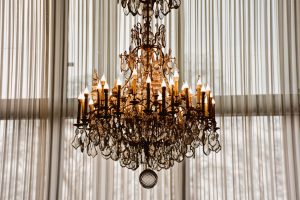 Chandeliers are valuable lights admired for the elegance and lighting quality they bring to a room. Any chandelier can add glamour and beauty to a home or even a commercial building. They come in various sizes, shapes, and designs. Some people believe that chandeliers are for high ceilings and dining rooms. A chandelier is actually quite versatile as it can be used in any part of the home and with both low and high ceilings.
 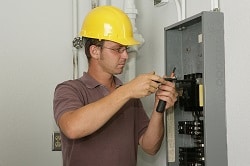 The words ‘electrical contractor and electrician’ are often used interchangeably. Many people do not know the difference between both but assume they mean the same thing. In this article, we will discuss what an electrical contractor does and how they are different from an electrician.
  We often see light fixture installations as the easiest tasks of an electrician. Hence, most people try to do them without professional help. A light fixture is described as an electrical device containing an electric lamp. They usually come with an installed switch for users to control the light. For light fixtures to work, they must be connected to a power source. Common examples are your ceiling lights, chandelier, outdoor lights and so on.
  An electrical contractor will always tell you that good lighting is everything. These are not empty words as both homeowners and store owners can agree. The benefits and functions of light in any location are numerous. It is one of the primary reasons we use electricity. Lighting illuminates a space to give you clarity and vision, but in contemporary times they do even more. Lights can boost your business in a commercial building. They can improve security, productivity, and efficiency. Also, studies have shown that lights can be associated with good mood and a relaxed mind.
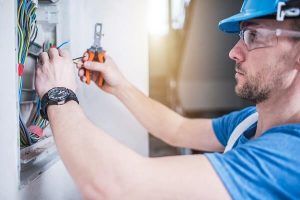 The electrical panel is the center of electricity supply in a home or building. It is called several other names such as the distribution board and breaker panel. You can identify the electrical panel as a metal electrical service board, located outside the home, in the garage, or the utility room. It is a network of wires and switches.