The Electric Connection’s Blog

Hiring a Local Electrician During COVID

The coronavirus pandemic has continued to do its rounds, forcing the world to a standstill and changing the lives of thousands of people radically. We are confident that it won’t always be like this, but it has taken a toll on us in different ways.
We know that there has been a bright side, no matter how bleak it has looked. For example, we got to understand the need for love, kindness, community, and family. We have come to appreciate everything we have and learned to think highly of the healthcare providers and educators.

Amidst all of this, many other things have stayed the same; like the need to mow your lawn, cut your hair or get it done, clean your house, cook and fix stuff that goes bad. This means that you may need to hire a Los Angeles electrician at some point during the COVID19 pandemic.

Here are some helpful tips to help you navigate safely through this:

Ask Questions

In a season of caution, it is important to ensure that you are on the safe side. One way to do that is to ask as many important questions as you can. Here are some questions that you may find helpful:

  • What precautions have you put in place to keep your team and customers safe?
  • How do you pay attention and assess the health of every member of your team?
  • Will you be requiring a homeowner to give any special accommodations like wash-up spaces before the job and after?
  • How seriously do you emphasize the need for gloves, masks, handwashing, sanitizers, and eye protection?
  • Have you had a team member who experienced COVID-19 symptoms? How did you handle this?
  • How do you sanitize your supplies, service trucks, and equipment?
  • Is there a provision for contactless payment?

Check for Good Reviews

If an electrician has had poor reviews before the pandemic, then the likelihood that they will serve you well in a crisis isn’t much. Make sure you check out reviews on Facebook or Google, especially to find out how honest they are.

Be Sure They are Licensed

Before hiring an electrician, particularly in these times, take their licensing seriously. An unlicensed electrician may increase the chances of another electrician fixing their damage, thus increasing the potential risk of getting exposed to COVID-19. Please don’t give in to the temptation to hire a less-expensive unlicensed electrician, regardless of how bad things are for you.

How Good Have They Been to the Community?

A lot of home service contractors have been affected by the pandemic and they will need as many jobs to get them back on their feet. It would be nice to find the companies that have given back to your community and hire them. Plus, if they are good to your community, then they will most likely not fail the previous tests.

Your health and safety are important, but so are the health and safety of the home service contractors. Try to keep them safe by following all precautions, including keeping your distance, and isolating yourself if you experience any symptoms. Also, remember to opt for e-signatures and documents. Stay safe!

Replacing an Electrical Panel Los Angeles

replace electrical panelMost homeowners find it difficult to assess the condition of the panel in the home. It’s usually because you know so little about how it works.
Thankfully, we can simplify what you need to know about replacing an electrical panel in Los Angeles.

An electrical panel serves two purposes in any building. It provides electricity and ensures safety. An electrical panel in Los Angeles can last about 40-60 years. But age is not a vital factor when you want to determine the condition of the panel. Excessive use, wear, and tear could lead to wires loosening in your electrical panel, accumulation of dust that shortens the lifespan of the panel, and corrosion.

Signs to replace an electrical panel in Los Angeles

The age of your home doesn’t determine how long your electrical panel will remain in good condition. What’s important is that your panel is large enough for your electrical needs and can function properly to provide power and safety. If your panel needs replacing or repairs, there are signs to look out for. They include;

  • Rusted components

The presence of rust or corrosion in your electrical panel means the panel has been exposed to moisture. You can observe this if you open the breaker box. Rust is never a good sign because water in your panel can be dangerous. The panel will have to be replaced and the source of the rust or moisture determined to prevent it from happening and putting your home at risk again.

  • Constantly tripping circuit breakers

This is usually where the safety function of the electrical panel comes in. When the circuit breakers sense an overload or power surge in your electric system, they trip off to protect the system. However, constantly tripping circuit breakers are another issue entirely and indicate a fault.

  • Burn marks in the panel

As the electric panel ages, parts of it may break down and generate heat. This leads to obvious burn marks in the electrical panel, and like rust, it can be very dangerous. The panel will have to be replaced.

Other signs you need to repair or replace your electrical panel are;

  • The electrical panel is underpowered and not large enough to serve your needs.
  • Breakers don’t work at all to protect your home.
  • Old wiring that is no longer safe.
  • Lights flickering or dimming in the home, especially in an older home with an older panel.
  • You hear buzzing sounds or perceive strange/burning smells from the electric panel.

Replacing the electrical panel in Los Angeles

Now you’ve seen all the signs or a few. The next step is to call an electrical contractor in Los Angeles to confirm you need a replacement. Replacing an electrical panel can be costly, and this cost is determined by two major factors.

  • The condition of the panel/scope of the work.
  • The electrician’s rate.

What’s more important is to get a licensed electrician on the job to make sure you get a proper replacement service.

Electrical Troubleshooting In Los Angeles

electrical troubleshootingTroubleshooting your electrical problems can be tough or easy depending on the nature of the problem or how much of an expert you are.
Electrical troubleshooting involves finding the source of a system malfunction and knowing how to repair it. Its electrical problem-solving that qualified electricians can perform.

Signs you need electrical repairs and a troubleshooting expert in Los Angeles

Regardless of if electrical problems come up in your commercial/industrial building or residential building, you will need a qualified electrician to find the cause and offer solutions. Some signs you need electrical repairs and a troubleshooting expert include;

  • Fuses blowing continuously
  • Lighting issues such as lights flickering, dimming, and so on
  • Loose power outlets
  • Buzzing noises
  • Sparks or arcs
  • Electric shocks
  • Burning smells
  • Equipment fails
  • Power system fails

Knowing an expert electrical troubleshooter in Los Angeles

  • An expert troubleshooter can find all kinds of fault regardless of if they are easy or complicated.
  • They can repair and replace only the defective components in the system
  • Expert electrical troubleshooters in Los Angeles can understand both circuits they are familiar with and those they are not.
  • They use the right tools to refine their skills and identify defective components in an electrical system
  • They are experienced and constant practice makes them more proficient.

What happens during electrical troubleshooting in Los Angeles?

Electrical troubleshooting in Los Angeles can be a smooth and easy process with the right professional. The electrician will gather as much information as he can about the problem you’re experiencing by asking questions. With this knowledge, he can get prepared with the right tools and approach. He will go through your electrical system to find the cause or source of the electrical issue. Once found, he will fix the problem and run tests to make sure everything works properly.

Can you troubleshoot electrical repairs on your own?

Yes, and no. It’s important to always leave electrical work to licensed electricians. This ensures safety in your home from electrical hazards and efficiency. With a professional at work to solve your electrical problem, you are likely to avoid any headaches on the same or other issues anytime soon.

On the other hand, for residential buildings, there are some common electrical problems that you can fix yourself. These include issues that require little to no troubleshooting experience. Some examples are;

  • Fixing a loose outlet plug
  • Fixing cut or damaged extension cords
  • Reassembling a broken light switch
  • Resetting the electrical breaker.

If you are in a commercial or industrial building and don’t have an electrical expert available, don’t attempt to DIY any problems that arise. The electrical system in a commercial or industrial building can differ significantly from that of homes, and a DIY gone wrong can have terrible consequences.

Some electrical problems you shouldn’t DIY include;

  • Lighting issues
  • Dead outlets
  • Warm outlets
  • Breakers tripping more than normal
  • Equipment fails
  • Power system fails

At the Electric Connection, all our electrical technicians are expert troubleshooters in Los Angeles first. They are trained in solving your electrical issues.

What Is A Main Panel Upgrade?

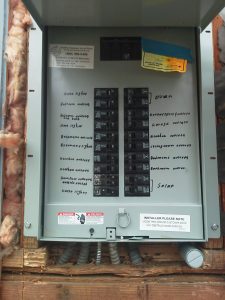
los angeles panel upgradeIn your utility room, basement, or designated area, you will find a big grey metal box known as the electrical panel. The box comprises a series of wires and circuit breakers that determine where power goes in your home.
An efficient or upgraded main panel determines the right amount of voltage to meter out and ensures power is distributed safely and properly.

A main panel in need of an upgrade is more inconvenient than you would imagine. Hence, when it becomes necessary, don’t hesitate on a main panel upgrade.

The options that come with an upgrade

Upgrading your main panel depends on your precise electrical needs. If you need to upgrade from a smaller panel to a big one, that’s one option. It might be because your current panel can no longer provide enough power. You may also upgrade to fix faulty or damaged parts of the panel. The options usually involved with an electrical panel upgrade include;

  • Getting a bigger panel to bring more power into your home
  • Upgrade circuits to meet current National Electrical Code standards.
  • Replacing damaged or old components.
  • Increasing the number of circuits so you can add more outlets.

Ask all the right questions first.

To upgrade your main panel, you will need to hire a professional electrician. The electrician should be licensed and experienced in panel upgrades.

But, before you dive into signing any contracts and starting the work, ask the right questions to confirm that you need an upgrade and what to expect.

This is relevant as you may want an upgrade for the wrong reasons. For example, some homeowners take on this project when an electrician performs the inspection to say you need an upgrade; you think your insurance company demands it; you’ve heard something scary about fuses; you experience lights dimming and flickering, and so on. Within this list could easily be someone trying to sell you a bill on what you don’t need and your fear.

An honest electrician can tell you if you really need an upgrade and why. If they don’t tell you why be sure to ask first before agreeing.

When it’s time for the upgrade, the electrician should also have ready,

  • A detailed electrical estimate of the cost of upgrading the main panel.
  • Permits sorted before any work can take place.
  • An installation date on a day with good weather.

What happens when it starts?

A main panel upgrade can be highly disruptive or not so much depending on factors like the work involved and your electrician. It’s best to know what to expect to stay prepared.

The power to your home will be turned off for a minimum of 4 hours to as long as the electrician estimates to finish. During that time your appliances should be unplugged. You can also avoid opening the refrigerator and freezer door until it’s over.

The electricians will need access to your home. They will work mostly around the area of the panel and possibly others like your water tank or meter area. If there is wiring involved, they would work room to room.

Complete Burbank House Rewire

electrician rewiring a house in burbankThe thought of a complete home rewire can be worrying to some homeowners. But it’s always better to be safe than sorry.

A complete Burbank house rewire can be less complicated than you think. Hence it’s important to know what to expect and how you can make this project go as smoothly as possible.

When would you need a Burbank house rewire

Regardless of where you live, the factors that make a complete house rewire necessary are always the same. And in most cases, it’s impossible to realize your home needs rewiring until certain problems occur or you are undertaking projects like remodeling or addition.

You would need a Burbank house rewire under any or most of the following conditions;

  • Lights flicker when you turn on power demanding appliances
  • You have old-fashioned wiring like cloth-covered wiring, fuse boxes, knob-and-tube wiring, and so on.
  • There are signs of overheating at the socket outlets
  • You are remodeling, renovating, or adding a new room.
  • Breaker trips frequently or more than normal
  • You are adding new demanding appliances
  • After an inspection by a licensed electrician who confirms your wiring is worn out.

What happens during a Burbank house rewire?

  • Things can get messy around the house because home rewiring projects can be disruptive. There will be wires, drywall and ceiling been cut into, and much more.
  • Electricians often rewire in two stages. The first is fixing wiring and cables, and the second is installing everything connected to a socket or switch.
  • You won’t have power for a while. The electricians will shut off electrical power to the home for safety purposes while working.
  • You don’t have to leave your home while it’s being rewired. You can move from room to room or live nearby if you can’t deal with the mess.
  • It can take anywhere between 2-10 days to rewire your home depending on how large your home is.
  • Rewiring gives you the chance to future proof your home.

What does it cost to do a house rewire?

With a project like this, you might have already guessed it can dig deep into your pocket. The cost of house rewiring can differ depending on factors such as;

  • Your location
  • If the house is occupied or vacant
  • Size of your home
  • Age of your home
  • The electricians you hire

It’s possible to spend up to $3000 rewiring a home in Burbank and much less when the factors come into play.

What if my home is already rewired?

It’s possible to discover that your home has already been rewired and is still in good shape for your use. The best way to tell is to call an electrician for an inspection, but if you’re just buying the home, you can look out for signs such as;

  • Fabric covered wiring
  • Old-fashioned Fuse box
  • Old round pin sockets.

If your home does need a complete rewire, there are benefits in store for doing it. Rewiring your home with professional electricians helps you stay safe, fixes grounding issues, and gives you the capacity you need as a modern homeowner.


How to Pull an Electrical Permit in Los Angeles

pulling permit in los angelesNot all projects require a permit, but most electrical works do. In Los Angeles, it’s easy to pull an electrical permit if you meet all the requirements. Since pulling permits differ from state to state, we have put together the Los Angeles guide you need.
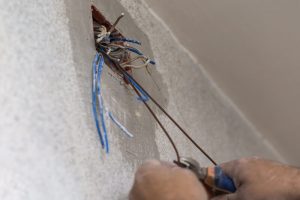
An electrical permit is an approval you get from your building department to go ahead with electrical projects in a home.

In Los Angeles, you will need electrical permits for any kind of electrical works. These include work related to;

  • All residential and commercial buildings
  • Installing a new electrical panel
  • Installing a new sub panel
  • New buildings or addition to a building
  • Any electrical installations over 600 volts.
  • Installations of lighting including exits lighting and security lighting.
  • Installations in hazardous locations.
  • New, expanded, or replaced electrical items
  • Installation of a complicated electrical system as determined by the Department, such as Emergency, Legally Required Standby, Fire Alarm, and Gas Detection Systems.

The Permit Process

To pull an electrical permit in Los Angeles, you must first file electrical plans with the indicated department. These plans and the first step are referred to as electrical plan check. Only when this plan check has been approved or deemed not required will a permit be issued.

Electrical permits in Los Angeles can also only be issued to an electrical contractor with the appropriate license, the property owner, and or an agent representing either the contractor or the property owner.

Why it’s important to pull a permit when necessary?

Pulling a permit in Los Angeles may seem like a hassle to you, but it’s necessary if you want to avoid certain unfriendly situations. Electrical work carried out without a permit is considered illegal. Such unpermitted work can cause even more problems in the future if the option of a resale comes up. There’s also no assurance that the work was done up to code.

Where can I obtain the permit in Los Angeles and how much time is involved?

You can obtain an electrical permit from the local Building and Safety District Office serving your area. For online permits, you can go through Los Angeles County’s Electronic Permitting and Inspection (EPIC LA).

For simple projects that do not require a plan check, you can get an express permit when you apply online.

For small-medium projects, a plan check can take 45-60 minutes and as the projects get larger, plan checks extend to even weeks.

After obtaining the permit, the permit expires within 12 months if work has not started from the time it was issued.

It’s possible to get an extension on your permit, but that might require an extra fee.

How to make obtaining an electrical permit in LA easy

Start by hiring a professional and licensed electrician for your electrical needs. It’s legal, easier, and safer to let this experienced technician pull the permit for your project. All you will need to do is likely to bear the cost.

Licensed electricians can get permits faster and pass inspections easily too. They are also updated on current codes, and this saves you any future problems.

Troubleshooting Your Tesla Wall Connector

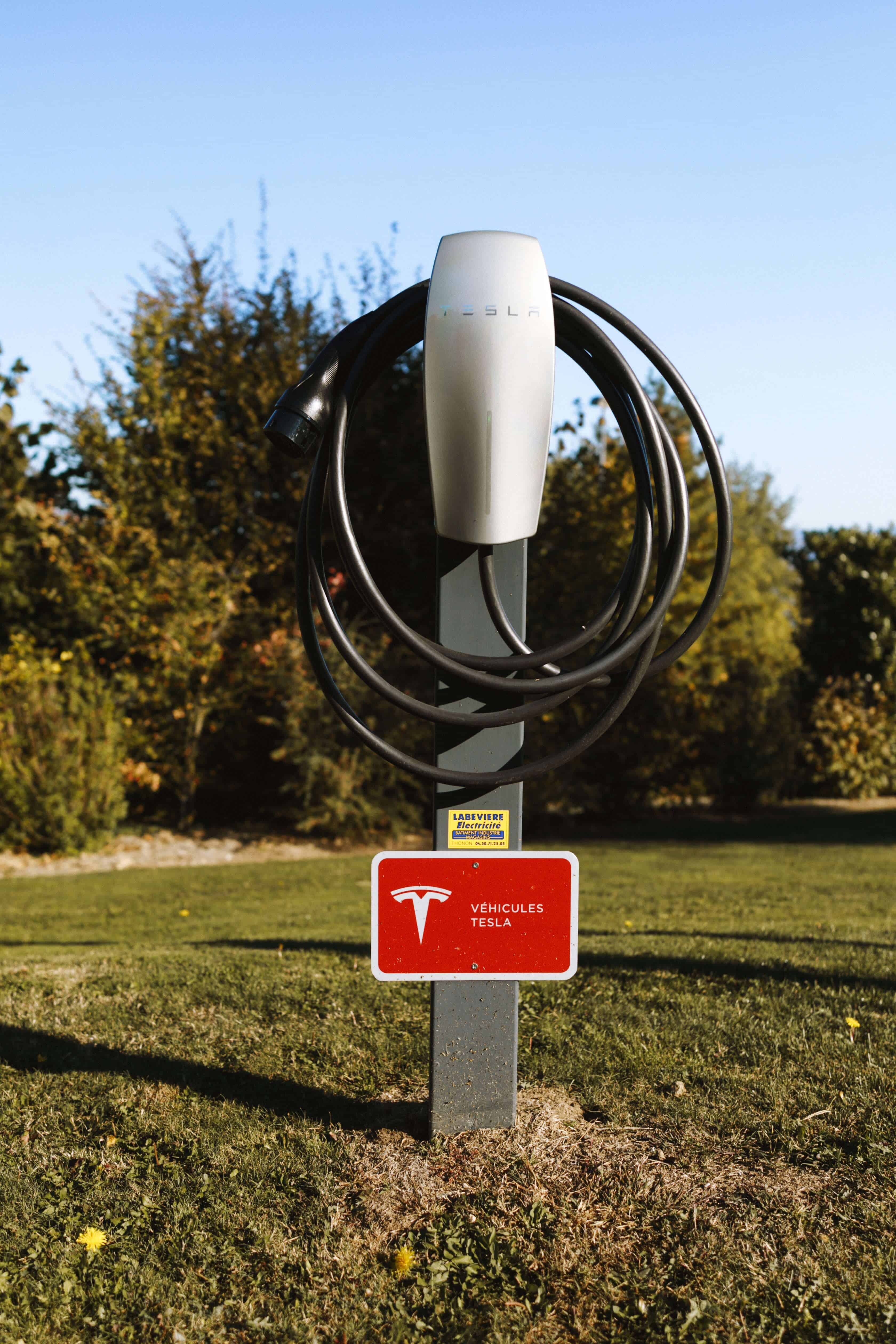
tesla wiringAs reliable as your Tesla Wall Connector may seem, it’s not far-fetched for problems to come up. Sometimes these issues are easy to troubleshoot on your own. Other times, professional help may be needed. Here are some tips and troubleshooting solutions for your Tesla Wall Connector.

No lights on your Tesla Wall Connector

When you turn your Wall Connector on, the indication of power is the lights. If that doesn’t happen it means you have a power supply problem with no power coming from the breaker panel. This applies especially when your Wall Connector has been working fine before.

To solve this problem, check that the power supply is on. This needs a minimal knowledge of your breaker panel and how it works. It usually involves flipping a breaker back into the on position. If nothing changes, it’s likely time to call an electrician.

The electrician will remove the Wall Connector and check that there is voltage present and fix any issues with the breaker panel that may be the root cause.

The Wall Connector shows a solid red

If you have been using your Tesla Wall Connector for a while, seeing a solid red will stand out to you because the Wall Connector usually comes on with a green light. A solid red can mean a few things and none of them are good news. It could mean the Wall Connector is bad or has an internal fault. Either way, a repair or replacement becomes necessary.

What you can do to solve the situation is to first try turning off the circuit breaker. Wait for a few seconds after before turning it back on. If the solid red light persists, then it’s time to contact Tesla.

One red blink to seven red blink

A red blink code pauses for one second and then repeats itself. The good news is from one red blink to seven red blinks, your Wall Connector can give some indication of what problems need to be fixed.

One blink means there’s a GFCI interruption because of an unsafe current path. There might be damage somewhere.

Check the Wall Connector itself, the handle, cable, and vehicle charge port for signs of contact with water or damage. Call an electrician right after to fix the issue.

Two red blinks mean a ground assurance fault has been detected. Call a certified Tesla electrician to handle this. The electrical technician will have to see if the Wall Connector is properly grounded and check all physical connections alongside.

Three red blinks present a different problem, which is a rise in temperature. This can quickly become a fire hazard and should be attended to by an electrician as soon as possible. You can confirm the issue by checking if the faceplate and cable handle are warm to the touch.

In contrast to what you might be thinking, it doesn’t get worse with four red blinks. Four red blinks simply indicate lost internet connection, and you can check the Wi-Fi settings, router, and signal strength to handle this.

Five red blinks mean an issue with power-sharing communication and can be sorted the same as four red blinks.

Six and seven red blinks generally mean an overvoltage or poor grid quality and need either an electrician or Tesla’s assistance.

Contacting Tesla

We recommend that our customers get in touch with Tesla technical support before contacting us or another electrician. We’ve had several customers recently have to have their Wall Connectors replaced by Tesla due to some kind of manufacturing defect. They can help you troubleshoot and do a diagnostic test. Please call 650-681-6133.

Note: For Wall Connector installations where you have breakers tripping, it may likely be an issue with the setting in your Wall Connector which you need to commission.

For WiFi commissioning support:

You may contact Tesla at 877-961-7652 between the hours of 8am to 5pm Pacific time Monday through Friday. Please be sure that you are home with the Wall Connector, you have the TPN (the part number), the TSN (the serial number), and you have connected the Wall Connector to the internet prior to calling. One of the troubleshooting steps is to get the Wall Connector, if it is a gen 3, to the internet. Please select the link below which will direct you to our website which includes the directions on connecting the Wall Connector to the internet. If the Wall Connector was installed the Online Orders department will not be able to assist with an exchange, however we will be able to complete the troubleshooting steps and if the troubleshooting doesn’t work then it may qualify your system for replacement.

How to Understand, Recognize, and Remove Cloth Covered Wiring

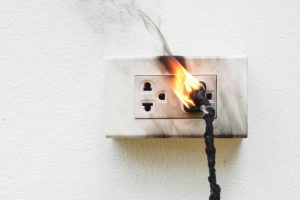
house rewire signs, outlet on fireCloth-covered wiring is a common subject that many homeowners end up faced with. It is often synonymous with old homes and you may not even know you have them. Read on for all you need to know about cloth-covered wiring in this article.

Understanding Cloth Covered Wiring

The simple description for cloth-covered wiring is electric wiring insulated or covered with cloth/fabric material. If it sounds old school, know that it is indeed old school and was the norm between the 1950s and 1970s. It seemed like a good idea at the time, especially since it was affordable and there were no better options.

After the decades of using cloth insulation for electric wiring, plastic insulation was discovered and refined and became the standard for all wiring needs. Cloth-covered wiring is now considered as an electrical hazard because of their many shortcomings.

Why cloth-covered wiring became bad news?

Using cloth as an insulator quickly proved dangerous because cloth material can deteriorate over time. The more brittleness and deterioration occurs, the higher the risk of an electric fire from the heat produce by wires.

Cloth is also an easy target for rodents and insects that can chew on it and expose the wires underneath.

In addition to these drawbacks, some cloth-covered wiring is further insulated with asbestos. Asbestos is known as a dangerous carcinogen to humans. Hence, like the cloth covering wears away over time, the asbestos breaks down and becomes airborne. This puts human lives at risk.

There is also the common issue of cloth wiring not being properly grounded. This presents even more danger to lives and property.

Recognizing Cloth Covered Wiring

  1. Check for knob-and-tube wiring. Knob-and-tube wiring was also widely used at the same time as cloth covered wiring. It comprises ceramic knobs and tubes used for running wires through the walls. This wiring is also considered outdated and unsafe. If you have knob-and-tube wiring, then you likely have cloth wiring because cloth was often used for insulating knob-and-tube wiring with a rubber outer covering.
  2. Check for the manufacturer. You can find the manufacturers or brand names of cloth wiring companies on the cloth-covered wiring. Many of these companies are no longer in business or have been sold off to other companies. Some names to look out for include:
    • Narax
    • Ammcoflex
    • Cirtrex
    • Dutrax
    • Cres-Flex
    • Hatflex
    • Essex
    • Triangle PWC
    • Southwire
  3. Call an electrician. If you are still in doubt or unable to recognize the wiring on your own, it’s best to call a professional electrician or home inspector. These experts will recognize cloth-covered wiring easily and will tell you if you need a house rewire.

Removing Cloth Covered Wiring

It’s good to know that not all cloth covered wiring spell danger for your home or building. The best way to know if you need to remove your cloth-covered wiring is to call an electrician. In cases where you need to remove and replace the outdated cloth-covered wiring in your home or building, this can only be completed by a licensed electrician.

Virtual Events in Los Angeles

If virtual events were hardly a big deal before, they sure are now. Several guidelines to help protect everyone from the pandemic have made it impossible to enjoy most events in public as we did before. Consequently, many scheduled events have been canceled, some postponed, and others going virtual.

In Los Angeles, there are still many things that give a sense of normalcy. Our safe and efficient electrical services at The Electric Connection are one of such. Plus a wide range of virtual events available through various channels or media.

  • LA Food Bowl

The food bowl you’ve always known involved gathering together over a meal. It is targeted at celebrating restaurants and promoting a sense of community. With COVID-19 restructuring the way we do everything, it’s not possible to hold the food bowl event as before. Hence, a virtual version was created alongside a donation program to hold the LA Food Bowl where you are. The event is scheduled for October 17th and features a Cook-a-thon with 30 chefs and celebrities. There’s also a tasty takeout list to keep you satisfied and help local restaurants through this time.

  • We Can Teach You That

Traveling during this time is possible, but traveling safely is what you need to do. LA Times travel writer Christopher Reynolds will show you How To Travel Safely (If You Must) in a virtual event come October 27, 5:00 pm. This event is part of a new virtual series – We Can Teach You – hosted by the LA Times. You can stay updated with this virtual series to gain new and useful knowledge. This travel safe course will include;

  • How to reduce risks as you travel post-pandemic
  • How to fly safely
  • Day trip ideas
  • Real-life stories/experiences traveling since March
  • Advice from local and state officials
  • Update on travel restrictions both locally and internationally.


  • Eat See Hear

Just as it sounds, this virtual show is about a good meal and a good watch or show. The Los Angeles Times kicks off another season of Eat See Hear. You will receive highlights for food trucks and restaurants across LA with the perfect menus for a SHOWTIME Sunday lineup.

  • Festival of Books, Stories, and Ideas

For the last 25 years, the LA Times has brought the Festival of Books, Stories, and Ideas to book lovers, authors, and others interested. Now, due to the pandemic hosting a physical event won’t be possible but that isn’t stopping this 25th festival of books from happening. The event has gone virtual beginning October 18th and lasting over the next 4 weeks. You can follow the festival on social media and secure your virtual seats for this free event.

More and more events are scheduled every day to ensure you keep going and not miss a thing.


Preserving the Charm, Upgrading the Safety: A Guide to Rewiring Your Beverly Hills Home

electrician pulling wires in beverly hills homeLiving in Beverly Hills often means owning a piece of history. Whether it’s a mid-century masterpiece or a classic estate that’s been in the family for generations, these homes possess a level of craftsmanship and charm that is hard to find in modern builds. However, as an electrician at The Electric Connection, I see the hidden side of these historic homes—the wiring behind the walls.

While the architecture may be timeless, the electrical systems often are not. If you’re considering an upgrade, here is everything you need to know about rewiring your home to meet modern standards while keeping your property safe.

Why “Old School” Isn’t Always Cool
Many older homes in Beverly Hills were built more than 50 years ago. Back then, the average household used only a fraction of the electricity we use today. The most serious risk we encounter is outdated insulation—specifically cloth-insulated wiring. Over time, the cloth becomes brittle and disintegrates, leaving bare wires exposed. One small spark near old insulation or dust can ignite a fire. Additionally, we often find knob and tube wiring or ungrounded systems that simply aren’t designed to handle today’s high-tech electrical loads.

Professional Installation vs. DIY: The Pros and Cons
When it comes to a project as complex as a whole-house rewire, homeowners often weigh the costs of hiring a pro versus doing it themselves. Here is a breakdown of how those options stack up:

Hiring a Professional Technician

  • PROS:
    • Safety First: Keeps you, your family, and your home safe from fire hazards.
    • Permit Management: Your electrician handles the paperwork and obtains all necessary city permits.
    • Code Compliance: Licensed pros are up to date on ever-changing local electrical codes.
    • Smooth Inspections: Professional work is far more likely to pass city inspections immediately.
    • Liability Protection: Professionals carry insurance that protects you if anything goes wrong during the job.
    • Speed: An experienced crew can complete a rewire much faster than a solo DIYer.
  • CONS:
    • Initial Cost: It is a larger upfront investment compared to doing the labor yourself. A lot of electricians will provide a ballpark estimate for a rewire by just calling.
    • Finding a Match: It takes a little time to research and find a truly dependable, licensed electrician.

DIYing Your Rewire

  • PROS:
    • Initial Savings: You save on labor costs at the start of the project.
    • Work at Your Pace: You can chip away at the project on your own schedule.
  • CONS:
    • High Risk: DIY rewiring puts lives and properties at risk of fire or shock.
    • Time Intensive: You will spend weeks planning, drilling holes, and running wires through cramped spaces.
    • Inspection Hurdles: Obtaining permits and passing inspections is much tougher for non-professionals.
    • Insurance Issues: Many insurance companies will deny claims for fire damage if the electrical work was done as a DIY project.

Modern Needs: Panels and Fixtures
When you decide to modernize, it’s about more than just safety; it’s about functionality. Modern homes typically require 100-200 amp service panels, whereas older homes might only have 60-100 amps. If your breakers are frequently tripping, it’s a clear signal that your home is crying out for more power.

A rewiring project is also the perfect time to:

What to Expect During a Rewire
We won’t sugarcoat it: rewiring is a major project. It involves running new wires throughout the house, which may require drilling small holes in walls or accessing ceilings. The power will need to be shut off while work is performed, and things can get a bit dusty. However, the right team can complete the job quickly and in a hassle-free manner, leaving your home safer and more efficient than ever.

Protect Your Investment
Your Beverly Hills home is one of your most valuable assets. Don’t let outdated wiring put it at risk. Whether you’re noticing flickering lights or just want the peace of mind that comes with a professional wiring inspection, our team at The Electric Connection is here to help. We’ve been serving the Los Angeles area since 1979, and we know exactly what it takes to bring a classic home into the 21st century safely.

Ready to modernize your home? Give us a call at (818) 446-0888 to schedule your inspection today.