The Electric Connection’s Blog

Your Reviews Matter for Electricians

online reviews for electriciansWe are in the 21st century and as generations pass, things change repeatedly. Things like how customers make choices, the number of electricians in the electrical industry, the need for a solid online presence, and more. The reputation of an electrical company is vital now more than ever and reviews also play a strategic and critical role. People want proof of an electrician’s capability and affordable pricing before hiring. This proof usually comes only in the form of reviews. Hence, every customer’s review matters for an electrician.

What clients look for

As mentioned earlier, a lot of things change every day including customer behavior. New customers want to know if the electrician is experienced. They want to know if they are prompt and known for quality service. Of course, the electrician will have their good qualities pasted all over their website or page. They will try their hardest to convince you of how great their electrical service is. While new customers may take this into consideration, they are hardly spurred to make a favorable decision this way. Statistics show that 84% of customers trust online reviews to give them the insight they need. Also, 74% of customers say online reviews help them trust a business more.

The bottom line is customers want to see reviews. They want to hear what others like them have to say and many times, customers who leave reviews talk about the very details that a new client may be looking out for.

Reviews boost ranking on search results

The search results in question here include queries like “highest-rated,” or “most reviewed.” Many people use similar queries on review platforms to help them narrow down their choices to the best options available. Without a wealth of reviews, some electrical companies will not be included in such search results. If the customer can’t see the company, then they can’t be converted.

Reviews reveal special qualities

Many businesses have unique qualities or service they provide to their clients. Such companies may not be so concerned about telling everyone about this quality but leave it to their customers. Reviews often let you see what is different or unique about a specific electrical company. For example, if an electrical company is always prompt and perhaps offers some extra service, customers who appreciated or enjoyed this would mention it in their review.

Your reviews matter for electricians

Talking about reviews is easy but getting them in the first place can be daunting. Not all customers – satisfied or not – have the patience to leave a review. Some electricians send mails, cards, and try other strategies to get their customers to leave reviews. Some of these methods are successful, others are not. As a customer, your review matters for electricians. Aside from contributing to company growth and expansion, leaving reviews help to solidify a friendly business relationship which comes with its perks depending on how the company operates.

The Review Generator has helped The Electric Connection reach out to their customers and grow their online rating.

How to Find a Local Electrician with Wide Service Area

local electricianFinding a local electrician can prove daunting if you don’t know how or where to look. A local electrician is an electrician you can easily find in your area, state, or region. Several electricians have a wide service area that allows them to serve many areas at once as local technicians.
You should never be in a hurry to choose the first local electrician that comes your way. Doing this can lead to loss of funds, unfinished or worse off projects, and stress. Read on to learn tips to find a local electrician with a wide service area and the expertise for quality service.

Don’t hire based on niceness
It might surprise to learn how many homeowners hire an electrician because he is ‘nice’. Experience has taught such homeowners that ‘niceness’ does not guarantee competence. The ideal thing to do is to find ways to vet the electrician’s skills and experience in completing your service.

Word of mouth recommendations – with proof
A reputable local electrician should be well known within the area he serves and even the other service areas. Ask friends, relatives, builders, local contractors, developers, colleagues, or any resident for a recommendation. When you receive this word-of-mouth recommendation, don’t stop there; run the company through online listings to find out more and check out some reviews.

Search online platforms that represent your area
A simple targeted Google search can give you a good list of electricians to choose from. Put this with your former list and sift through to find someone who fits your needs.

Use your service as a factor
Not all electricians possess the skill and certification for specialized tasks. You can search for electricians who can complete your service needs. You can ask the electrician or make the deduction yourself. An example of how this point is important is – hiring a commercial electrician for your home electrical repairs. That won’t end too well.

Find those with same day or next day services
Most local electricians offer this flexibility. You can get your electrical service completed the same day as the service call or the next day. It is a great benefit when you are in an emergency situation.

Ensure the electrician has licenses valid in your location
Certain electrical standards, codes, and rules vary from area to area. When you finally find a bonded, licensed, or insured electrician ask to see the documents to confirm that they are valid and they can operate in your area. It is possible for an unlicensed electrician to be much cheaper but such a way of saving cost can prove risky and ineffective.

When you narrow your choice down to one or two names, take a look at their websites to see other areas they serve, get a sense of their method of operation and experience. Avoid finding local technicians based on the cheapest one. It does not guarantee quality service.

The Electric Connection is a well-known electrical company serving Los Angeles and its surrounding areas. Contact us for your electrical service needs.

Can I Upgrade to a 200 Amp Service?

panel upgradeIn the past, many homes could get away with using at most a 60 – 100 Amp service. But as technology evolves every day and homeowners are exposed to more and more appliances, 100 Amps can no longer cut it for most homes.

Knowing if you can upgrade to a 200 Amp service panel involves considering a few key points. Stick with these lines to learn more.

You can upgrade to a 200 Amp service under the following conditions:

You need more electrical power
Have you added or do you plan to add any new appliance in your home? If so, don’t be in a hurry to upgrade your panel. Check the amount of power needed by this new appliance. Several appliances require a moderate amount of power that do not need you to make drastic changes to your panel. While power-hungry appliances like an Air conditioner will need much power to operate.

Hence, if you are adding appliances such as cell phones, LED TV, and an incandescent light bulb, there’s no need to worry. Appliances like an air conditioner, electric clothes dryer, electric range, or hot tub can be a reason to upgrade your amp service.

Your home is old
Older homes usually have a lower amp panel and the electrical wiring can be worn out from years of use. This limits the efficiency of your home and certainly calls for an upgrade. You will need a professional electrician to inspect your electrical system and inform you about the status of your wiring.

You want a safer electrical system
100 Amp may not trip breakers now but it is cutting it too close for electrical safety. When you have a larger amperage like 200 Amps, the unused extra serves as a buffer that is safe and flexible for your system. With a 100 Amp panel in a modern home, half of your safe capacity is taken up from simply switching on one appliance. If there’s an issue and you are lucky, the breaker will trip. In older homes, any unlucky situation involving a 100 Amp panel can trigger an electrical fire.

You want efficiency and room to grow
A 200 Amp service guarantees greater efficiency of your home. It gives you room to grow at any time you choose. You might not need it now, but who says you won’t want a backyard pool in the future? Or perhaps a basement bar or one of these power-hungry devices you do not have now?

The electrician says so
The most dependable way to know if you can upgrade to a 200 Amp panel is to ask an electrician. A professional electrician will check your current electrical system and give accurate advice on what is needed. If you do need an upgrade the electrician can provide that as well.

A panel upgrade is a serious project so be sure to hire only a licensed, qualified, and insured electrician. Reach out to us here for this service and more.

How Much Power Do Window AC Units Use?

air conditioner powerWhen you are not up for the huge investment on a central AC, a window AC may be your next best option. A window AC is typically installed at the window but unlike a central AC, they only service the rooms they are installed in. Only a central AC can cool all or many rooms at once. Read on as we explore what a window AC could mean for your energy bills.
A window AC unit consumes less than 1/3 of the energy used by a central AC. It is a cost-effective option when you have just one or a few window ACs. It is vital to know that the power demands can increase drastically if you install many of these units.

Before installing an AC, it is important to confirm that your electrical system can accommodate the new addition. This is because regardless of the energy-saving capacity of a window AC, it is still more powerful than almost all other units in the home.

A professional electrician can advise you on the installation and equally help to upgrade your panel, create dedicated outlets, and all other electrical components required for the unit. A window AC comes in various sizes and capacity, which also influences the power it consumes. Typically, a standard outlet is suitable for a 115-volt window unit with a 15-amp requirement. However, a larger window unit with between 125 to 220 volts and higher amperage will require a dedicated outlet.

A window unit is cheaper to obtain than other options like a central AC unit and a Ductless unit. But it lacks in the kind of power other air conditioners have.

If you are wondering about other options for AC and cooling, a ductless air conditioner might be a good choice. It costs more than the window unit initially, but it also packs more power. Also, in the long run, a ductless air conditioner saves you more money on the energy bill.

Central AC units are a great option, but they contribute a large chunk to the electric bill. If you must use them, employ energy-saving tips to cut down on energy costs.

Who should install a window AC unit?

Only a professional and licensed technician should install your window AC unit or any other unit. At the Electric Connection, we are experts in installing units like the AC to enhance comfort in your home. You can reach out to us to help you decide on the best energy-saving methods and install your AC unit.

What to Do When Your Outlet Stops Working

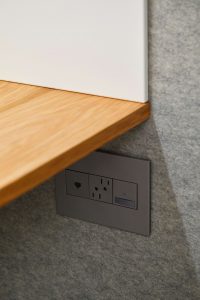
outlet stops workingWhen one or more outlets in the home suddenly stop working it’s easy to assume the worst. Before you panic, it’s good to know that there are some things you can try to solve the problem. However, when these don’t work, be sure to call in the pros.
Tips to troubleshoot your electrical outlet

  • Confirm the problem
    When one outlet stops working out of the blue, confirm that there is a problem. Plug the same appliance to other outlets in the home and another appliance to the suspected outlet and working ones. This helps you identify the faulty outlets and their location. After this is done, unplug all appliances from the dead outlets and mark them for easy identification later.
  • Check the circuit breakers
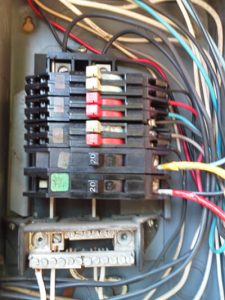
    Next is to check for a tripped breaker or a blown fuse. The circuit breakers or fuses can be found in the electric panel. The electric panel can be found by following the electrical wires from outside the home to the point where they enter. It is usually installed in the garage, utility room, or basement.

    Check the panel for any breaker whose switch is not in line with the others. Tripped breakers can be reset by taking the switch to an OFF position and then back ON again. Make sure you hear a click in the OFF position before switching to the ON position.

    If the breaker trips again, there is no need to overdo it. Simply call an electrician and avoid using the outlet.

  • GFCIs Check
    The Ground Fault Circuit Interrupter outlets are those strange-looking outlets you see in some areas of the home where there is a higher risk of electric shock. GCFIs protect you from electric shocks by shutting off the power when a leak or unusual electric surge is detected.

    GFCI protected outlets are often labeled to help you point them out, but it is also common for those labels to fall off after some time. Test and reset the GFCI by pressing the reset button. If the GFCI refuses to reset and just keeps tripping each time you press it, stop the action and call a professional at The Electric Connection.

  • Electrical outlet tester
    An electrical outlet tester is like an easy way to troubleshoot your faulty or dysfunctioning outlet. Plug the tester into the outlet and read the light patterns. The tester easily shows if the outlet is mis-wired or improperly grounded.

Safety tips before troubleshooting

  • Ensure that there is no bare wiring from the outlet or the appliance you plug into the outlet.
  • Don’t force the wrong sized or shaped plug into the outlet.
  • Don’t overload your outlets.
  • If the outlet sparks, shut it off and call an electrician.

Should I Install a Wall Outlet Safe?

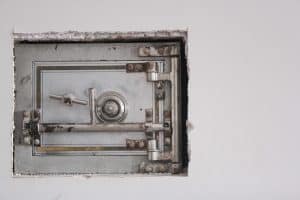
not a wall outlet safeThink about it; a wall outlet safe actually looks like a wall outlet. So no one would think to look there for your valuables. A conventional safe, however, is a different matter. It stands out as an easy target for a burglar or friendly neighborhood thief. You may prefer to do without the stress of having a large showy safe. Therefore, it’s no surprise that wall outlet safes are getting more popular.
How does a wall outlet safe work?

Like we stated above, a wall outlet safe looks like a regular wall outlet. It is made of cheap plastic and is easily available online or in local retail stores.

It is simple to install and safe because there is NO electricity involved. The outlet safe should be installed like a normal electrical outlet in strategic parts of the room. Once installed, you can open the safe to stuff your cash, jewelry, or other portable valuables and close the outlet safe right back. Another good news is, you can have as many as you like or need.

Steps to install your wall outlet safe

Tools needed are drywall saw, pencil, and the wall outlet safe kit.

Unpack the kit and read any instructions that follow.

Use the outlet template to trace out an outline on the wall in your chosen location. Make sure the distance from the floor to the outlet is the same as the other real outlets in the room.

Use the drywall saw or any saw that comes with the kit to cut around the outline, creating a space for the outlet safe.

Place the outlet safe in the wall and make sure the flanges on the sides lock against the drywall; precisely at its front. This holds the safe in the correct position.

Next, close the safe by fitting the cover plate with the fake receptacle over the opening. Push the screw into the center of the safe from behind.

There will be a key in the kit that you would use at this time to turn the screw clockwise until it locks into place.

If your wall outlet safe is in an open location, consider plugging in an appliance or dummy charger to make the safe or outlet look as real as other working outlets.

You can reach out to us at the Electric Connection anytime for advice on choosing the right wall outlets safe or any electrical needs.

4 Ways You Can Save on Your Electric Bill Next Month

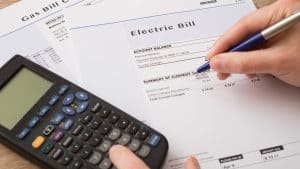
save on electric billThe crazy amounts of money most families spend on their monthly electric bills is a problem most households are wondering how to counter. From air conditioners to water heaters almost every equipment in our homes today use electricity. Because of this, the secret to making your electric bills affordable is through ensuring the appliances in your home are not overusing the power.
You have to ensure you are using energy-saving types of equipment. Second, ensure they are correctly utilized to make sure they do not misuse the energy. A faulty outlet can affect the amount of energy being used. The following are ways you can apply in your home to help you save on your electric bill.

  1. Efficiently Insulate Your Home

    You might be wondering why your house quickly loses heat even when the air conditioner is on. This is because the heat generated rises and promptly leaves your home through the various spaces present on the structure. To prevent this from happening, you must ensure your house is correctly insulated, preventing the heat from escaping.

    Without insulation, you will incur extra costs on your electric bill. The air conditioner will have to be working the entire time to ensure the temperature in your home is to your required standard. For proper insulation, you can add items such as fiberglass to your home to prevent heat from escaping. Adding such material will add value to your home while still reducing your electric bill.

    You can also do weather-stripping- which involves sealing operational elements such as windows and doors. Another method you can resort to using is caulking. It involves filling of cracks and opening in between the components in your home.

  2. Use Energy Saving Appliances

    Using energy-saving types of equipment in your home can also help you save on your electricity bill. For example, take into consideration the old models of appliances, they use considerable large amounts of energy compared to the modern types of equipment. Because of this, if in your home you are still using some of these old types of equipment, then it is time you get yourself the modern ones.

    Make sure every equipment in your house saves you energy. From the refrigerator to the water heater ensure they all help you conserve energy. Energy star appliances might be expensive if you compare their prices to other normal appliances, but the amount of money they will help you save will make buying the seem like the best decision you ever made.

  3. Utilize a Programmable Thermostat

    By using a programmable thermostat, you will likely save ten percent of your electric bills. How is this possible? A programmable thermostat prevents your home from losing heat or the cooling effect during seasons with extreme temperatures such as winter and summer. It achieves this by ensuring the temperature is high or low in your home during periods when no one is affected by such a change, for example, when everyone is at work.

    For instance, during the winter season, you can set your thermostat to allow the temperature in your home to rise when everyone is at work. You can then set it to turn on the air conditioner just minutes before the time you usually arrive back from work. This way, you will come back home to a conducive environment. The reduced cooling effect during the day will ensure you save a substantial amount of energy, hence reducing your electric bill.

    By frequently turning your programmable thermostat down during winter and up during the summer, you will be able to conserve energy. If you compare the amount of money you will spend when installing a programmable thermostat and the amount you will save, it is a worthy investment.

  4. Use cold Water for Laundry

    You can save a substantial amount of money on electric bills if you decide to do your laundry using cold water.  This is possible because ninety percent of the energy your washing machine uses is for the heating of water. Consider the number of times everyone in your family does their laundry monthly if you all decided to switch to using cold water, then you will significantly reduce your electric bills.

Final Thought

With regards to saving money on your electric bills, recognize the things in your home that utilize a substantial amount of energy. Items such as washing machines, water heaters, air conditioners, and dishwashers are some of the appliances that use up a lot of energy.

Make sure the models you are using are energy efficient to ensure they do not hike up your electric bill. With your air conditioner, the more you turn the temperature up during the hot seasons, and lower it during the cold seasons, the more you will save in electric bills. The above are ways that will ensure you do not overspend on your electric bills.

Which State Pays the Most for Electricity?

Many Americans dread opening the energy bill when it comes. With your electric bills spiking all the time, it’s only right to wonder if you are alone in this situation. In fact, you may just wonder if another State might offer you cheaper electricity.

As your reliable electrician technicians, we come through with the information you need to satisfy this curiosity and probably make a decision to move.

Most Expensive States for Electricity (as of June 2019)

Hawaii – Hawaii sits top of the list with 32.45 cents per kWh. Hawaii has the most expensive electricity rates at any time. It relies heavily on petroleum as the main source of power, and this resource is consistently costly. The State is moving towards using solar energy and geothermal energy sources.

Alaska – Alaska’s electricity is like that of Hawaii. The State depends on petroleum liquids as well for their electricity. The rate is 23.51 cents per kWh. And also like Hawaii, Alaska is harnessing geothermal energy sources for renewable energy.

Connecticut – The State has an electricity rate of 23.1 cents per kWh. It is the most expensive state in the Northeast. The State is working towards obtaining electricity from renewable sources.

Least Expensive States for Electricity (as of June 2019)

Louisiana – Louisiana is popular for its oil refineries. Its high number of industries make it one of the highest energy consumers in the country. The electricity rate in the State is, however, 9.66 cents per kWh. It is the lowest dropping below Washington this year.

Arkansas – More than half of the State’s energy is generated from coal. Arkansas has an electricity rate of 10.35 cents per kWh.

Washington – For years, Washington always ranked the lowest in electricity rates. It is the largest hydroelectric power producer in the U.S. The electricity cost is 9.90 cents per kWh.

Why the electricity costs differ by State

Electricity is sourced from the conversion of other raw materials. Hence, the electricity rate for a state usually depends on their raw materials, the cost of converting them to electricity, and electricity use. So, states like Hawaii have expensive electricity rates because they depend on expensive materials like crude oil. Louisiana, on the other hand, depends on one company with several power plants. This makes their electricity cost low. Different seasons also contribute to electricity costs.

What you can do

Not everyone is lucky to live in the States with the lowest electricity costs. Even when you do, who wouldn’t want to beat their electricity bill down to the minimum? Tips you can use to reduce those figures on your bill significantly include:

  • Change your light fixtures to energy saving options; Use dimmers and LED bulbs.
  • Get a smart thermostat; a smart thermostat offers flexibility and control. It helps you save up to 10% of energy.
  • Install ceiling fans; using ceiling fans can save as much as 30% on the bills.
  • Dress the part; Wear light clothes during hot days and thick clothes during cold ones.
  • You can also opt for an audit to know how or where to save from the Electric Connection.

What is the Difference Between AC and DC?

ac dc voltageElectricity is almost as important as oxygen nowadays. It powers everything around us in one way or the other. Just like electricity is useful, it can also be dangerous. But we will not discuss the dangers here.

Electric current flows in either of two ways–AC or DC. For years, these two types of current have been compared to decide who is king, but it has been a tough battle. What really is the difference between AC and DC? Read on to find out.

AC which is Alternating Current was developed by Nikola Tesla. It is a current that switches direction; sometimes going backwards or forwards. It is represented by a wave-like current. DC is Direct current developed by Thomas Edison and it flows in a steady single or forward direction. For AC the cause of its switching direction is a rotating magnet along the wire. This is unlike DC which has steady magnetism along the wire to give it a forward direction.

AC is better suited for traveling longer distances and it provides more power. DC, on the other hand, would lose its energy over long distances and is preferable for shorter distances.

In a circuit, DC flows in one direction while AC reverses its direction.

How the differences between AC and DC are applied

AC is most commonly applied in the home or in offices. Transformers are used to aid the change in voltage from high to low. AC current is used up by home appliances like your TV, Air conditioner and more.

DC supplies electric current to electric devices that use a battery. A good example is your mobile phone or radios. A laptop uses both AC and DC currents. AC current flows from the circuit through the charger to the box in the middle. This box known as a power adapter converts the AC current to DC.

AC and DC remain widely used for different purposes in the electrical industry.

A Funny Rivalry

History has it that in the 19th century, Edison and the Westinghouse had a sort of war over which current was superior. Apparently, Edison had patents invested in the wide use of DC and he did not take kindly to the competition with AC. Edison decided to prove that DC was superior with demonstrations of AC killing large animals. For that time, his experiments to show that AC was dangerous caused many to turn to DC. But soon the limitations of DC were discovered and AC became dominant.

What Uses the Most Electricity in Your Home?

Home appliances are necessary for comfort and efficiency. They literally make life easier for everyone. The only problem is that they all demand electricity to run and some use up much more power than others. Hence, while you enjoy the convenience of warm water or cool air regularly, your electric bills keep rising higher.

A typical home uses energy in the following way:

  • Air conditioning and heating – 46%
  • Water heating- 14%
  • Lighting – 9%
  • Appliances – 13%
  • TV and other media – 4%

Of course, these numbers might shock you. If you are searching for the best way to cut down on your energy bills, you must start by knowing what uses the most electricity in your home. These big eaters will have to be controlled to help you save significantly. Read on to learn about them.

Air conditioning
The air conditioner is one of the most demanding electrical appliances in the home. On its own, this appliance takes up to 19% of electrical power. It is frequently used during summer months to keep the heat at bay and enjoy cool air.

Saving on the air conditioner can be tough but also easy with the right practices. Start by getting an upgrade to a smart thermostat. The thermostat will make cooling schedules work better to save energy. Wear light clothing in the house and sometimes use cost-efficient methods of cooling. These include opening up a window and using fans.

Water heater
The water heater is used more often than the air conditioner, especially on cold days. We rely on water heaters daily for various needs such as showers, washing dishes, and clothes.

You can save on energy by reducing the temperature of your water heater. Change the presetting to 20 degrees and combine this with other saving tips such as low-flow showerheads and faucet aerators. Take shorter showers and use cold water for washing sometimes. Maintain your unit with a professional electrician to improve its efficiency.

Lighting
Saving on lighting is quite simple and should be almost unnecessary if you have taken the right precautions earlier. Throw out the old-school incandescent bulbs and replace them with LED lights. LED lights last much longer and use far less electricity.

Refrigerator
A typical home refrigerator runs for 24 hours on every day of the week. It only goes off when the power does too. But like any other appliance on this list, the refrigerator consumes as much power as it gives. If you don’t have a refrigerator yet, the good news is you can just buy the new and energy-efficient models. If not, you can employ a few strategies to cut down.

Proper maintenance is important to help your appliances work better and use less power. Clean the vents and coils of this appliance regularly and replace any broken parts like the rubber gaskets. Don’t keep the door open for too long and set the refrigerator’s temperature lower.

All saving tips must be practiced consistently to see results.