The Electric Connection’s Blog

Reasons to Upgrade to a 200 Amp Service

You certainly love the confidence and convenience of plugging in any appliances you need whenever you need them. You love this so much that it becomes easy to forget that your electrical panel cannot give more than its capacity.

According to experts, electricians, recent electrical codes, and homeowners who have had unique experiences, the standard capacity for an electrical panel is a 200 amp service. If you have less, then you probably require an upgrade. Here are all the reasons why.

Amps and Your Electrical Panel

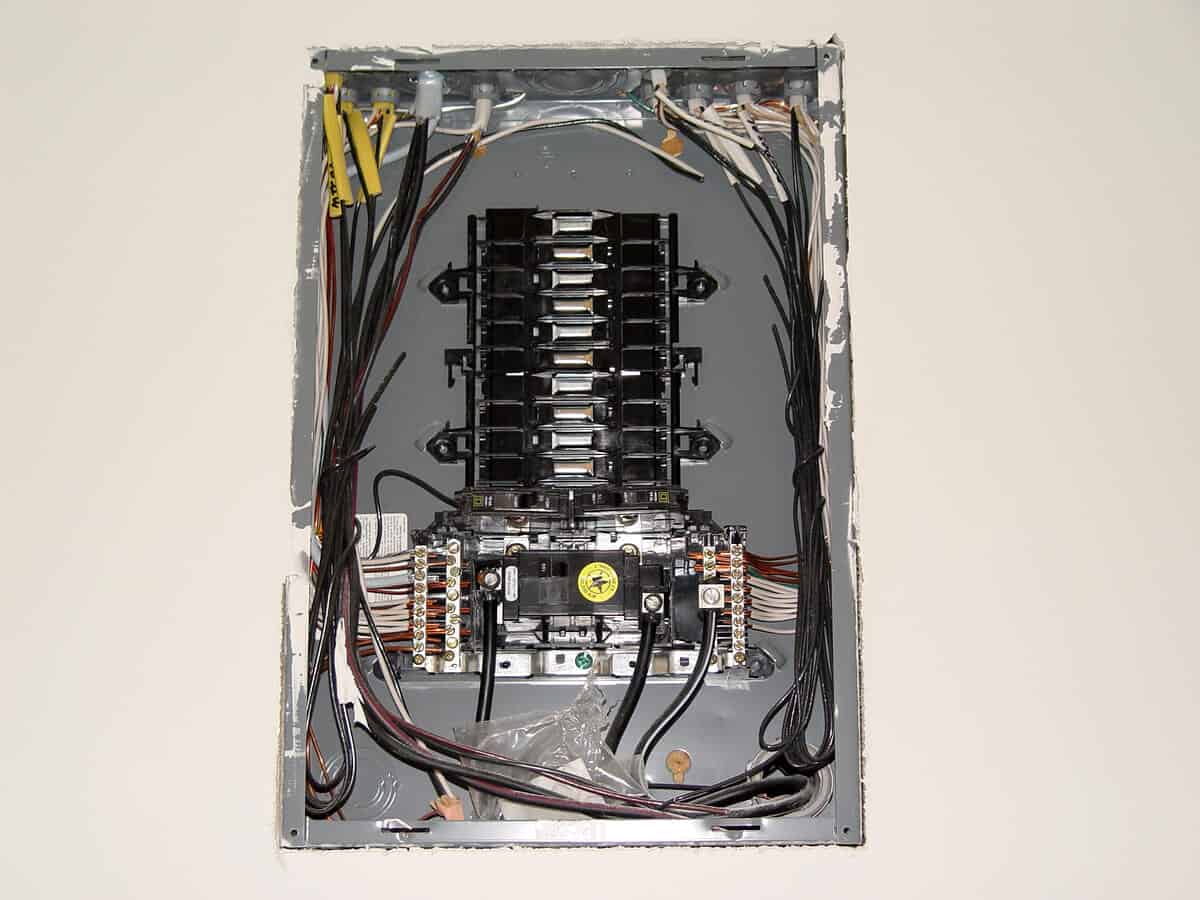
The industrial grey box in that safe, dry area of your home distributes electrical power across circuits that serve you. This box is the electrical panel or breaker box, and every panel has its dedicated capacity. Depending on how much power you need, your electrical panel can be between 100-400 amps.

Old homes often used 60-100 amps panels because they had fewer electrical demands. Using similar sized panels in these modern times can be insufficient for your home needs. It can lead to fire hazards, lights out, faulty appliances, and much more.

Why upgrade to a 200 amp electrical panel

  1. To enjoy increased capability and safety

Electrical panels often work at a certain maximum capacity. This helps to ensure the safe working of the panel. Going over this safety threshold can not only cause your breaker to trip, but can also lead to a fire caused by overloading circuits/outlets.

  1. More circuits

With an upgraded 200 amp panel, you get enough room for dedicated circuits. This further improves electrical safety and allows you to run an increased number of appliances and more power demanding appliances without your breaker tripping.

  1. Future demands

Switching to a 200 amp breaker is one of those good decisions that helps you prepare for the future. With this service upgrade, you can add new devices, remodel your home, and do much more without worry.

  1. Everything is just easier

Another solid reason to upgrade to a 200 amp service is the increased efficiency you get to enjoy. Everything is simply much better and easier with a 200 amp panel. The panel is easy to reset and repair with compatibility for GFCI circuits.

How to know you need an upgrade

  • Breaker tripping frequently
  • Dimming lights, especially when appliances are turned on
  • Buzzing or crackling sounds.
  • Breaker won’t reset

Always confirm the exact source of your electrical issues from your electrician.

Humming Noise from Electrical Panel

You are right to worry about suspicious buzzing or humming electrical noises around your home. Electrical systems are designed to work quietly, offering you power and efficiency with no hassle.

Your electrical panel controls the power supply in your home while keeping you safe from electrical hazards. Hence, any annoying or worrying sounds from the panel could indicate problems of different kinds. See what these noises could be and what they might mean below.

  1. A light buzzing sound

By a light buzzing sound, we mean a faint buzzing sound from your breaker. It’s not the type to keep you up at night or be highly noticeable. The cause is often current flowing through the breaker, like water flowing in some direction. This light buzzing sound is generally normal and harmless. But, if it gets louder or involves clicking and other horror-movie sounds, be sure to call an electrician.

  1. Medium humming sounds

This sound is louder and more obvious than a light buzzing sound. It can take various forms such as a sizzling noise, sparking, a clicking noise, or a humming breaker. So you can hear sizzling sounds with occasional sparks and this certainly means something is wrong with the circuit breaker. The cause may be frayed and loose wiring which is incredibly dangerous and an electrical hazard. It is necessary to call an experienced electrical technician to replace and repair the wiring quickly.

  1. Loud and continuous buzzing sounds

Now, this is what keeps you up at night. Constant loud buzzing sounds can be disturbing because they are loud. The cause often stems from the breaker not tripping when it should, and this, in turn, indicates that the breaker is bad. Your electric breaker shuts off the power supply during a power surge to protect your home. But when it fails to do this the flow of current to the wires increases leading to a buildup of heat, the loud buzzing sound, and an electrical hazard. Circuit breakers go bad for several reasons such as wear and tear and a faulty panel. This humming noise should not be ignored, and an electrician should be called immediately.

A buzzing and humming sound is normal if…

The sound isn’t loud as we have described above.

If the buzzing sound starts right when your AC comes on but stops once the appliance is working smoothly.

Trying to solve this electrical issue yourself can be very dangerous. Therefore the first and safest way to solve humming and buzzing noise from your electrical panel is to call a licensed and experienced electrician.

It may be time for an electrical panel upgrade — contact an electrician for more information.

Tesla Wall Connector: Gen 2 VS Gen 3

Earlier this year, particularly January Tesla unveiled the 3rd generation wall connector. Since then everyone has been trying to know what’s good and what’s better with this new charger. If your Gen 2 Tesla charger is working just fine, why would you possibly be motivated to consider Gen 3?

We answer all the questions in this review below.

What’s Different?

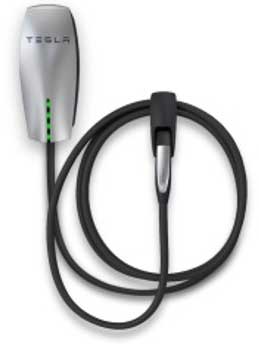
Appearance. It’s almost the first thing you notice with this Gen 3 EV charger. The new electric charger’s fresh look comes as a glass front display on a white background, keeping the brand name font and color on its surface. In contrast, the Gen 2 Tesla EV charger has a plastic silver or black cover.

Power. The Gen 2 wall connector has always been a more powerful option, as it’s able to deliver up to 80 amps of power to your electric car. The Gen 3 however is limited to a maximum of 48 amps. But wait before you conclude, it’s important to remember that there are no electric vehicles – regardless of brand – that can charge at over 48 amps. Aside from this being Tesla’s way of sticking with the maximum power output, electricians can tell you that fewer amps mean less heat. Gen 2 electric chargers have often had overheating and sparking problems because of the heat.

Cable length. For the Gen 2, electric car owners can enjoy the flexibility of a 24 feet cable. This new Gen 3 charger falls short in this area with only 18 feet from Tesla. This can count as a significant disadvantage in most cases. Seeing as a standard 2-car garage in the United States is a 24’ by 24’ it’s vital to have a cable that can reach most corners.

Cable size. This will probably bring a smile to your face as Gen 2 users are all too familiar with the heavy and thick cable of Gen 2 electric chargers. With Gen 3 electric car charger the cable is lighter, thinner, and easier to manage. This also contributes to making the entire charger weigh less. It’s a good advantage from Tesla and one users will enjoy.

Wi-Fi. For all those who are tech-savvy and convenience-conscious, it’s wonderful to hear that the new Tesla charger is Wi-Fi enabled, and it allows you to connect the unit with your smartphone. But at the same time, some users have mentioned having no connection with their Gen 3 charger and app, while others say the smart charger can connect with the car. The use comes mainly by accessing the network with your computer to get updates and set up the charger. There is a strong possibility of more updates with the Wi-Fi from Tesla.

Load sharing. The former charging unit allowed load sharing with up to 4 connected units while the new Gen 3 allows load sharing for up to 16 devices wirelessly.

Cost. To our amazement, the cost of the Gen 3 electric car charger is the same $500 price as the older Gen 2 unit. It’s safe to assume that the various limitations on the Gen 3, when compared with Gen 2, helped cut cost and make this elite charger affordable.

How Do Electricians Rewire a House?

electrician pulling wires through wallRewiring your home can be a tough or easy process depending on how you approach it. However, it’s an electrical project that must be done once it’s necessary. It’s good to wonder what’s involved and how electricians rewire a house. Read on as we explore this.

What’s involved in rewiring a house?

The first thing to know is that rewiring can be messy and disruptive despite how much your professional electrician tries to keep this smooth and easy. The walls will have to be drilled into, and the flooring lifted in some cases. Your electrician will;

  • Install new cables
  • Rewire sockets
  • Add or move outlets, switches, light fixtures, and so on.
  • Fit new back boxes on outlets and switches
  • Add wiring for a smart home if needed.

Also, home rewiring projects usually occur in two stages, which are;

  • Replacing circuits and back boxes, cabling, and wiring for the first stage.
  • The second stage involves installing lighting fittings, faceplates, switches, testing, and setting everything up for use.

How is a home rewired?

  • Step 1 – Get the required permits and codes

A rewiring project will need a permit from your local building department. The electrician will pull the permit while you cover the expenses.

  • Step 2 – Access the walls.

Depending on the condition of your home (lived in or vacant) the electrician will have to determine how he plans to access the walls of your home. After making this plan, he will figure out any new cable locations too. Most of the new wiring will have to be run through the attic and crawlspace before entering the walls. With a plan in motion, the electrician will shut off power to your home to begin.

  • Step 3 – Drill new holes and rewire outlets

It might become necessary to drill new holes to rewire outlets, switches, or install fresh wiring for future appliances. A professional electrician with skill can do this easily and protect your walls from excessive damage.

  • Step 4 – Determine the number of circuits

Chances are you are rewiring your home because it’s an old home. Most old homes lack enough circuits to meet the demands of modern homes. A professional electrician is updated and knowledgeable of the recent National Electrical Codes and can identify the appropriate number of circuits following these guidelines.

  • Step 5 – Replace your service equipment

Rewiring your home can mean changing the wiring in addition to replacing your service panel. It’s up to your licensed electrical technician to find out if your electrical panel needs to be repaired or replaced to suit the new wiring.

When is rewiring necessary?

Rewiring offers many benefits such as more power, efficiency, and safety in your home. But it can only be done when necessary. You can call an electrician to see if you need to rewire your home in any of the following situations;

  • You live in an old home
  • You are planning on a major renovation
  • You are adding new major appliances
  • Your electric system is unsafe

How to Hang a Chandelier

Chandeliers are the most elegant lighting fixtures with the ability to switch up the appearance of any room. One chandelier hanging from your ceiling in the right spot can create that sophisticated look you’ve always wanted.

Unfortunately, when it comes to hanging a chandelier, many homeowners think it’s a long and confusing process. This holds you back from purchasing that exotic chandelier and you couldn’t be more wrong.

Hanging a chandelier can be easy and quick with the right information. You can DIY this or ensure your convenience and safety by calling a professional electrician near you.

Start by choosing the appropriate size, and design for the spot you want to hang the chandelier. Next, get the right tools which include;

  • Screwdriver
  • Wire stripper
  • Ladder
  • Plier
  • Tape measure
  • Electrical wire tester

Here are the steps to install a chandelier.

You would either be installing your chandelier with a chain or hook, as these are the most common.

First, turn off the electric power to the room you will work in. This can be done with the switch at the circuit breaker. Also, turn off the light switch in the room itself. These steps are to ensure safety as you install the chandelier.

Next, unpack the chandelier and read all the manufacturer’s instructions. Reading the manufacturer’s instructions helps to serve as an additional and accurate guide on what to do as you install. You can identify details like chain length from the manufacture’s instruction.

Prepare the ceiling electrical box. Unscrew the canopy and examine the wires that will power your new chandelier. You should see three separate wires (black, white, and copper wires). Check for damaged wiring and use a voltage meter to check for a hot wire. If all is fine with your junction box, move on to the next step. If not, you will have to fix any damage first and probably call an electrician at this point.

Now, install the mounting bracket over the junction box in the ceiling. At this point, you need to go back to the manufacturer’s instructions to assemble your chandelier.

If you are hanging a chandelier chain, measure the appropriate length and thread your wire through the chandelier chain. Make sure you give room for excess wire when threading.

Open the electrical box in the ceiling and attach the threaded wire from the chandelier to the corresponding wires in the ceiling. In most cases, you will have a black and copper wire from the chandelier. Use a wire stripper to strip off half an inch of insulation from the chandelier wires. Attach the ends of the black chandelier wire to the ends of the black wire in the junction box. Do the same for the second wire.

Tuck the wires back into the junction box and cover it up.

Install your chandelier bulbs and switch the electricity back on to enjoy your working chandelier.

If you would rather avoid the hassle, call an electrician here today for easy and fast chandelier installation.

What’s the Cost To Replace Federal Pacific Electric Panel?

panel upgrade los angelesA safe electrical system is invaluable to every home and if you have a Federal Pacific Electrical Panel (FPE), replacing it is the best solution to ensure your electrical safety.

Federal Pacific Electrical Panels are commonly found in homes between 20 and 70 years old. These panels were first introduced by Reliance Electric in the 1950s and quickly became installed in millions of homes across the country. It was soon discovered that FPE panels were unsafe and present a great risk to homes that use them.

Your home’s electrical panel distributes electrical power safely across all circuits. It is also built to ensure protection by tripping off in situations like a short circuit, circuit overload, power surge, and so on. If the breaker cannot do this, the chances of an electrical fire starting increase dangerously.

How an FPE breaker puts your home in danger.

According to reports from the United States Consumer Product Safety Commission (CPSC), Federal Pacific breakers may fail to trip during an overload or short-circuiting. FPE breakers have recorded high rates of not tripping when necessary for your electrical protection. It was also discovered that the breakers tend to enter a lock-up. A lock-up describes a situation where a breaker that has tripped once will never trip in the future regardless of dangerous conditions like an electrical overload.

Studies estimate over 2,800 electrical fires caused each year by a Federal Pacific Electrical Panel that didn’t trip.

Most of the unreliability of the panel is due to the use of cheap materials in its manufacture and their limited original design.

Distinct risks and problems posed by a Federal Pacific breaker also includes;

  • The crowded wires often found within the panel box.
  • The breakers to do not switch off even in the OFF position.
  • Arcing occurs at the bus.
  • The Federal Pacific breakers trip unexpectedly when the dead front cover is removed.
  • Breakers are often not tightly connected to the bus bar.

Electrical inspectors always encourage homeowners to replace and not repair a Federal Pacific Electrical Panel. Electricians may also hesitate or refuse to fix problems with these panels because they cannot guarantee the results or your electrical safe afterwards.

Identifying a Federal Pacific Electrical Panel

You may have a Federal Pacific Electrical Panel if your home is as old as between 20 to 70 years. Since the company no longer exists, you can’t purchase a new FPE panel. It can only be present if it was installed in older homes. You can identify an FPE panel with the labels or logos on the front cover. The common appearance is an orange and white label.

You can also look out for the name Stab-Lok written inside the panel or on the breaker. A signature red label across the front of the panel is another indication.

The cost of replacing a Federal Pacific Electrical Panel may vary across electricians, location, and other factors. The replacement can generally cost anywhere from $1500 to $2000, and even more.

The replacement will include any necessary repairs, rewiring, moving the panel location, and installation that are up to recent codes.

What’s that Electrical Buzzing Sound in the Wall?

hummingYour house is not the scene of a horror movie. So, in most cases when you have heard a certain buzzing sound more than once, it’s probably real and not your mind playing tricks.
What’s normal about electrical buzzing sounds?

Electrical appliances do make sounds caused by the electricity itself. This is thanks to the alternating current in electric wires which cause fluctuations or irregularity in magnetic fields. The fluctuations, in turn, produce vibrations which play out as harmless, quiet sounds.

The twist to this, however, is that not everyone can hear the sounds of their electrical appliances. Only very few people who are attuned to the sound of electricity can. For audible sounds to be created, there has to be an increase in voltage.

When is an electrical buzzing sound no longer normal?

When the noise, hum, or buzz becomes louder than it should be, then it’s time to worry. An electrician can help you point out the source of the buzz and its cause.

An electrical buzzing sound can also be referred to as a mains hum. You can often hear a mains hum which is above 60 hertz around your refrigerator or other large units in the home that operate on a motor.

Beyond this, a mains hum can indicate a problem in your breakers or wiring. If the loud sound seems to come from a breaker, shutting it off may be a bad idea. Hence, contacting an electrical technician is the best thing to do.

If the noise comes from an appliance or fixture, you can shut it off immediately before calling a professional electrician. An electrical buzzing sound from a lighting fixture might only require you to change the bulb to fix the problem.

Buzzing sounds from the wall usually indicate old or damaged wires. You can shut off the power to the circuits in that area to stop the noise and call an electrician.

Wall outlets can be another source of an electrical buzz and the culprit is often improperly grounded wiring or increase in voltage that overwhelms the wiring.

It’s important to attend to electrical humming sounds as soon as possible. If the humming sounds do indicate a problem, then there is a risk of electrical fires and the issue getting worse than it is. Getting professional help on-time serves to protect life and property. Do not attempt to DIY the issue as it can only make things worse and put everyone around you in danger.

Signs of Electrical Problems in Homes in Southern California

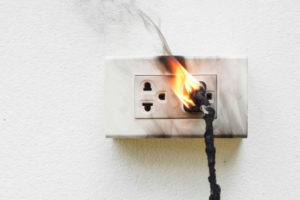
outlet on fire due to electrical problemYour electric system works 24/7 providing the power you need to make life easier. While you might wish this efficiency can last forever, this is usually not the case.
The good news is, despite how complicated electricity can be for inexperienced eyes and hands, there are signs of electrical problems you can look out for as a homeowner in Southern California.

Staying alert or watching out for these signs can protect your home from severe issues like electrical fires. It can also help you spend less on repairs or replacement when the problem is discovered on time.

Here are 7 signs to look out for.

  1. Unfamiliar or burning smells

Electrical burning smells can be hard to miss. This makes it easy for you to find the source by following the smell. If the strange or burning smell is coming from an outlet, your panel, or any other electrical installation stop using it immediately and call an electrician. Burning smells may indicate that damage or an electrical fire has begun. At the same time, new appliances often emit a strange odor when they are first installed or plugged in. This could stem from the finish, paint, or material used on the appliance and nothing serious.

  1. Flickering lights

Flickering lights indicate a power surge or damage to your electrical wiring. When your lights flicker, buzz, or dim when turned on, or if an appliance is plugged in, then your system likely needs an upgrade. You can call an electrical technician to inspect and determine the problem.

  1. Buzzing sounds

Buzzing sounds from your fixtures, switches, outlets, or appliances can be worrying. These installations should mostly operate silently. If you hear consistent buzzing noises call an electrician to fix the electrical issue.

  1. Frayed or chewed wiring

Pets, rodents, cheap products, and inexperienced handymen can lead to frayed or chewed wiring in your home in Southern California. This sort of damage is both a shock and fire hazard that should be handled immediately. Contact your electrical contractor in Southern California to inspect your entire wiring and replace any damaged parts.

  1. Warm or sparking wall outlets

If wall outlets or switches are warm to the touch, they may indicate loose or damaged wiring. Call an electrician to check and replace any damaged wiring.

  1. Circuit breaker trips

Your home breaker is designed to trip, to protect your system from overload or power surges. When these protective trips occur, it’s easy to switch your breaker back on and continue using your efficient system as normal. However, frequent circuit breaker trips are a sign of something deeper and dangerous in your electrical system. Call an electrician to confirm as soon as you observe this.

  1. Cheap or fake electrical products

You can find cheap electrical products for your home in Southern California anywhere. While the lower than normal price may seem enticing, most of such products are made with fake materials or not up to industry standards. They can go on to create dangerous problems or electrical hazards in your home. Always purchase quality electrical materials or products for your home.

Los Angeles Electrical Contractors

local electricianWhen something goes wrong with your electrical system, the first person you consider calling to fix the problem is an electrician.

From homeowners to business owners, the terms electrician and electrical contractor seem like the same thing. However, contrary to this popular belief, an electrical contractor is not the same as an electrician. Read on as we discuss the difference between your Los Angeles electrical contractor and electrician.

An electrician is an individual qualified tradesperson. They may be employed by an electrical contractor or become self-employed as an electrical contractor.

Who is an electrical contractor?

An electrical contractor is a business person or firm that provides specialized electrical construction services. They handle the installation and maintenance of electrical systems and are also responsible for making sure these systems work effectively and safely.

Electrical contractors work in any settings such as a residential, commercial or industrial setting. Their work hours vary widely depending on what is needed for a project. Electrical contractors are classified by the type of work they do. They also hold the required licenses and insurance and can employ an electrician/electrical worker. Electrical contractors can also provide input into the design of a project. It’s crucial to help avoid mistakes during their work.

Electrical workers or electricians are not allowed to perform electrical services for the public unless they are under the employment of an electrical contractor.

Job duties of a Los Angeles electrical contractor.

There are several tasks to be completed by an electrical contractor. The overall tasks include design, installation, maintenance, customer service and administrative work. The customer service and administrative work of an electrical contractor often include scheduling appointments with customers, completing regulatory requirements, taxes and permits applications, and so on.

An electrical contractor is also tasked with inspecting electrical equipment, stringing wire, replacing worn electrical parts, bending conduit, lifting heavy objects, electrical repairs, handling high-voltage power transmission and distribution lines, handling low-voltage installations, such as wireless network, telecommunications, security systems, and more.

Electrical contractors coordinate electrical crews and work with other contractors like home builders. They are reliable and take their work seriously as they represent a business or electrical company.

Electricians are independent

While an electrician and electrical contractor can perform some same functions, an electrician remains an individual worker without the license and insurance to provide his/her service to a community.

Hence, electricians often work for electrical contractors, or directly for individuals or companies. You can hire an electrician directly, but to get a reliable, licensed, and insured electrician, you can always go to an electrical contractor.

The Electric Connection is a leading Los Angeles electrical contractor, we bring you the best electricians who are experienced, licensed, and insured to provide quality electrical services for any electrical needs. Contact us today.

Electrical Issues in Los Angeles Homes

Some electrical issues are more common than you think. They occur in almost every home with electricity and while they may be no one’s fault sometimes, it’s often because your electrical system is subject to getting worn out. Read on as we discuss the most common electrical issues in Los Angeles homes and how to handle them.

  1. Broken light switch

A broken light switch in your Los Angeles home can be due to any number of reasons. It could be due to damage because the switch is old, improper wiring and circuit faults, or the switch may have been overridden.

To fix this, turn off the circuit breaker and remove the faceplate with a screwdriver. Turning off the circuit breaker earlier would help you identify which one is broken. Ensure there is no electricity in the wires and disconnect the switch to fix it.

Type of electrical issue – Harmless.

  1. Cut extension cords

Extensions often come in handy in your Los Angeles home and can also easily get damaged. To fix a cut or damaged extension cord, cut off the old plug and peel back the insulation jacket to expose the wires. Strip each wire and connect/screw them to the new plug. Twist each wire and screw black to gold, green to green, and white to silver at the back of the plug. Close the plug.

Type of electrical issue – Harmless.

  1. Flickering lights

This horror scene trick can never be good news. Flickering lights often indicate a more serious problem such as poor connections, sparks, overheating, and more. They should be looked at and fixed as soon as possible. Contact an electrician if you experience flickering lights.

Type of electrical issue – Hazardous.

  1. Electric shocks

That unexpected zap when plugging in a device could either be no-problem news or bad news. Test the appliance by plugging into another outlet. A repeated shock indicates the appliance might have a fault or problem with your wiring. Call an electrician when you experience electric shocks to find the cause and solution of the problem.

Type of electrical issue – Possibly hazardous.

  1. Loose outlets

Loose outlets can be easy to spot when you’re trying to plug in something. If it’s bad enough, you might have the outlet hanging out of the socket or wall. Turn off the breaker to stop power from coming through the outlet. Use a voltage tester or power testing tool to confirm there’s no power in the outlet. Remove the cover plate and add new outlet shims until the outlet can fit firmly on the wall. Screw the cover plate back in.

Type of electrical issue – Harmless.

  1. Tripping breakers

Circuit overload is one of the biggest causes of frequent breaker tripping. This means that there are not enough power points in your home electrical system. Overload can lead to more than normal trips, which can be dangerous.

Calling an electrical technician is the best solution, as your electrical system might need an upgrade or repairs.

Type of electrical issue – Hazardous.